
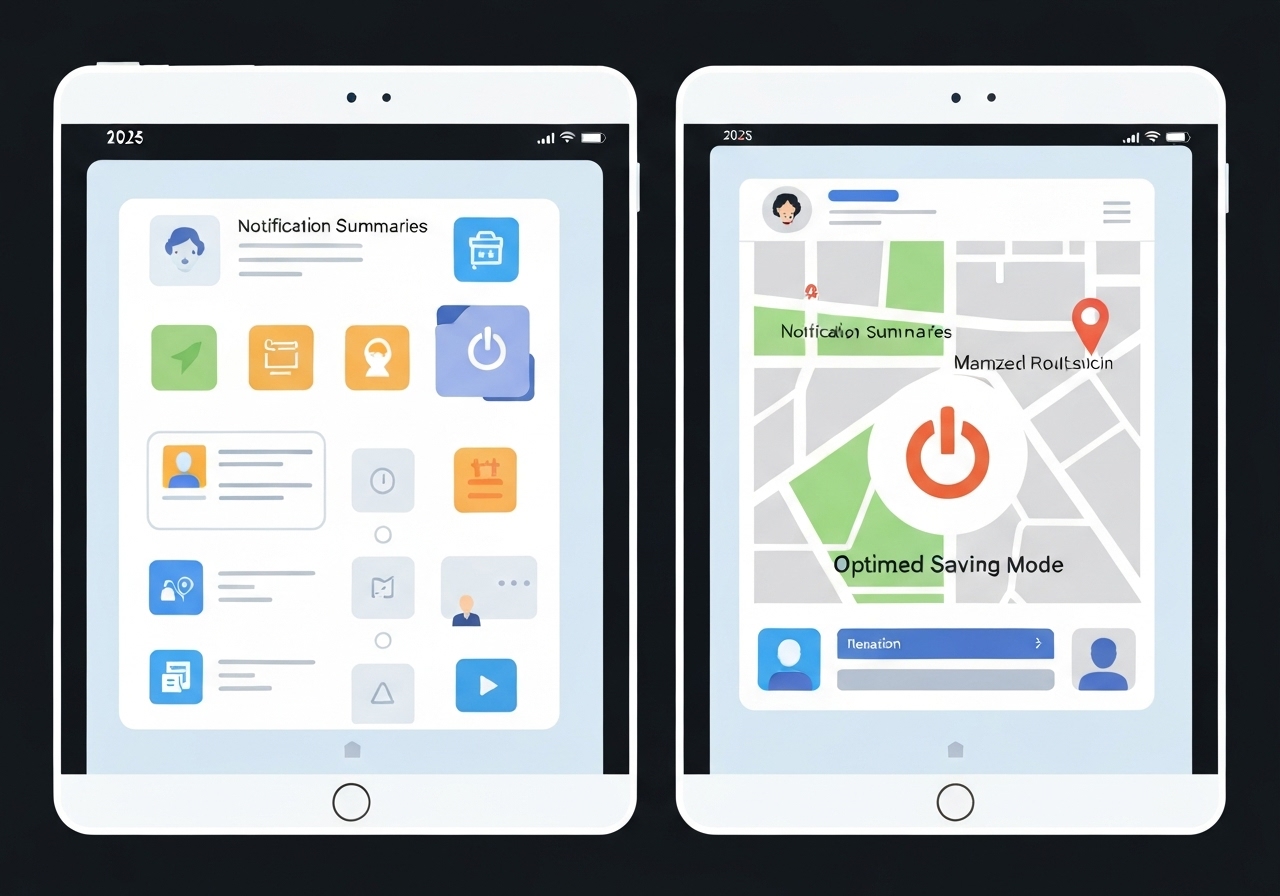
Google pushed a sizable November 2025 Pixel Feature Drop outside its usual schedule, delivering new capabilities to Pixel phones running Android 16 QPR1. The update introduces on-device AI features, including notification summaries driven by Gemini Nano, an optional Maps Power Saving mode, and wider Scam Detection coverage. Some features arrive immediately while others are staged for December or limited to specific Pixel models and countries. The release mixes privacy-focused on-device processing with cloud-assisted suggestions on select devices.
Key Takeaways
- Google released a November 2025 Pixel Feature Drop based on Android 16 QPR1, with some features shipping now and others slated for December.
- Pixel 9 and later (excluding the 9a) gain AI-generated summaries for long chat notifications; summaries are produced on-device via Gemini Nano and marked with an AI sparkle and italics.
- In December, lower-priority notices will be grouped under a new “Silent” header in the notification shade, with categories such as “News” and “Promotions” collapsed by default.
- Scam Detection for chat messages (showing a red-shield “Likely scam” warning) is expanded to Pixel 6 and newer devices in the United States.
- Phone-app Scam Detection that listens for calling patterns is now available on Pixel 9+ (9a excluded) in Australia, Canada, India, Ireland, and the United Kingdom.
- Call Notes—on-device recording, transcription, summaries and suggested next steps using Gemini Nano—arrive on Pixel 9+ (9a excluded) in Australia, Canada, Ireland, Japan, and the UK.
- Maps adds a Power Saving Mode for driving that Google says can extend battery life by up to four hours on Pixel 10 series devices.
- New creativity and personalization features include Message Remix (Nano Banana image edits), Personalized Edits in Photos using face groups, Pixel Theme packs, prioritized VIP notifications, and other app expansions across Pixel models.
Background
Google’s periodic “Feature Drop” updates have become a recurring channel for rolling out incremental Pixel enhancements without waiting for major Android releases. Historically, Feature Drops bundle camera improvements, new apps, and AI-driven tools; this November release continues that pattern but is notable for arriving off-cycle. The update builds on Android 16 QPR1, which provides the platform baseline and stability fixes for Google to layer these new capabilities.
The move toward on-device models like Gemini Nano and model variants such as Nano Banana reflects a broader industry shift: manufacturers aim to deliver generative and assistive features while minimizing cloud dependency for latency and privacy. At the same time, Google is combining on-device processing with selective cloud compute (private AI compute) where it deems the trade-offs worthwhile for richer suggestions. These changes intersect with regulatory scrutiny over AI and communications security, influencing how and where features are made available.
Main Event
Notification summaries: Pixel 9 and later (the Pixel 9a is excluded) will now condense long message notifications from first-party and third-party chat apps—Google Messages and WhatsApp among them. Summaries are generated on-device using Gemini Nano; Google says each summarized notification is visually badged with an AI sparkle at the start and rendered in italics to signal the automated nature of the text. The experience is intended to surface the gist of lengthy threads without opening the app.
Notification organization: Google plans a December enhancement that groups lower-priority notifications under a new “Silent” header at the bottom of the shade. Items categorized as News or Promotions will be collapsed by default and can be expanded by tapping the category, reducing clutter for users who prefer a minimal notification stream.
Scam Detection and phone protections: Google expanded detection of likely scam messages to notifications from any chat app on Pixel 6 and newer within the United States; suspicious items will show a “Likely scam” label with a red shield. Separately, the Phone app’s call-pattern Scam Detection—designed to warn when a call matches common scam indicators—is now active on Pixel 9+ (again excluding the 9a) across Australia, Canada, India, Ireland, and the UK.
Call Notes and call intelligence: Pixel 9+ users in Australia, Canada, Ireland, Japan, and the UK receive Call Notes functionality that records calls, transcribes them, and produces summaries and suggested next steps using on-device Gemini Nano. Google emphasizes local processing for transcription and summarization, with the aim of keeping audio and text on-device by default.
Maps Power Saving mode: When navigating while driving, Pixel 10 series devices (Pixel 10, Pixel 10 Pro, Pixel 10 Pro XL, Pixel 10 Pro Fold) can enable a simplified Maps layout via a power button. The pared-back view shows only essential information—map and upcoming turns—and Google claims it can extend battery life by up to four hours in driving scenarios.
Analysis & Implications
Privacy and trust: The reliance on Gemini Nano and similar on-device models is a deliberate privacy-forward posture—processing near the user reduces raw-data transmission to cloud servers. For features such as notification summarization and Call Notes, keeping computation local can ease user concerns about message and audio content leaving the device. That said, where cloud assistance (private AI compute) appears, Google must still communicate clearly which data, if any, is transmitted and why.
Battery and UX trade-offs: Maps’ Power Saving mode explicitly targets battery longevity during navigation, with Google’s claim of up to four extra hours on Pixel 10 hardware. Real-world results will vary with signal strength, display brightness, and accessory use; however, offering a simplified UI is a practical approach to extend device uptime for long drives. The decision to surface the mode as a tappable power button suggests Google expects users to flip between detailed and essential displays based on context.
Regional rollout and fragmentation: The update underscores Google’s staged approach—model and country restrictions mean that many enhancements will reach users incrementally. Functions tied to transcription, privacy settings, or local laws (for example, call-recording rules) often require per-country checks, explaining the varied availability. This staggered model reduces deployment risk but can frustrate users who expect feature parity across devices and markets.
Competitive dynamics: By packing on-device generative features and notification intelligence into Pixel hardware, Google is sharpening differentiation versus competitors that emphasize cloud-first solutions. Prioritizing on-device AI can be a selling point against rivals, although the degree to which consumers value these particular features—notification summaries, theme packs, or image remix tools—will shape their commercial impact.
Comparison & Data
| Feature | Pixel Models | Availability |
|---|---|---|
| Notification summaries (Gemini Nano) | Pixel 9 and later (9a excluded) | Now |
| Grouped “Silent” notifications | Most recent Pixels | December 2025 |
| Chat Scam Detection (notification badge) | Pixel 6 and newer | US |
| Phone-app Scam Detection | Pixel 9+ (9a excluded) | Australia, Canada, India, Ireland, UK |
| Call Notes (on-device) | Pixel 9+ (9a excluded) | Australia, Canada, Ireland, Japan, UK |
| Maps Power Saving | Pixel 10 series | Now |
The table summarizes immediate availability and regional limits for the most notable items in the Feature Drop. It highlights a clear pattern: premium Pixel hardware (Pixel 9+ and Pixel 10 series) receives the most advanced on-device AI features first, while wider compatibility (Pixel 6 and other models) varies by feature and region.
Reactions & Quotes
Google framed the update as a mix of on-device intelligence and user-focused refinements. The company positioned Gemini Nano as a workhorse for private, low-latency tasks on-device while reserving cloud compute for more complex, timely suggestions.
“We are bringing new on-device AI capabilities to Pixel that help people get useful summaries and keep private data local when possible.”
Google (official statement)
Privacy advocates welcomed on-device processing but urged clarity about optional cloud features and data retention. Analysts noted that the staged rollout reflects localization and regulatory considerations.
“Shifting compute on-device is the right privacy move, but users need clear controls and transparency on when data leaves the device.”
Independent privacy researcher
Early user reports on social channels emphasize convenience—users appreciate quick message gist and simplified navigation—while some testers call out the limited model coverage (exclusion of 9a) as confusing.
“Summaries save time in busy chats, but availability across model variants feels inconsistent.”
Mobile device forum user
Unconfirmed
- The precise December rollout timeline and whether the grouped “Silent” notification behavior will be user-configurable are not yet confirmed.
- Google’s up-to-four-hour battery extension claim for Maps Power Saving is a maximum estimate; device- and scenario-specific testing data has not been published.
- The schedule for broader language and country support for Message Remix and Personalized Edits remains unspecified beyond the initial English markets named by Google.
Bottom Line
November’s Feature Drop emphasizes on-device AI as the central thread: Gemini Nano enables notification summaries and Call Notes with privacy-minded processing, while features like Message Remix and Maps Power Saving balance cloud and local compute depending on capability. The release packages convenience and personalization but does so unevenly across models and countries, reflecting legal and technical constraints.
For Pixel owners, the update brings tangible benefits—faster triage of messages and longer navigation battery life—particularly on newer hardware. Users and privacy watchers should check device-specific settings and permission screens to understand when processing stays local and when private AI compute may participate; Google will likely expand support and clarify details in subsequent updates.
Sources
- 9to5Google (tech news report)