
Lead
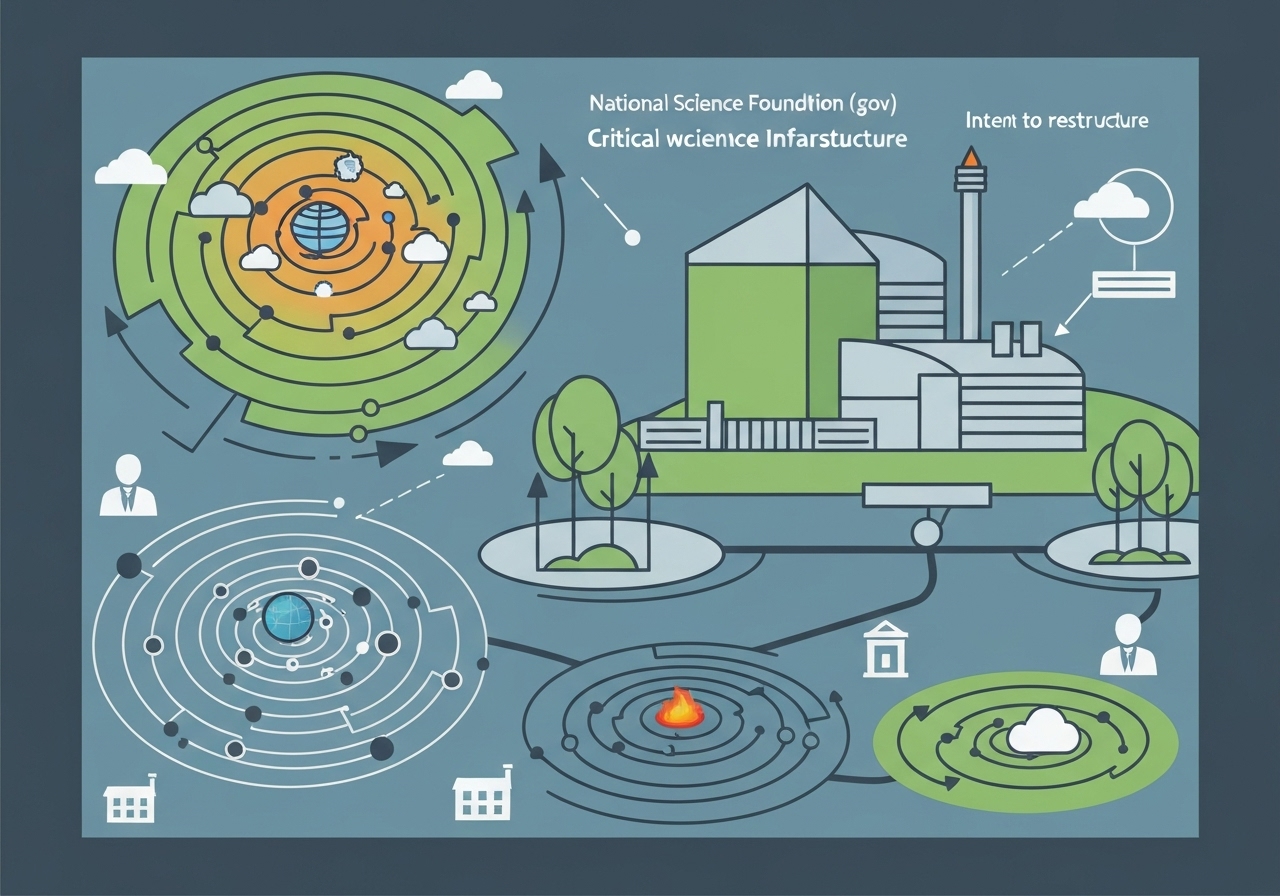
The National Science Foundation (NSF) announced today that it will review and potentially rescope the research and observational functions carried out by the NSF-funded National Center for Atmospheric Research (NCAR). The agency said the review aims to ensure continued world-class support for weather modeling, space weather research and forecasting, and other essential capabilities. As part of the process, NSF will seek input from partner agencies, the research community and other stakeholders and will publish a Dear Colleague Letter describing follow-on steps. The agency specifically signaled possible actions including transferring stewardship of the NCAR‑Wyoming Supercomputer, divesting or transferring two NSF aircraft managed by NCAR, and redefining the modeling and forecasting portfolio toward priority areas such as seasonal prediction, severe storms and space weather.
Key Takeaways
- NSF announced today a formal review of NCAR’s research and operational roles to rescope core weather-science infrastructure and services.
- NSF reaffirmed commitment to “world-class” infrastructure for weather and space weather modeling and forecasting while exploring organizational changes.
- Options under consideration include transferring stewardship of the NCAR‑Wyoming Supercomputer to another operator and divesting or transferring two NSF aircraft that NCAR manages.
- The agency plans to narrow modeling and forecasting efforts to targeted needs such as seasonal weather prediction, severe storms and space weather.
- NSF will issue a Dear Colleague Letter to explain next steps and solicit feedback from federal partners, researchers and other stakeholders.
- The review will engage partner agencies, the academic community and interested parties to inform potential asset transfers and program refocusing.
Background
NCAR has long served as a central hub for atmospheric research, operating major computational and observational assets funded largely through NSF. Its portfolio includes the NCAR‑Wyoming Supercomputer, research aircraft, and programs that span modeling, forecasting and space weather science. These capabilities support both basic research and operational needs carried out in partnership with federal agencies and universities.
In recent years, advances in high-performance computing, commercial cloud services, and increased federal emphasis on operational forecasting have prompted federal agencies to reassess how research infrastructure is organized and governed. Similar reviews have focused on aligning stewardship of large facilities with agencies or operators best suited for sustaining day-to-day operations, while keeping research-driven science with academic institutions.
Main Event
In its announcement, NSF said it will formally review the structure and functions of work currently performed by NCAR and will actively solicit feedback across the community. The agency noted the review is intended to preserve and strengthen capabilities for weather modeling and space weather while considering alternative stewardship arrangements for specific assets.
NSF identified three concrete areas of inquiry: potential transfer of stewardship for the NCAR‑Wyoming Supercomputer; divestiture or transfer of two NSF aircraft managed and operated by NCAR; and redefining the scope of modeling and forecasting research to focus on priority operational needs such as seasonal prediction, severe storms and space weather. The agency said these areas will be examined alongside input from partner agencies and stakeholders.
To launch the process, NSF will publish a Dear Colleague Letter outlining timelines, consultation mechanisms and how interested parties can submit comments. That document will frame the agency’s follow-on actions and provide details on how the review will be conducted and what decision points are expected.
Analysis & Implications
Operational stewardship of large scientific facilities is often separated from academic research to improve reliability, funding stability and service delivery. Transferring the NCAR‑Wyoming Supercomputer to an operator more focused on sustained operations could enhance uptime and user support, but it may also change governance and priority-setting for research workloads.
Divesting or transferring NSF aircraft raises similar trade-offs. Aircraft configured for atmospheric research deliver unique measurements that underpin model development and field campaigns. If aircraft stewardship moves to another operator, mission access, research scheduling and data policies could be affected; careful transition planning would be required to avoid gaps in observational coverage.
Refocusing modeling and forecasting research toward seasonal prediction, severe storms and space weather aligns NSF resources with pressing societal needs and federal priorities. However, narrowing scope risks deprioritizing exploratory or foundational science that enables future breakthroughs; NSF’s consultation process will be critical to balance near-term operational demands with longer-term discovery research.
Comparison & Data
| Asset | Current Operator | NSF’s Proposed Action |
|---|---|---|
| NCAR‑Wyoming Supercomputer | NCAR | Explore transfer of stewardship to an appropriate operator |
| Two NSF research aircraft | NCAR (managed/operated) | Divest or transfer management/operation |
| Modeling & forecasting programs | NCAR research groups | Redefine scope toward seasonal prediction, severe storms, space weather |
The table summarizes NSF’s early signals. Any transfer or divestment would need transition timelines, funding arrangements and data access assurances to maintain continuity for research and operational users.
Reactions & Quotes
“NSF remains committed to providing world-class infrastructure for weather modeling, space weather research and forecasting,”
National Science Foundation (official release)
“NSF will engage partner agencies, the research community and other interested parties to solicit feedback for rescoping the functions currently performed by NCAR,”
National Science Foundation (official release)
“NSF will publish a Dear Colleague Letter to inform the agency’s follow-on actions,”
National Science Foundation (official release)
Unconfirmed
- No timeline for final decisions or specific target dates for any transfers has been published by NSF as of this announcement.
- It is not yet confirmed which operators, if any, are being considered to assume stewardship of the NCAR‑Wyoming Supercomputer.
- Details on how data access, user allocations and research priorities would be preserved under any transfer are not yet available.
Bottom Line
NSF’s review signals a potential reallocation of stewardship and operational responsibilities for prominent weather‑science assets currently managed by NCAR. The announced options aim to secure sustained, high-quality infrastructure while refocusing research toward prioritized forecasting needs.
How the review balances operational continuity, researcher access and long-term scientific discovery will depend on the consultation process and the specifics laid out in the forthcoming Dear Colleague Letter. Stakeholders should monitor NSF communications closely and prepare to participate in the agency’s engagement process to shape outcomes.