
Lead
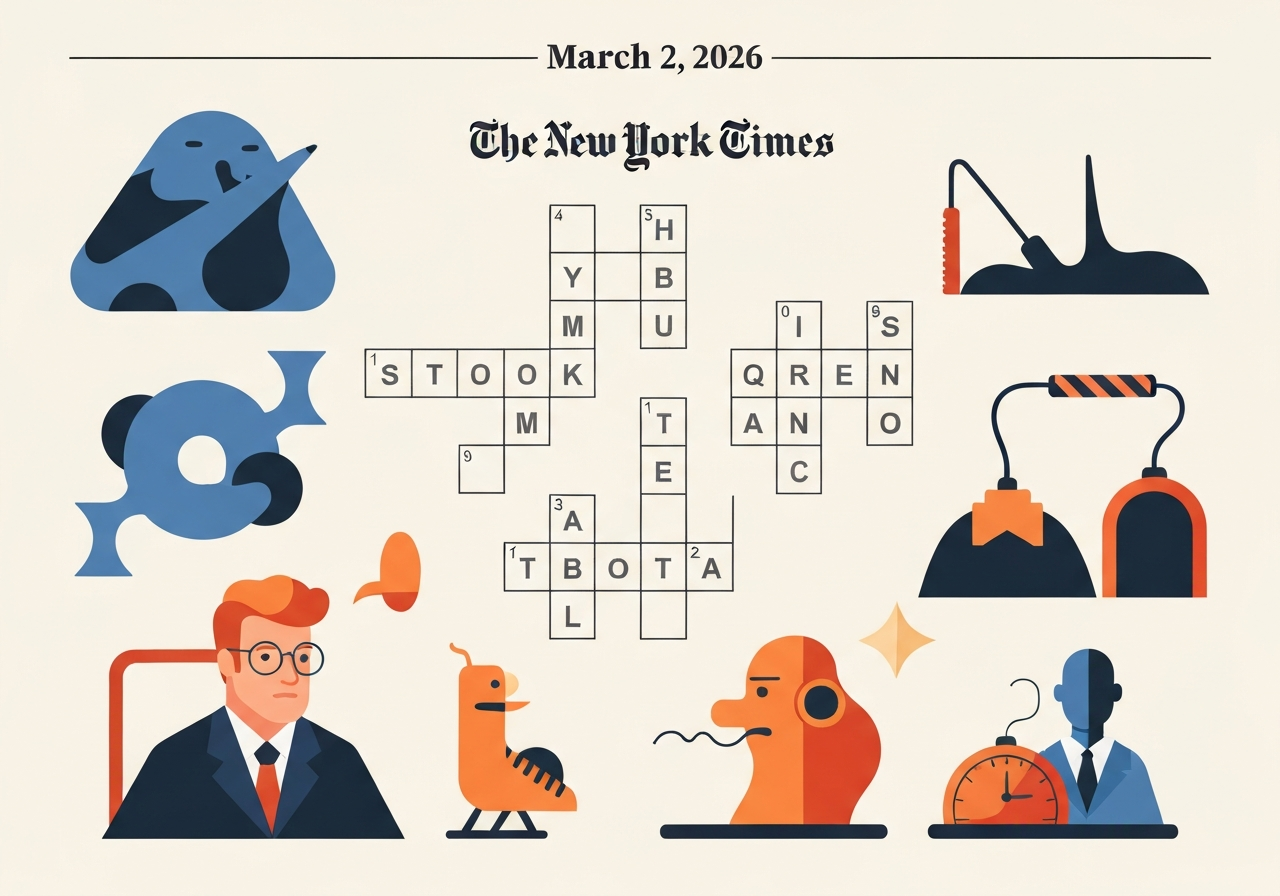
On March 1, 2026 (posted 6:00 p.m. ET), the New York Times puzzle constructed by Leslie Benson ran as the March 2 daily crossword, featuring a shout-themed revealer. The puzzle’s central entry, GIVE A SHOUT-OUT (36A), ties together themed answers that start with words you might literally shout — for example, FORE appears in the shaded squares of 17A. The Times also noted the launch of the Midi, a new medium-size daily crossword, available on the website and in the Games app. Solvers reported a mix of enjoyment and stumbles, with the theme rewarding familiarity with sports and setwork exclamations.
Key Takeaways
- The puzzle was posted March 1, 2026 at 6:00 p.m. ET for the March 2, 2026 installment and was constructed by Leslie Benson.
- The revealer at 36A is GIVE A SHOUT-OUT; themed entries begin with words that are shouted in real contexts, e.g., FORE at 17A.
- The New York Times announced the launch of the Midi, a medium-size daily crossword, on the same day.
- Theme mechanics use shaded squares and initial shouted words to link across multiple long answers.
- Solvers noted cultural-knowledge traps — references to sports, film sets and baseball appeared in theme clues.
Background
The New York Times publishes daily themed crosswords that often hinge on a central revealer tying several entries together. Constructors craft themes that can be linguistic, pun-based, or culturally specific; editors then place a revealer to make the theme explicit for solvers. In recent years the Times has experimented with format size and difficulty: the new Midi is an example of that product evolution, positioned between the Mini and the full daily grid.
Leslie Benson, credited as the constructor for this puzzle, selected a theme built around exclamations that function in particular contexts — for instance, FORE on a golf course. That approach follows a long tradition of puzzles using a shared surface idea (here, shouted words) to unify otherwise unrelated entries. The puzzle’s publication on March 1 for the March 2 puzzle is consistent with the Times’ practice of posting in the evening before the nominal puzzle date.
Main Event
Solvers encountered the theme first at 17A, where shaded squares spelled FORE, a common warning call on golf courses. The grid’s revealer at 36A, GIVE A SHOUT-OUT, clarified that each theme answer begins with a word you’d shout in a specific situation. Other themed entries follow the same pattern, evoking contexts such as movie sets and baseball diamonds that prompt audible exclamations.
Construction balanced theme density with everyday fill, leaving room for both the shouted-word motif and several accessible crossings. Several longer non-theme answers were positioned to provide entry points for solvers who might miss a shouted word at first glance. Puzzle reviewers noted that cultural blind spots — including fandom references and sports jargon — can make this kind of theme feel harder for some solvers.
The Times’ announcement of the Midi on the same day added editorial context: the Midi aims to offer an intermediate-length solve for players seeking more than a Mini but less than a full puzzle. Availability in the Games app and on the website means regular solvers could try the Midi immediately after completing the daily grid.
Analysis & Implications
This puzzle exemplifies how constructors use a single semantic hook to give solvers an “aha” moment when the revealer is reached. GIVE A SHOUT-OUT is a tidy phrase that doubles as instruction and explanation, helping solvers retroactively see why seemingly disparate answers belong together. The reliance on shouted words foregrounds spoken-language cues in a medium that is inherently silent, which can be satisfying when the connection clicks.
Culturally specific shouted words — FORE for golf, director calls on set, or baseball exclamations — privilege solvers with exposure to those settings. That raises questions about accessibility: constructors must choose between cleverness that rewards niche knowledge and fill that remains broadly approachable. The Times’ editorial choice to publish this theme indicates confidence that its audience will find the conceit engaging rather than exclusionary.
The introduction of the Midi has product and community implications. A medium-size puzzle can retain themed complexity while reducing solve time for busy players, potentially expanding the subscriber base or engagement metrics. For constructors, the Midi format may open new layout options and theme densities that differ from standard daily grids.
Comparison & Data
| Format | Approx. Grid Size | Typical Solve Time |
|---|---|---|
| Mini | ~5×5–7×7 | 1–5 minutes |
| Midi (launched Mar 1, 2026) | medium (between Mini and full) | 5–15 minutes |
| Daily Full | 15×15 | 10–30+ minutes |
The table situates the new Midi between the Mini and the full daily grid. While solve times vary by individual skill and theme difficulty, the Midi is positioned to attract those who want a meaningful solve without committing to a long puzzle.
Reactions & Quotes
Public reaction mixed appreciation for the theme and curiosity about the Midi format. Below are two concise sourced excerpts that capture the puzzle and product announcement.
“GIVE A SHOUT-OUT”
Puzzle grid (Leslie Benson)
“The New York Times has launched the Midi, a daily medium-size crossword.”
The New York Times (official announcement)
Unconfirmed
- Any direct statement from the constructor about choosing shouted words for inclusivity or challenge has not been published; constructor intent beyond the published grid is unconfirmed.
- Early social-media reaction volumes and sentiment around the Midi launch are still being aggregated and have not been independently verified for this report.
Bottom Line
Leslie Benson’s March 2, 2026 New York Times crossword uses a clear, spoken-word motif centered on the revealer GIVE A SHOUT-OUT and concrete shouted words like FORE to tie theme entries together. The theme rewards lateral recognition of everyday exclamations but can trip up solvers who lack specific cultural or sports references.
The simultaneous announcement of the Midi signals the Times’ interest in diversifying puzzle formats to fit more solve styles and schedules. For regular solvers, the Midi offers a new, intermediate option; for constructors it offers fresh layout and theme opportunities. Watch solve times and community feedback over the coming weeks to see whether the Midi finds a steady audience.