
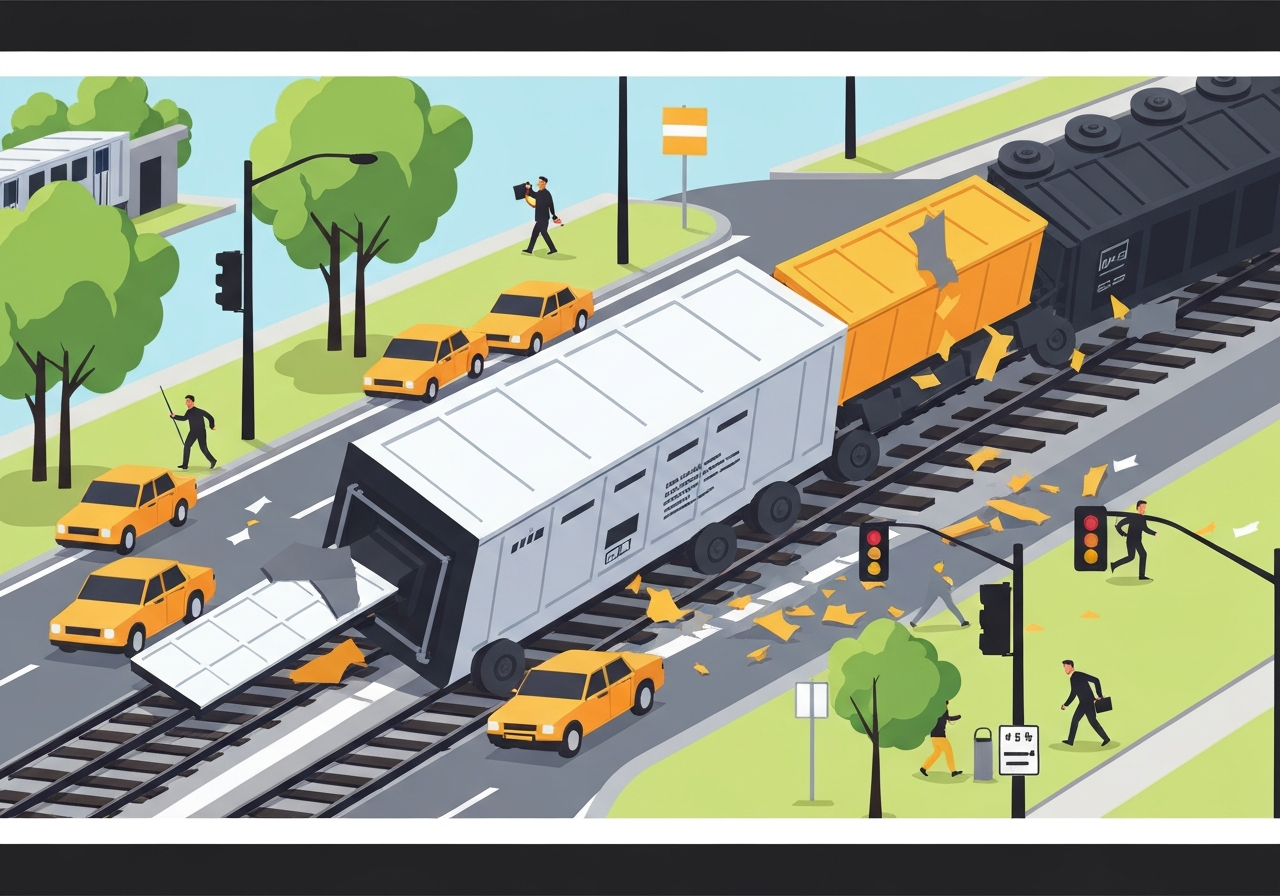
Lead: A freight train derailed early on Wednesday, February 11, 2026, near the 108th Street railroad crossing in Oak Lawn, Illinois, disrupting Metra’s Southwest Service and prompting multiple road closures. Metra reported receiving notice of the incident at 4:45 a.m., and Oak Lawn and Chicago Ridge police ordered closures on Central Avenue and sections of Ridgeland Avenue. Authorities said there were no injuries and that the derailment did not involve hazardous materials. Local officials warned that at least one crossing will remain closed for a day or longer while crews assess damage and clear the scene.
Key Takeaways
- The derailment occurred near the 108th Street railroad crossing in Oak Lawn on Feb. 11, 2026; Metra was notified at 4:45 a.m.
- Metra suspended all Southwest Service trains after the incident, leaving commuters to seek alternate routes.
- Central Avenue between 107th and Pleasant Boulevard was closed by Oak Lawn police; the 10700-block crossing will be closed at least one day.
- Ridgeland Avenue was closed between Southwest Highway and Washington Street, according to Chicago Ridge police.
- Officials reported no injuries and said no hazardous materials were involved in the derailment.
- Local authorities cautioned that track repairs and crossing inspections could extend closures beyond the initial 24-hour estimate.
Background
Freight and commuter rail intersect frequently in the Chicago metropolitan area, making any derailment on shared or adjacent corridors a major disruption for both freight logistics and passenger travel. Metra’s Southwest Service (SWS) runs into Chicago’s central terminals and carries commuters who often have few practical alternatives when trains are suspended. Rail crossings such as the 108th Street intersection are managed by municipal and railroad authorities; closures at those points can quickly back up local traffic and require coordinated responses from village public works, police departments and rail operators.
Accidents that do not involve hazardous materials are still complex to clear because track geometry, signal systems and crossing infrastructure must be inspected and repaired before trains can resume. Local governments have to balance traffic rerouting, public safety and communication to residents and commuters. In this incident the primary stakeholders include Metra, Oak Lawn police, Chicago Ridge police and freight operator representatives; each must confirm track integrity and clearance before services restart.
Main Event
At 4:45 a.m. on Feb. 11, Metra received notice that a freight train had derailed near the 108th Street railroad crossing in Oak Lawn. Oak Lawn police immediately closed Central Avenue between 107th Street and Pleasant Boulevard to prevent vehicles from entering the site while emergency and railroad crews responded. Chicago Ridge police announced a separate closure of Ridgeland Avenue between Southwest Highway and Washington Street, reflecting the localized traffic impacts of the incident.
Metra confirmed the suspension of all Southwest Service trains after the derailment affected rails used by commuter trains, forcing the operator to halt movement on the corridor pending inspection and clearance. Martha Hill, identified by Metra as a spokesperson, advised riders to seek alternate routes or consider driving into the city while service remained suspended. Local officials emphasized that the 10700-block crossing on Central Avenue would be closed to all traffic for at least one day and might remain closed longer depending on damage assessments.
Emergency responders and rail crews worked on scene to secure the area and evaluate track and crossing hardware. Chicago Ridge police stated that the derailment did not involve hazardous materials, simplifying the immediate public-safety response but not eliminating the engineering work needed to restore normal operations. Oak Lawn police confirmed there were no injuries connected to the derailment.
Analysis & Implications
The immediate suspension of Metra’s Southwest Service creates ripple effects across the region: commuters who rely on SWS trains will face longer door-to-door travel times, increased vehicle traffic into downtown Chicago, and higher demand on alternate transit lines and bus routes. For employers and service providers, a day-long or multi-day outage on a major commuter corridor can reduce punctuality and workplace productivity, particularly for workers without flexible schedules.
From an operational standpoint, freight derailments that damage track infrastructure require coordinated inspections of ties, rails, ballast and signaling equipment. Even when hazardous materials are not involved, restoring service depends on both physical repairs and a regulatory sign-off by rail inspectors. The need for parts, specialized labor and safe access can extend closures beyond the initial 24-hour estimate provided by local authorities.
There are also contractual and logistical implications for freight operators and Metra. Freight companies must account for rerouted shipments and rolling-stock availability, and Metra must consider service recovery plans, including bus bridging or re-timing trains once tracks are cleared. If the investigation identifies preventable causes — such as maintenance lapses or equipment failure — it may prompt subsequent operational or oversight changes across the corridor.
Comparison & Data
| Location | Closure | Reported Duration |
|---|---|---|
| 108th Street railroad crossing (near 10700-block Central Ave) | Crossing closed to all traffic | At least one day; possibly longer |
| Central Avenue (107th to Pleasant Blvd) | Road closed | Unspecified; tied to crossing access |
| Ridgeland Avenue (SW Highway to Washington St) | Road closed | Unspecified; local closure by Chicago Ridge police |
The table above summarizes reported closures; authorities provided a 24-hour baseline for the 10700-block crossing but cautioned the situation could change after inspections. Historically, non-hazardous derailments that damage track crossings can take anywhere from under a day to several days to clear, depending on the extent of structural repairs and signal work required. The immediate priority for crews is to verify track alignment and signaling safety before resuming passenger service.
Reactions & Quotes
Metra emphasized service disruption and rider options while crews work on the corridor.
“Look for alternate routes or consider driving into the city,”
Martha Hill, Metra spokesperson (as reported to ABC7)
The local police provided safety and operational updates to the public.
“The railroad crossing in the 10700-block of Central Avenue will be closed to all traffic for at least one day and possibly longer,”
Oak Lawn Police (as reported to ABC7)
Chicago Ridge police clarified the hazard status to calm public concern.
“The derailment did not involve hazardous materials,”
Chicago Ridge Police (as reported to ABC7)
Unconfirmed
- The precise cause of the derailment has not been publicly confirmed and remains under investigation.
- The number of freight cars derailed and the extent of equipment damage were not disclosed by authorities at the time of reporting.
- The full duration of service suspension and road closures beyond the initial “at least one day” estimate is uncertain pending track inspections and repair scheduling.
Bottom Line
The Feb. 11 freight-train derailment near 108th Street in Oak Lawn halted Metra’s Southwest Service and closed multiple local roads, with no injuries and no hazardous materials reported. Immediate public-safety needs are satisfied, but the timeline for full service restoration depends on engineering assessments and repairs to track and crossing infrastructure.
Commuters should follow Metra and local police updates for reroute guidance; employers and transit planners should anticipate commuter displacement for at least the coming day and prepare contingency measures. Authorities will release investigative findings and a clearer restoration timetable as crews complete inspections.
Sources
- WLS/ABC7 Chicago — local TV news report summarizing police and Metra statements