
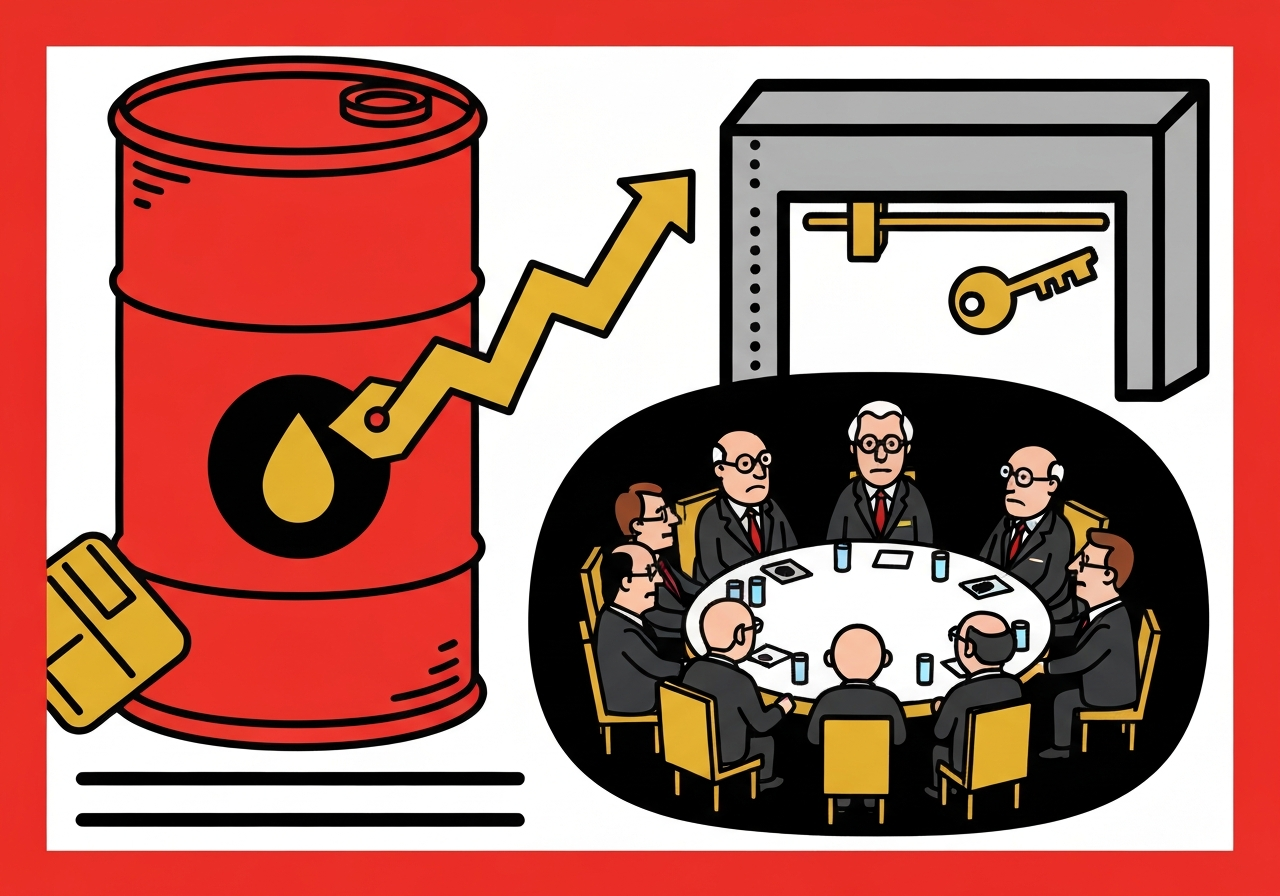
Lead: On 16 March 2026, global oil benchmarks climbed as markets reacted to the effective closure of the Strait of Hormuz and US President Donald Trump’s appeal for an international naval coalition to reopen the waterway. Brent crude briefly topped $106 a barrel on Sunday, standing at $104.63 as of 04:30 GMT, as trading participants judged the disruption could persist. The call drew little public commitment from the countries mentioned by name, and market anxiety pushed energy costs higher amid broader concerns about supply and growth.
Key Takeaways
- Brent crude rose as much as 3% on Sunday to over $106 a barrel and was quoted at $104.63 at 04:30 GMT on 16 March 2026.
- The Strait of Hormuz normally carries roughly one-fifth of world oil flows; current transit levels are down to no more than five ships per day versus a historical average of 138.
- Global oil prices have climbed more than 40% since the war began on 28 February 2026, driven by large-scale supply disruption.
- At least 16 commercial vessels have been attacked in the region since 28 February, according to maritime reporting from UKMTO.
- President Trump urged nations including China, Japan, France and the UK to escort ships through the strait; public responses so far have been muted and Japan and Australia said they have no plans to send ships.
- US officials said warships would not be deployed to the waterway until Tehran’s military capability has been further degraded, though operations are expected to start soon.
Background
The Strait of Hormuz is a narrow chokepoint between Iran, Oman and the United Arab Emirates that historically handles about 20% of the world’s traded oil. Interruptions in the strait reverberate quickly through global hydrocarbon markets because alternative routes and spare export capacity are limited. Past incidents of naval harassment and attacks in the Gulf have raised premiums on insurance and freight and led some shippers to reroute or pause voyages.
The present disruption followed escalation in the wider region after strikes involving the US, Israel and Iran; Iran has taken actions that effectively halted transit through the strait in response to those strikes. International bodies such as the International Energy Agency have described the current stoppage as the largest disruption to global energy supplies in modern history, underscoring the scale of missing flows and the market’s sensitivity.
Main Event
On 16 March 2026 President Trump publicly called on other countries to help Washington reopen the Strait of Hormuz, framing the move as necessary to restore commercial traffic that typically carries about one-fifth of global oil. The appeal named China, Japan, France and the United Kingdom among the states he urged to take part in an escort mission; there has been no public commitment from those governments to deploy naval forces to the strait.
Markets immediately reflected the prospect of prolonged disruption. Brent crude spiked as traders priced in ongoing supply shortages, hitting a session high above $106 a barrel before settling slightly lower. Energy analysts pointed to sharply reduced transit counts reported by the United Kingdom Maritime Trade Operations centre, which recorded no more than five vessels transiting the strait each day since 28 February versus a long-term average of 138.
Tokyo and Canberra both issued statements on Monday saying they had no plans to dispatch warships to the waterway, and other governments were cautious in their public responses. US administration officials indicated that the United States is prepared to escort commercial shipping if required, but they also said warships would not be sent until Tehran’s military capabilities have been further weakened; officials expect such operations to begin in the near term.
The UKMTO reported at least 16 attacks on commercial vessels in the region since the conflict began on 28 February 2026, a tally that has prompted insurers to widen risk premiums and some shipowners to suspend operations. Combined with the practical constraints of alternative export corridors, traders say the shortage of seaborne throughput is likely to keep upward pressure on crude and refined fuel prices.
Analysis & Implications
Price reaction: The immediate market reaction—Brent rising more than 40% since late February—reflects both actual lost volumes and risk premia. When a chokepoint that handles one-fifth of seaborne oil is disrupted, buyers cannot quickly replace output from spare capacity, especially given the tightness in global inventories following years of limited investment and prior production cuts.
Economic consequences: Higher crude translates into pricier transport fuels and refined products, raising inflationary pressure worldwide. Central banks and fiscal authorities will face trade-offs: elevated energy costs can slow growth and increase the risk of stagflation, particularly for energy-importing economies that lack immediate policy tools to offset the shock.
Geopolitical dynamics: The US proposal to build a multinational escort force tests alliances and neutrality calculations. Countries named by President Trump face complex assessments: security commitments, legal authorities, domestic political optics and the risk of escalation. A robust coalition could reduce perceived shipping risks but also increase confrontation potential with Iran.
Market scenarios: If a coalition is not formed and Iran maintains restrictions, prices could remain elevated or climb further, forcing demand destruction in some consuming regions. If a credible escort operation begins and succeeds in stabilizing transits, some of the risk premium could unwind, but insurance and operational costs are likely to keep a new baseline price higher than pre-crisis levels.
Comparison & Data
| Metric | Historical / Pre-war | Since 28 Feb 2026 |
|---|---|---|
| Average daily transits through Hormuz | 138 | <=5 |
| Brent crude (session peak) | — | $106+ per barrel (peak) |
| Reported attacks on commercial vessels | Typical months: few | At least 16 since 28 Feb 2026 |
The table above highlights the scale of the operational shock to seaborne trade: daily vessels passing through the strait have dropped from a historical average of 138 to five or fewer since the start of the conflict. That collapse in throughput is the primary driver of the greater-than-40% rise in global oil prices recorded since the war began on 28 February. Elevated freight and insurance costs, together with direct losses of export capacity, are contributing to sustained market tightness.
Reactions & Quotes
“If there is no response, or if it’s a negative response, NATO faces a very bad future,”
Donald Trump, US President (interview with Financial Times, 15–16 March 2026)
President Trump used stark language in a Financial Times interview to press allies for support, framing inaction as having consequences for alliance cohesion.
“We have no plans to dispatch ships to the Strait,”
Government statement, Japan (public statement, 16 March 2026)
Tokyo’s immediate response signalled reluctance among key maritime powers to become directly involved in escort operations, citing legal, logistical and diplomatic considerations.
“The events have caused the largest disruption to global energy supplies in history,”
International Energy Agency (IEA summary)
The IEA’s assessment underlines the scale of lost seaborne volumes and the unusually severe market impact relative to prior disturbances.
Unconfirmed
- Exact timeline for any US-led escort deployment remains unconfirmed; US officials say operations are expected soon but no start date is public.
- The degree to which the named countries (China, Japan, France, UK) privately discussed participation with Washington has not been publicly verified.
- Attribution for each of the maritime attacks reported by UKMTO has not been independently confirmed in all instances.
Bottom Line
The closure of the Strait of Hormuz has created an acute supply shock that pushed Brent above $106 a barrel and raised global energy costs by over 40% since 28 February 2026. Absent a rapid restoration of transit or a credible multinational escort that materially reduces risk, markets should expect continued volatility and persistent upward pressure on fuel prices.
Political decisions in the coming days—whether states agree to naval escorts, whether Iran modifies its posture, and how insurers and charterers respond—will determine if the price surge becomes a prolonged inflationary problem or gradually eases. For businesses and policymakers, the immediate priorities are securing alternative supply lines where possible, monitoring shipping and insurance developments, and preparing for broader economic effects from sustained higher energy prices.
Sources
- Al Jazeera — (news media: initial account summarising prices, Trump appeal and reactions)
- Financial Times — (news media: interview with US President Donald Trump)
- International Energy Agency (IEA) — (international agency: market and supply disruption assessment)
- United Kingdom Maritime Trade Operations (UKMTO) — (official maritime reporting: transit counts and incident reports)