
Lead
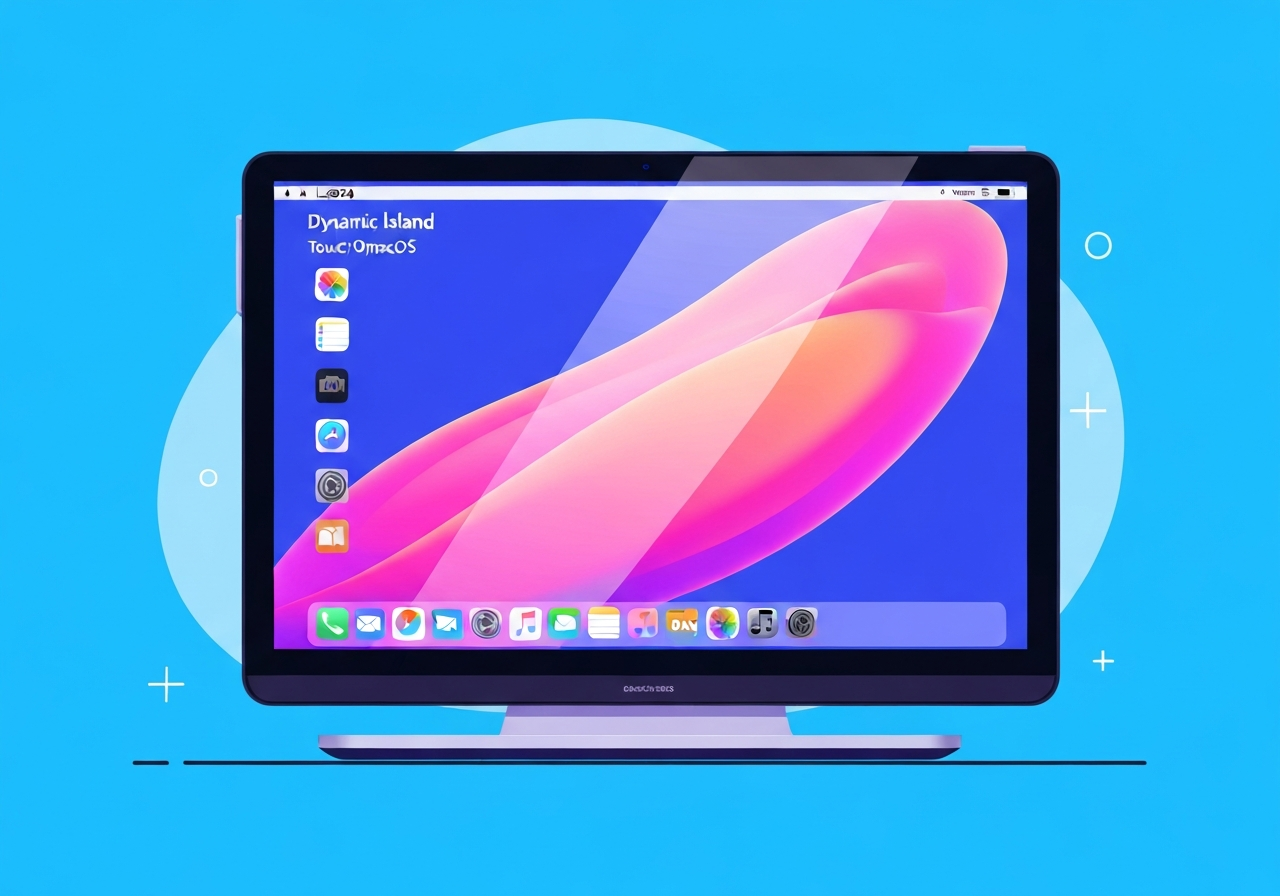
On February 24, 2026, reports based on Bloomberg coverage say Apple is developing a touchscreen OLED MacBook Pro that will adopt the iPhone’s Dynamic Island and a hole-punch front camera. The machine is expected to arrive toward the end of 2026 and use next-generation M6 Pro and M6 Max chips built on a 2‑nanometer node. Apple is also said to be preparing macOS updates to make the interface more touch friendly while preserving the keyboard and trackpad. If accurate, Apple plans two MacBook Pro refreshes in 2026: an M5 update in spring and OLED M6 models later in the year.
Key Takeaways
- Apple is reportedly developing a touchscreen OLED MacBook Pro with an interactive Dynamic Island and a hole‑punch camera, per Bloomberg coverage cited by MacRumors.
- OLED models are expected for both 14‑inch and 16‑inch MacBook Pro sizes, keeping the current size lineup intact.
- Apple plans an M5 Pro/M5 Max MacBook Pro refresh in spring 2026; the OLED touch models will use M6 Pro/M6 Max chips built on a 2‑nanometer process and target late‑2026 shipping.
- macOS will receive touch‑first UI adjustments: controls that adapt to tap vs. pointer input, expanded touch targets, pinch gestures, and faster scrolling gestures.
- Apple will retain the physical keyboard and large trackpad and does not plan to brand the MacBook Pro as a touch‑first iPad‑style product.
- The new Mac Dynamic Island will replace the notch and expand contextually for app and system interactions, increasing usable screen area.
Background
Apple has long resisted making macOS a touch‑first platform, arguing that direct touch was better suited to iPadOS. The company tried touch experimentation on the Mac before—most notably with the OLED Touch Bar introduced on some earlier MacBook Pro models—but removed it after weak user adoption. That history frames both user and developer expectations: a cautious, incremental move toward touch rather than a wholesale reimagining of the Mac interface.
Hardware and chip roadmaps also matter. Apple has followed a cadence of iterative chip upgrades (M‑series) and is reported to plan an M5 refresh this spring. Moving to a 2‑nanometer process for the M6 family would be a major manufacturing step, affecting power efficiency and thermal budgets—two critical considerations for an OLED touchscreen laptop. At the same time, OLED brings different display characteristics (contrast, black levels, potential burn‑in considerations) compared with the mini‑LED and LCD panels used in recent MacBook Pros.
Main Event
The Bloomberg‑sourced report, reposted by MacRumors on February 24, 2026, says Apple will adopt the iPhone’s Dynamic Island for the Mac’s top bezel, replacing the notch and shrinking the visible intrusion into the display. That Mac Dynamic Island is described as interactive and contextually expanding based on the active app or system feature, giving developers a new UI region to surface information or controls.
Physically, the design changes are expected to be conservative: a slightly slimmer chassis but a silhouette much like the current MacBook Pro, with Apple keeping the keyboard and trackpad intact. Apple is said to be using a hole‑punch camera (a small circular cutout) instead of a wide notch, increasing usable screen real estate while retaining a front webcam.
On the software side, macOS will be updated to detect input method and present different control affordances for touch versus pointer usage—tappable, larger menu controls when touching screen elements and more compact pointer‑optimized menus when using a mouse or trackpad. The system is reported to support iPad‑style gestures such as pinch‑to‑zoom and fast scrolling, and touch options will be integrated across macOS rather than confined to isolated features.
Analysis & Implications
Adopting a touchscreen OLED MacBook Pro would be a notable shift in Apple’s product philosophy, moving macOS incrementally toward hybrid input without abandoning the cursor model. For users, the primary benefit is greater display flexibility: direct manipulation of content, quicker navigation for certain tasks, and potentially more immersive media consumption. Developers will face design decisions—whether to add touch‑specific affordances, adapt menus, or optimize for both input types—requiring updated Human Interface Guidelines and likely new macOS tooling.
From a market perspective, the change narrows the functional gap between iPad and Mac hardware while differentiating macOS laptops from Windows competitors that already offer touch screens. If Apple positions the feature as optional and seamless with the trackpad, it could avoid fragmenting the Mac user base, but there is also the risk of consumer confusion over which device best fits their needs—iPad versus touch‑enabled MacBook.
The 2‑nanometer M6 chips change the hardware calculus: improved performance-per-watt could help offset OLED power consumption and thermal impacts, but yields and manufacturing complexity at 2nm are real risks that could affect supply, pricing, and launch timing. Apple’s decision to keep physical input devices suggests it plans to preserve Mac workflows for pro users, while offering touch as an augment rather than a replacement.
Comparison & Data
| Model / Refresh | Display | Chip | Planned Timing |
|---|---|---|---|
| MacBook Pro (spring refresh) | LCD / mini‑LED (existing tech) | M5 Pro / M5 Max | Spring 2026 |
| MacBook Pro (OLED touch) | Touch OLED with Dynamic Island | M6 Pro / M6 Max (2‑nm) | Late 2026 (reported) |
The table summarizes the reported 2026 cadence: an M5 update earlier in the year and an OLED, touch‑enabled M6 update later. That sequencing would allow Apple to refresh chips first across current models and then introduce the display and input changes when the next silicon and supply conditions align. The contrast between existing display tech and OLED also implies tradeoffs in brightness, battery life, and long‑term durability.
Reactions & Quotes
“The new Mac will adopt the iPhone’s Dynamic Island and a hole‑punch camera,”
Bloomberg (reported via MacRumors)
The previous quote summarizes the core hardware claims from the reporting; it captures the notable visual change from a notch to a Dynamic Island-style element.
“Apple is updating macOS to make it more touch friendly,”
MacRumors (report)
That second citation reflects the software adjustments Apple reportedly plans—adaptive controls and touchscreen gestures—rather than a confirmed developer roadmap from Apple itself.
Unconfirmed
- The exact ship date and availability windows for OLED MacBook Pro models remain unconfirmed; sources say “toward the end of 2026” but no firm date has been released.
- Details on Dynamic Island behavior and developer APIs for macOS are not yet public and could change before launch.
- Precise hole‑punch camera specifications (resolution, FaceTime capabilities) have not been disclosed.
- M6 performance, power, and yield characteristics at a 2‑nanometer node are reported but not independently verified.
Bottom Line
If the reporting is accurate, Apple is preparing a cautious but meaningful move toward touch on the Mac: a touchscreen OLED MacBook Pro with a Dynamic Island and touch‑aware macOS could arrive late in 2026 while Apple maintains the traditional keyboard and trackpad. The staged cadence—M5 silicon in spring, M6 OLED models later—would let Apple manage supply and software readiness while gauging user response.
Investors, enterprise IT teams, and developers should watch three things closely: (1) official Apple confirmation and developer documentation for touch APIs; (2) M6 chip performance and availability given the 2‑nm manufacturing step; and (3) pricing and messaging to see how Apple differentiates touch‑enabled Macs from iPads and non‑touch MacBooks. Those factors will determine whether the change is a subtle evolution or the start of a broader platform shift.