
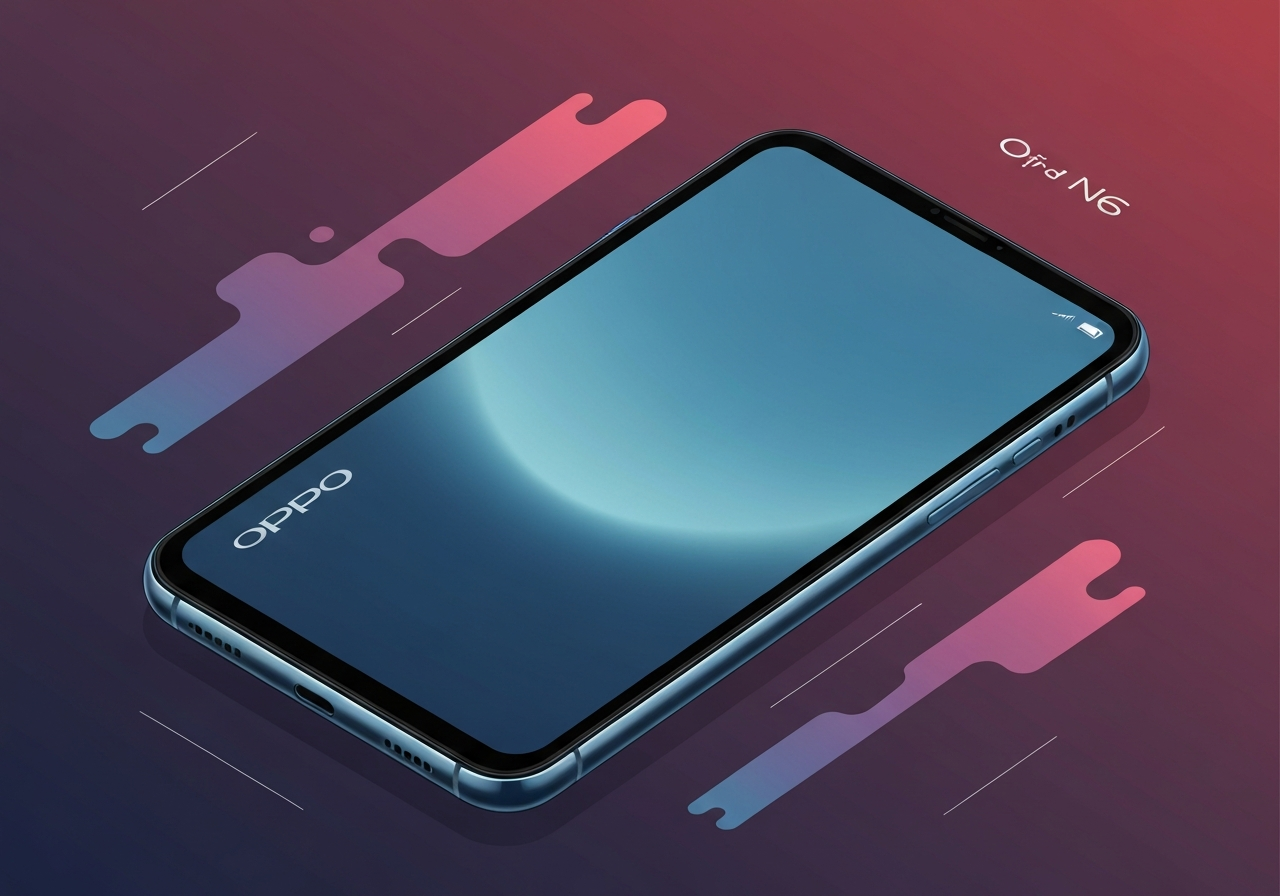
Lead: OPPO’s Find N6, presented on the company’s global product page, positions itself as a next-generation foldable that emphasizes a flatter hinge, stronger materials and upgraded imaging and battery systems. The device combines a new 2nd-generation titanium flexion hinge and Auto‑Smoothing Flex Glass with a Snapdragon® 8 Elite Gen 5 chipset, a 200MP Hasselblad main sensor and a 6,000mAh battery. OPPO highlights faster charging (80W wired, 50W wireless), improved hinge flatness and boosted CPU/GPU/NPU performance versus the Find N5. The product page also spells out IP ratings, lab-test caveats and regional or feature limitations.
Key Takeaways
- Hinge improvements: OPPO reports a 75% improvement in hinge flatness and a 20% increase in hinge strength versus the Find N5, based on OPPO laboratory comparisons.
- Camera hardware: A 200MP Hasselblad Ultra‑Clear main camera (23mm, 1/1.56″), a 50MP ultra‑wide (15mm, 50% more light intake) and a 50MP periscope telephoto (70mm, up to 120x zoom with OIS).
- Performance uplift: Snapdragon® 8 Elite Gen 5 with Trinity Engine yields reported CPU performance +20%, GPU performance +23%, NPU performance +37% and substantial power-efficiency gains per OPPO/Qualcomm figures.
- Battery and charging: 6,000mAh silicon‑carbon battery, estimated large‑screen video playback ~26 hours, 47 minutes wired 1–100% (80W), and ~80 minutes wireless 1–100% (50W) in OPPO lab tests.
- Design and weight: A slim foldable profile at 8.93 mm (closed or measured thickness per OPPO) and 225 g weight, supported by industry‑first 3D liquid printing and the Clover Balance Pivot for hinge precision.
- Display and durability: Auto‑Smoothing Flex Glass that gradually reduces visible crease appearance; OPPO notes the effect is not permanent and will vary with use.
- Software and productivity: Free‑Flow Window desktop‑class multitasking, Pocket AI workstation features and optional OPPO AI Pen (sold separately) designed specifically for foldables.
- Ingress protection: Multi‑state water/dust ratings listed as IP56 | IP58 | IP59 with detailed test conditions; OPPO warns performance can degrade with wear and that damage from immersion is not covered by warranty.
Background
The global foldable smartphone market has shifted from early experimental designs to products that prioritize hinge engineering, display flatness and durability alongside flagship camera and SoC performance. Manufacturers have invested in metal alloys, new hinge geometries and glass technologies to reduce crease visibility and increase lifespan. OPPO’s Find N line has progressed from the N5 generation toward a more polished foldable experience, positioning the N6 as an incremental but technically focused improvement.
Hinge and crease remain defining challenges for foldables: visible creases, touch performance near the fold and long‑term mechanical wear shape buyer perception and product differentiation. OPPO’s N6 emphasizes a 2nd‑generation titanium flexion hinge and manufacturing advances such as 3D liquid printing and the Clover Balance Pivot to address flatness and folding smoothness. These technical claims are presented alongside lab data and third‑party certification references, reflecting how vendors now combine internal testing and external validation to bolster reliability claims.
Main Event
Design: The Find N6 is framed around a thinner, lighter foldable silhouette (8.93 mm and 225 g) while introducing the 2nd‑Generation Titanium Flexion Hinge. OPPO says the new hinge produces a shallower crease and more consistent folding action, enabled by precise manufacturing processes and pivot engineering that aim to balance flatness and durability.
Display and materials: OPPO pairs the new hinge with Auto‑Smoothing Flex Glass, which the company describes as capable of reducing visible crease appearance over time after unfolding. The page clarifies this smoothing is an initial restorative effect and not a permanent elimination of the crease; effectiveness will decline with extended use. Brightness targets for the outer and inner screens include typical and peak figures (inner local peak up to 2,500 nits in lab conditions).
Camera and imaging: The camera stack centers on a 200MP Hasselblad Ultra‑Clear main sensor, a 50MP ultra‑wide with a 15mm landscape focal length and increased light intake, and a 50MP periscope telephoto offering a 70mm portrait focal length and up to 120x super zoom with OIS. OPPO highlights Hasselblad Portrait Mode and AI photography aids such as AI Portrait Glow and FlexForm camera modes for hands‑free shooting.
Performance, power and battery: The Find N6 runs Snapdragon® 8 Elite Gen 5 with a Trinity Engine resource manager. OPPO publishes lab comparisons showing CPU and GPU performance gains alongside reduced power consumption (CPU power −35%, GPU power −20% in OPPO’s tests). A 6,000mAh silicon‑carbon battery and adaptive power management underpin long battery runtimes, with OPPO lab estimates for video playback and social browsing presented as reference figures.
Analysis & Implications
Engineering emphasis: OPPO’s refinements—titanium hinge, 3D liquid printing and the Clover Balance Pivot—reflect the industry’s pivot from novelty to engineering maturity. If the laboratory improvements translate to real‑world durability, the N6 could reduce a key barrier to foldable adoption: consumer worries about crease visibility and hinge longevity. However, lab metrics are inherently controlled; field use, manufacturing variance and long‑term wear will ultimately decide perceived durability.
Camera and computational imaging: The 200MP main sensor plus Hasselblad tuning pushes the N6 into the high‑end imaging bracket for foldables, combining high resolution with computational modes. This could attract content creators who value a large sensor and lens variety in a single device, but successful outcomes will depend on image processing, low‑light performance and stabilization under handheld and folded configurations.
Battery and charging tradeoffs: A 6,000mAh battery in a foldable represents a notable step for sustained use. Combined with fast wired (80W) and wireless (50W) charging, OPPO aims to allay battery anxiety for power users. Battery longevity claims remain tied to usage patterns and software management; customers should expect variation from lab estimates in real networks and with mixed workloads.
Software and ecosystem: Productivity features such as Free‑Flow Window and Pocket AI position the N6 as a pocket workstation. The usefulness of those capabilities depends on developer support and app-level optimization; OPPO acknowledges some apps may not fully support multi-window features and some AI functions have regional or monthly usage caps.
Comparison & Data
| Metric | OPPO Find N6 (published) | Change vs Find N5 (OPPO labs) |
|---|---|---|
| Hinge flatness | Improved hinge with 2nd‑gen titanium design | +75% (OPPO lab comparison) |
| Hinge strength | Titanium Flexion Hinge | +20% (OPPO lab comparison) |
| CPU performance | Snapdragon 8 Elite Gen 5 | +20% (vs previous gen) |
| CPU power consumption | Trinity Engine optimizations | −35% (OPPO lab claim) |
| GPU performance / power | Gen‑5 GPU | +23% perf / −20% power (OPPO lab claim) |
| NPU performance | On‑device AI acceleration | +37% (OPPO lab claim) |
| Battery | 6,000mAh | — |
| Charging (wired / wireless) | 80W wired / 50W wireless | 47 min wired 1→100%, 80 min wireless 1→100% (OPPO lab tests) |
The table summarizes OPPO’s lab‑based percentage improvements and core hardware specs. Note these percentage figures are OPPO’s internal comparisons to the Find N5 and reflect controlled test conditions described in the product disclaimers. Real‑world performance and perceived hinge flatness will depend on manufacturing consistency, usage patterns and software updates.
Reactions & Quotes
OPPO framed the N6 as an engineering‑first evolution for the Find series when announcing the product on its global page.
“The 2nd‑Generation Titanium Flexion Hinge and manufacturing refinements deliver a noticeably flatter fold and a smoother user experience,”
OPPO (official product statement)
Industry commentary highlights the importance of measurable hinge advances for consumer confidence.
“Incremental, testable hinge and material improvements are exactly what foldables need to reach wider adoption,”
Industry analyst (mobile devices)
Early hands‑on reviewers have focused on the picture quality and the practicality of the FlexForm camera mode for hands‑free shooting.
“Hasselblad tuning and the 200MP sensor give the Find N6 an edge in detail capture, though software processing will determine final image appeal,”
Independent reviewer (early hands‑on)
Unconfirmed
- Long‑term hinge durability in everyday use beyond lab cycles: OPPO provides lab cycle results, but third‑party long‑term durability data are not included on the product page.
- Real‑world battery life: OPPO lab estimates (26 hours video playback, ~25.8 hours social browsing) will vary with network conditions, app usage and regional firmware.
- Availability and full functionality of AI features: Some AI services are region‑ or account‑limited and have monthly usage caps per OPPO’s disclaimers; wider availability is not fully detailed.
Bottom Line
The OPPO Find N6 presents a methodical, engineering‑driven iteration in the foldable segment: hinge metallurgy, improved flatness metrics and a large 200MP Hasselblad sensor aim to address two perennial user concerns—durability and imaging. Performance and battery figures position the N6 among flagship foldables, with fast charging and long runtime as practical strengths for heavy users.
However, buyers should weigh lab claims against real‑world variability. Hinge flatness and longevity depend on long‑term use and production consistency; camera excellence will hinge on image processing as much as sensor hardware. For buyers seeking a foldable that prioritizes engineering refinements and imaging, the Find N6 is a compelling option—pending extended third‑party durability testing and regional feature availability.