
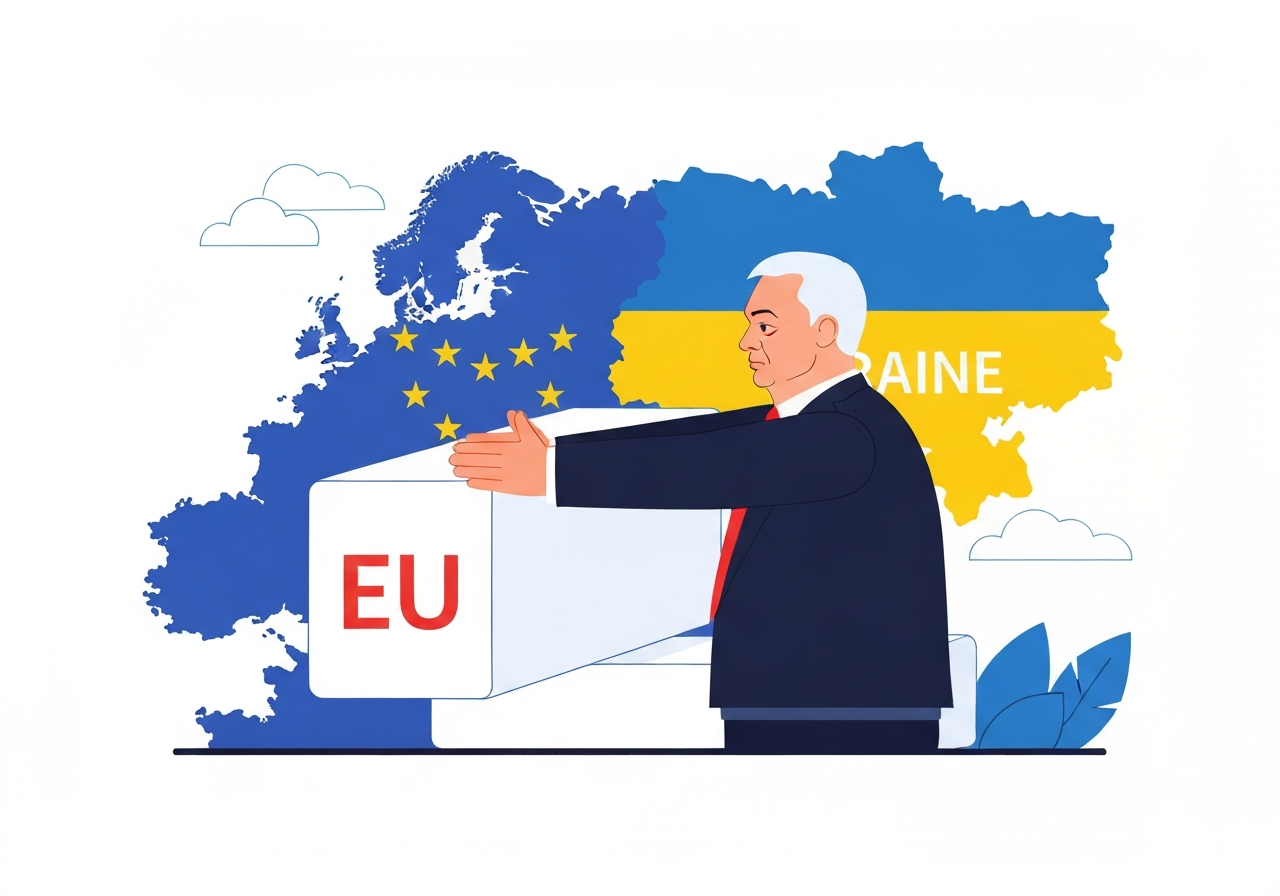
Facing a unexpectedly difficult campaign at home, Hungarian Prime Minister Viktor Orban delayed approval of a critical European Union loan for Ukraine and opposed a 20th package of sanctions, turning what Brussels hoped would be a show of solidarity into a public rupture. The objection came as the EU moved to approve a €90 billion loan (about $106 billion) and new penalties on Russia in the run-up to Hungary’s April 12, 2026, parliamentary election. EU partners interpreted the timing as politically calculated, and Brussels diplomats said the move exposed divisions at a sensitive moment in support for Ukraine. The standoff has left Kyiv’s financing and EU cohesion temporarily unsettled while Hungary’s domestic contest intensifies.
Key Takeaways
- Hungary objected to the EU’s proposed €90 billion loan to Ukraine (approximately $106 billion) and to the bloc’s 20th sanctions package in late February 2026.
- The timing coincides with Hungary’s national election on April 12, 2026, where Prime Minister Viktor Orban’s Fidesz faces unexpectedly stiff competition.
- Orban has governed Hungary for nearly 16 years, and critics say he frequently leverages EU processes to extract concessions and shape domestic narratives.
- The objection transformed planned EU action into a public display of disunity, delaying formal endorsement and complicating Kyiv’s near-term financing picture.
- EU partners, including Poland’s foreign minister, publicly criticized the move as mixing foreign-policy decisions with domestic politics.
- Analysts and diplomats say the incident risks longer-term damage to EU credibility on unified support for Ukraine and could prompt bargaining over concessions to Budapest.
Background
Viktor Orban has dominated Hungarian politics since his first return to power in 2010, serving as prime minister for almost 16 years and reshaping the country’s media and electoral landscape in ways analysts say have benefited his Fidesz party. Over successive terms his government has centralized influence over public broadcasting and reconfigured electoral districts and campaign finance rules, moves critics argue make close races harder for challengers. Still, structural advantages have not insulated his administration from economic complaints: voters cite stagnating growth, strains in public services and rising living costs as mounting grievances heading into 2026.
At the same time, Hungary’s relationship with the EU has been contentious for years, with Brussels frequently criticizing Budapest for rule-of-law backsliding and Hungary pushing back against policy prescriptions from Brussels. Hungary has on several past occasions used its position to slow or shape collective EU measures, particularly on migration and budgetary matters. The current dispute centers on EU support for Ukraine following Russia’s full-scale invasion in 2022, a policy area where the bloc has sought to maintain a united front amid continuing military and fiscal needs.
Main Event
In late February 2026, EU negotiators were preparing two linked initiatives timed around the fourth anniversary of Russia’s invasion: a large, multi-year loan package for Ukraine (€90 billion) and the bloc’s 20th sanctions package aimed at increasing pressure on Moscow. At a European meeting, Hungary raised an objection that halted consensus and prevented immediate adoption. The procedural move did not cancel the proposals but created a pause that placed the EU’s show of unity under an unwelcome spotlight.
Brussels officials described the interruption as a deliberate tactic. Diplomats said Hungary signaled it would not rubber-stamp proposals it viewed as insufficiently respectful of Hungarian concerns, framing the stance as a defense of national interest. Other member states saw the intervention through a different lens: as a domestic-political maneuver intended to mobilize skeptical Hungarian voters by portraying Brussels as imposing on national sovereignty.
The pause has practical consequences. Kyiv had been counting on the loan to underpin reconstruction and military-support budgets; delays in formal approval complicate disbursement schedules and the broader financial planning of European institutions. At the same time, sanctions rely on coordinated national positions; even a temporary block can slow enforcement decisions and weaken the immediacy of pressure on Moscow.
Analysis & Implications
Domestically, the tactic appears calibrated to appeal to voters who view EU actions skeptically. By framing the objection as a defense of Hungarian prerogatives, Orban’s campaign can re-cast Brussels’ measures as intrusive and mobilize nationalist and sovereignty-minded constituencies. For a leader who has used control of media narratives and institutional levers before, leveraging a high-profile EU file offers a potent short-term boost in visibility and a clear campaign storyline.
For the EU, the incident highlights a recurring governance vulnerability: when unanimous or near-unanimous consent is expected, a single member’s resistance can produce outsized leverage. That structural reality creates opportunities for bargaining but also opens the bloc to accusations of incoherence at moments when unified action matters most. The dispute may spur other capitals to seek procedural or political workarounds to reduce future single-state disruptions, but reforms of EU decision-making require broad buy-in that is itself politically fraught.
For Ukraine, the immediate implication is uncertainty. The €90 billion loan represented a major tranche of planned support; delays lengthen Kyiv’s funding gap, complicate budgeting for defense and reconstruction, and could signal to private and institutional donors that EU disbursements are less predictable. In geopolitical terms, any perception of faltering Western cohesion may embolden Moscow or at least strengthen its narrative that the West is divided, with practical implications for deterrence and negotiation leverage.
Comparison & Data
| Item | Value / Notes | Status (Feb 2026) |
|---|---|---|
| EU loan for Ukraine | €90 billion (~$106 billion) | Objected by Hungary, approval delayed |
| EU sanctions package | 20th package targeting Russia | Objection raised; consensus paused |
| Hungarian election | April 12, 2026 | Campaign underway; Fidesz challenged |
| Orban in power | Nearly 16 years as prime minister | Incumbent leadership |
The table situates the main figures at issue: the loan’s scale (€90 billion), the count of sanction packages (20th), and the election calendar (April 12). Those numbers matter because they convey both the material stakes for Ukraine and the political timeline for Hungary. The delay is procedural rather than fatal to the measures, but even short interruptions can ripple through budgets and diplomatic timelines.
Reactions & Quotes
European capitals registered their displeasure quickly, framing the move as a politicization of EU business at a sensitive moment for collective support of Ukraine.
“Using the European agenda to wage domestic political battles… is, in my view, a violation of European solidarity.”
Radosław Sikorski, Polish foreign minister
Poland’s foreign minister characterized the move as mixing domestic electoral tactics with shared foreign-policy obligations, reflecting a broader frustration among Eastern and Western EU partners who have sought steady backing for Kyiv since 2022.
“The timing was no coincidence; analysts see the pause as part of an electoral strategy.”
Analysts (summary)
Opinion and analysis circulated rapidly in Brussels and among policy observers, who noted the alignment of the procedural pause with Hungary’s campaign calendar and warned it could set a precedent for using EU-level files in national contests.
Unconfirmed
- Whether Hungary has secured specific, credible concessions in exchange for lifting the objection remains unclear and unverified.
- It is not confirmed that the delay will lead to a permanent cancellation of the loan or sanctions; the pause could be resolved through negotiation.
- Attribution of motive—whether the primary driver was electoral gain versus substantive policy grievances—cannot be proven definitively from available public statements.
Bottom Line
Hungary’s objection to the €90 billion loan and the 20th sanctions package for Russia turned an EU effort to mark solidarity with Ukraine into a public test of cohesion just weeks before Hungary’s April 12, 2026, election. The procedural pause did not nullify the measures but injected uncertainty into Kyiv’s near-term financing and highlighted how national politics can be projected onto EU decision-making.
Looking ahead, the outcome will depend on negotiations between Budapest and its partners: a quick backchannel solution could restore the intended aid and sanctions timetable, while a drawn-out dispute would damage perceptions of EU unity and complicate support for Ukraine. Observers should watch for any negotiated concessions, changes in internal EU procedures, and how Hungarian campaign rhetoric uses the episode in the run-up to the vote.
Sources
- The New York Times (national/international newspaper) — original reporting on the Hungary objection and campaign context.
- European Council — EU policy on Ukraine (official/EU institution) — background on EU support and coordination efforts for Ukraine.