
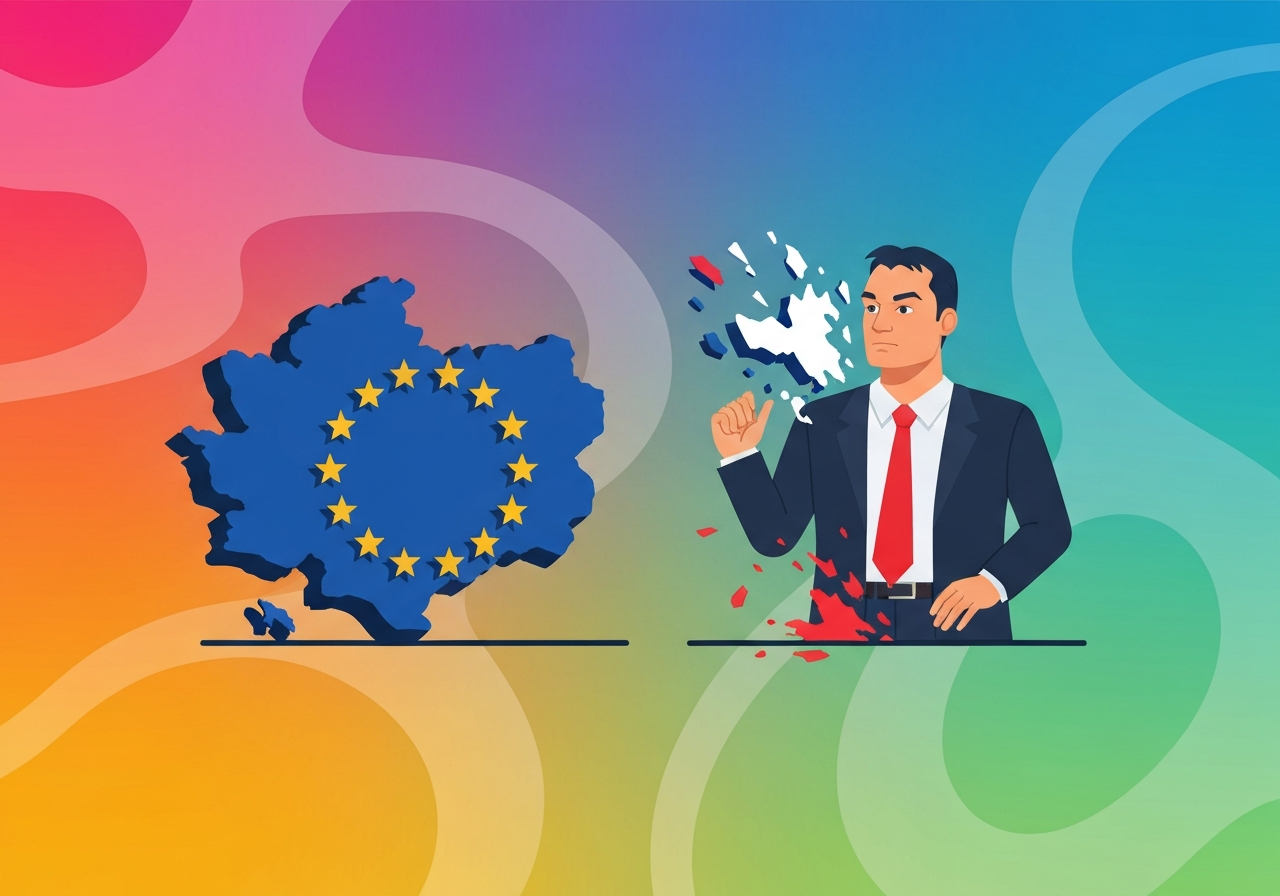
Lead: At the European Council meeting in Brussels on March 19–20, 2026, Hungary’s prime minister Viktor Orbán blocked approval of a €90 billion EU loan to Ukraine, defying a December pledge to back the package. His stance prompted unusually blunt criticism from peers, who warned the move erodes trust between member states. Orbán tied his refusal to the damaged Druzhba oil pipeline, framing the stance for a national election on April 12. EU leaders postponed the decision until their next summit, betting that Hungary’s election outcome will determine whether the blockage lasts.
Key takeaways
- Viktor Orbán withheld approval of a €90 billion EU loan to Ukraine at the March 19–20, 2026 European Council meeting despite a prior December commitment.
- European Council President António Costa publicly called Hungary’s action “completely unacceptable,” saying institutions must not be blackmailed.
- German Chancellor Friedrich Merz described the move as a serious breach of mutual loyalty and a blow to EU decision-making.
- Orbán linked the loan to repairs of the Druzhba pipeline, which Costa said Russia has damaged 23 times since February 2022.
- Ukraine recently secured an IMF loan of $8.1 billion, extending Kyiv’s funding runway into early May, reducing immediate fiscal pressure.
- EU leaders deferred the issue to the next council meeting and flagged measures for April’s Cyprus summit — including fines, court action, funding freezes or Article 7 sanctions.
- Most leaders hope Hungary’s April 12 election will change Budapest’s posture; if Orbán wins, the standoff could persist or resume under new bargaining terms.
Background
The EU has been trying to mobilize large-scale financial support for Ukraine to sustain its defence against Russia’s full-scale invasion. Negotiations over a €90 billion loan package have stretched across multiple summits and behind-the-scenes bargaining, with member states balancing fiscal, political and strategic concerns. Hungary has frequently clashed with Brussels on rule-of-law and foreign policy issues during Orbán’s long tenure, complicating unified EU responses to external crises.
In December, Hungary signalled it would back the Ukraine loan as part of a wider leaders’ agreement. By March, Budapest reversed its stance, linking consent to progress on repairs to the Druzhba pipeline — an energy artery that supplies Russian oil to Hungary and was damaged by a Russian drone in January. That linkage turned a technical infrastructure dispute into a lever for high-stakes EU politics ahead of Hungary’s national vote on April 12.
Main event
At the Brussels summit, EU leaders split into groups to persuade Orbán: most pressed him to uphold the December commitment while a minority aimed to flatter or accommodate him. António Costa led a forceful rebuke, warning publicly that allowing one member state to block collective commitments would set a dangerous precedent. Several leaders, including Germany’s Friedrich Merz, framed Hungary’s about-face as a breach of intergovernmental trust and damaging to the bloc’s reputation.
Orbán defended his position after the meeting, asserting he had “defended the interest of the country” by opposing what he characterised as an oil ‘blockade’ tied to Ukraine’s unwillingness to repair the Druzhba pipeline. Kyiv’s president, Volodymyr Zelenskyy, joined the session by video and adopted an uncompromising tone; that exchange appeared to harden positions rather than thaw them. After roughly 90 minutes of discussion and no change of mind from Budapest, leaders agreed to revisit the issue at the next council meeting.
The EU offered a face-saving compromise before the summit: defer disbursement of funds until oil resumed flowing through Druzhba. That option aimed to let Hungary claim domestic victory while keeping the loan package formally approved. Orbán rejected that route at the meeting. Diplomats said some participants refused to be seen as aiding his electoral messaging, limiting their willingness to negotiate further on the summit floor.
With the immediate vote blocked, the EU has signalled a suite of potential responses at the April 23–24 Cyprus leaders’ gathering, from additional funding restrictions and court action to fines and, at the extreme, Article 7 procedures that can suspend voting rights. How far capitals are willing to go will depend in part on electoral outcomes in Budapest and broader political calculations in Paris and Berlin.
Analysis & implications
Politically, the episode exposes a tension at the heart of EU governance: unanimous decisions hinge on trust and predictability between member governments. When a state rescinds a prior agreement, it undermines the conditionality and reciprocity that make cross-border bargains possible. Leaders warned publicly to deter copycat behaviour, but repeated recourse to bilateral leverage could normalize obstruction as a negotiating tool.
Strategically, the timing is consequential. The EU seeks to shore up Ukraine as war with Russia grinds on; delays in approving €90 billion slow the bloc’s ability to deliver long-term financial relief and reduce leverage in broader geopolitical contests. Kyiv’s IM F backing via $8.1 billion provides breathing space but not a long-term replacement for the EU package, which is intended to sustain Ukraine through extended uncertainty.
Domestically for Hungary, Orbán is playing to an electorate days before voting. By reframing the dispute as one of national energy security — and tying it to Druzhba repairs — he converts an EU-level impasse into an election asset for voters sensitive to prices and sovereignty narratives. If opposition forces win on April 12, Budapest could rapidly revert to EU-aligned positions; if Orbán prevails, the standoff could become a sustained bargaining posture with occasional tactical concessions.
Comparison & data
| Item | Date | Detail |
|---|---|---|
| European Council meeting | 19–20 March 2026 | Hungary blocked approval of a €90 billion loan to Ukraine |
| IMF support to Ukraine | Late March 2026 | $8.1 billion approved, extending liquidity into early May |
| Druzhba pipeline incidents | Since Feb 2022 | 23 reported damages cited by EU Council President |
The table places the blocked EU loan in context: an urgent, large-scale funding need set against shorter-term IMF support and repeated infrastructure attacks that Orbán cites to justify linkage. While the IMF loan eases immediate insolvency risks, it does not substitute for multi-year EU financing. The EU’s potential punitive measures, from fines to Article 7, would be unprecedented in their severity and require separate political calculations and legal steps.
Reactions & quotes
“Nobody can blackmail the European Council, nobody can blackmail the European institutions.”
António Costa, European Council President (official remarks)
“[This] is a serious breach of the loyalty among member states, undermining the European Union’s ability to act.”
Friedrich Merz, German Chancellor (post-summit comment)
“What I have done today is to crush the oil blockade… So I defended the interest of the country.”
Viktor Orbán, Hungarian Prime Minister (press remarks)
These exchanges highlight the public sharpness of the dispute: institutional leaders emphasised collective norms while Orbán framed his stance as national defence of energy and sovereignty. Diplomats described portions of the discussion as “icy,” and several participants said they limited public engagement to avoid boosting Orbán’s election messaging.
Unconfirmed
- Whether Ukraine has in practice refused to repair Druzhba for explicit political reasons remains contested and lacks independent, publicly verifiable evidence.
- Internal calculations about how EU capitals will vote on punitive measures at the Cyprus summit are fluid; specific national positions have not been formally announced.
- Claims that certain leaders deliberately limited persuasion to avoid aiding Orbán’s campaign are based on anonymous diplomacy accounts and remain unverified at cabinet level.
Bottom line
The March 19–20 European Council showed both the EU’s vulnerability to single-member obstruction and the bloc’s reluctance to escalate immediately against a partner state ahead of an election. Leaders aimed to balance deterrence with political prudence, deferring a final decision until after Hungary’s April 12 vote.
If Orbán is replaced, the blockage could dissolve quickly and funds be released under conditions acceptable to member states. If he remains in power, the impasse may persist, forcing the EU to choose between legal, financial and political sanctions or continued ad hoc compromises that risk eroding collective decision-making norms.