
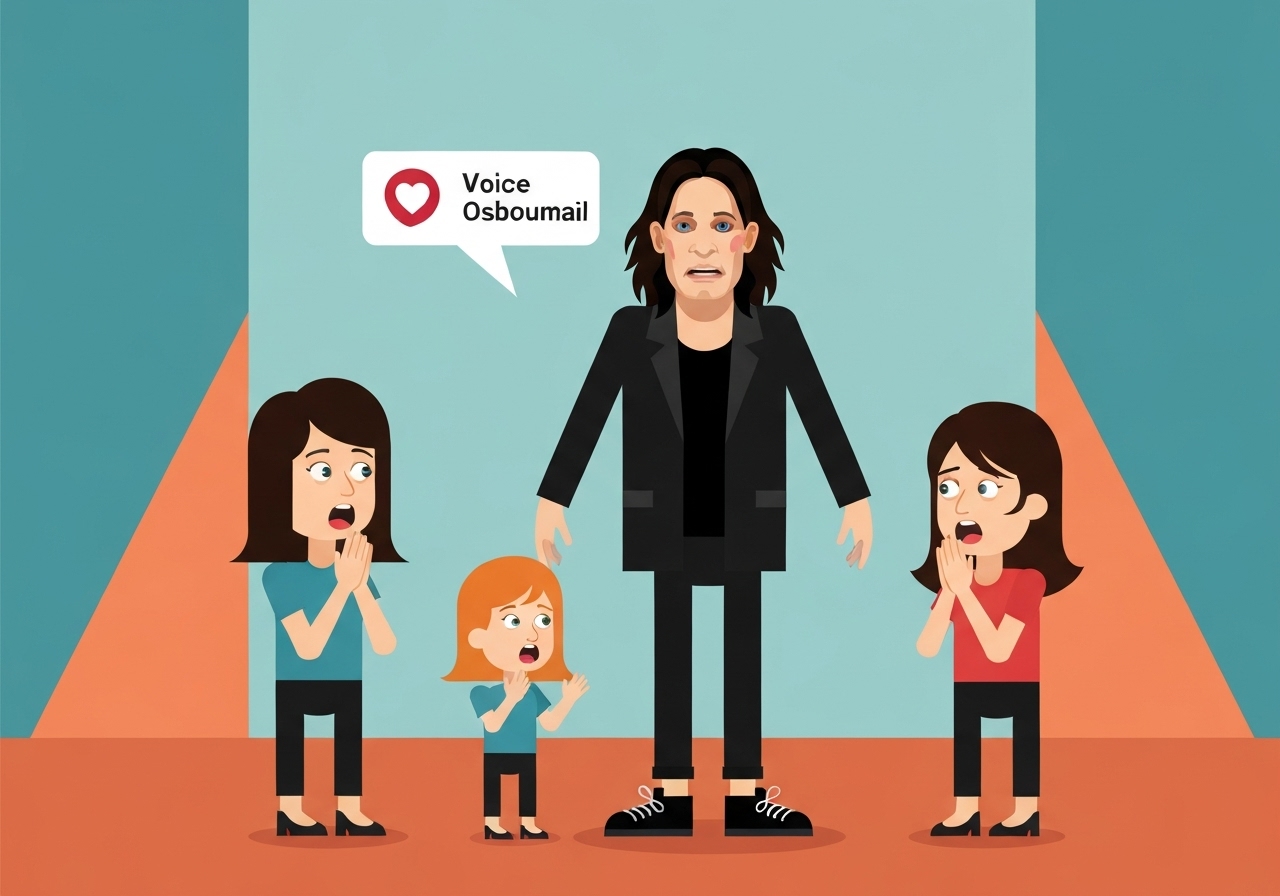
Lead: Ozzy Osbourne’s widow Sharon and two of their children, Jack and Kelly, played a voicemail from President Donald Trump on The Osbournes Podcast on Wednesday, offering condolences after the rocker’s death. Ozzy died on July 22 at 76, and the family said the message acknowledged how close they were and offered support. The recording and the family’s response sparked public attention because of the intersection of celebrity mourning and a high-profile political figure expressing sympathy. The moment was framed by grief: Sharon reacted emotionally while family members reflected on the gesture.
- Key Takeaways:
- President Donald Trump left a brief voicemail for Sharon Osbourne that was aired on The Osbournes Podcast on Wednesday; his message called Ozzy “amazing” and offered the family’s support.
- Ozzy Osbourne died July 22 at age 76; the New York Times reported the cause as a heart attack (acute myocardial infarction) with coronary artery disease and Parkinson’s disease with autonomic dysfunction listed as joint causes.
- Sharon and Ozzy were married in 1982; Sharon told the podcast she spent a month with Trump and Melania during Celebrity Apprentice in 2010 and described them as gracious.
- Jack Osbourne commented on the voicemail, noting that Trump “didn’t have to call and leave a voicemail,” underscoring how public figures’ gestures can prompt varied reactions.
- Following Ozzy’s death, public tributes came from former bandmates and celebrities including Adam Sandler and John Oates, illustrating the wide cultural reach of the rocker.
- Sharon has publicly thanked followers for support; in September she posted that the outpouring of messages offered comfort through difficult nights.
Background
Ozzy Osbourne rose to prominence as the frontman of Black Sabbath and later as a solo artist, becoming a defining figure in heavy metal. His long career made him a global cultural figure, and he and Sharon Osbourne built a public profile that spanned music, television and management. Sharon herself joined Celebrity Apprentice in 2010, finishing third, and that appearance brought her and the family into contact with Donald Trump in a professional capacity. The Osbournes also became a reality-tv staple with their MTV series, which broadened public interest in their private life and created a context where public messages to the family are widely noticed.
Political figures and celebrities routinely offer condolences after high-profile deaths; such gestures can be read both as sincere support and as symbolic public statements. For the Osbournes, a voicemail is a private form of outreach that became public because the family elected to play it on their podcast. The choice to share that recording intersects with media dynamics: personal grief is mediated through platforms that can amplify both sympathy and controversy. Sharon’s longstanding public role means her responses to messages are interpreted against a backdrop of her own celebrity and past interactions with political figures.
Main Event
On Wednesday’s episode of The Osbournes Podcast, Sharon, Jack and Kelly played an audio message left by President Trump. In the clip, Trump says he met Ozzy a few times and calls him “amazing,” adds that he knows how close Sharon and Ozzy were, and offers help and condolences. The recording briefly cuts out during playback, but the gist of the message was clear and prompted immediate response from the family on-air.
After the voicemail played, Jack remarked that whether people love or hate Trump, he did not have to call and leave a message—an observation that captured the mixed public reactions such an action can generate. Sharon, who has publicly defended and explained her own non-voting stance, responded by speaking warmly of both Trump and Melania based on their past interactions. She emphasized that during the Celebrity Apprentice month she spent with them they were polite and respectful toward her and her children.
Sharon became emotional describing the voicemail, saying it meant a great deal for someone to take the time to reach out during the family’s grief. The episode also included mention of the broader outpouring of tributes following Ozzy’s death, from former bandmates to other entertainers. The family encouraged listeners to hear the full conversation on the podcast for context and personal reflections that accompanied the audio.
Analysis & Implications
The decision to air a private voicemail from a sitting or former national leader underscores how celebrity bereavement is often public property, filtered through media platforms that can reshape private moments into public events. Condolence messages from politicians carry layered meanings: they can be read as genuine empathy, an exercise in public relations, or both, depending on the audience and context. For the Osbournes, who have long operated in the public eye, the choice to share the message signals a willingness to let their grief be part of a mediated public conversation.
The airing also highlights tensions in contemporary media where political polarization colors how audiences receive gestures of sympathy. Some listeners may focus on the content of the condolence itself; others will interpret the act through partisan lenses. That dynamic means a single private outreach can generate varied headlines and social reactions, affecting how a late figure’s memory is discussed in public forums.
On a personal level for the family, the voicemail appears to have offered emotional support; Sharon’s reaction suggested it provided comfort. Institutionally, the exchange is unlikely to change political narratives but does illustrate how leaders and public figures navigate ceremonial roles during high-profile deaths. For historians of popular culture, such moments show how personal networks among celebrities and politicians are often made visible in the aftermath of loss.
Comparison & Data
| Item | Detail |
|---|---|
| Death date | July 22 (age 76) |
| Official causes (per NYT) | Acute myocardial infarction; coronary artery disease; Parkinson’s disease with autonomic dysfunction (joint causes) |
| Family public action | Voicemail from President Trump played on The Osbournes Podcast (Wednesday episode) |
| Sharon Osbourne | Married Ozzy in 1982; Celebrity Apprentice contestant in 2010 (third place) |
The table summarizes the verifiable facts reported alongside the podcast moment. It is limited to details that have established public records: the date of death as reported by the family and media, causes as reported by the New York Times, and the family’s decision to broadcast a presidential voicemail. These data points situate the voicemail within a timeline of public statements and media coverage.
Reactions & Quotes
Below are representative excerpts aired or spoken on the podcast with brief context.
Hi, Sharon, it’s Donald Trump, and I just wanted to wish you the best. Ozzy was amazing. He was an amazing guy. I met him a few times, and I want to tell you he was unique in every way and talented.
Donald Trump (voicemail played on The Osbournes Podcast)
That short excerpt was played to illustrate the content of the call: a personal condolence that referenced prior encounters and offered support.
All I know is a man that I know, I worked with for a month… he was always, ‘How are the children? How’s Kelly? I’m so proud of Kelly and Jack.’
Sharon Osbourne (on The Osbournes Podcast)
Sharon used her own experience on Celebrity Apprentice to frame Trump as courteous in their past dealings, explaining why the voicemail mattered to her personally.
Love him or hate him, he didn’t have to call and leave a voicemail.
Jack Osbourne (on The Osbournes Podcast)
Jack’s remark captured a common public reaction: recognition that the gesture was optional and might be read differently by listeners with varying views of the caller.
Unconfirmed
- The precise number and dates of meetings between Ozzy Osbourne and Donald Trump are not independently verified in the podcast excerpt and remain unconfirmed.
- Any specific offers of assistance referenced in the voicemail are general; there is no public record of concrete steps taken by Trump or others on the family’s behalf following the call.
- How representative the podcast audience’s reaction is of the broader public cannot be determined from this single episode and remains uncertain.
Bottom Line
The Osbournes’ decision to broadcast a condolence voicemail from Donald Trump highlights how private expressions of sympathy by public figures are often recast as public events. Facts are clear: Ozzy Osbourne died July 22 at 76 and the family aired a recorded message from Trump on a Wednesday podcast episode; medical causes were reported by the New York Times. Interpretation of that gesture varies by audience—some view it as a meaningful personal outreach, others as a newsworthy intersection of celebrity and politics.
For readers, the key takeaways are the verifiable details (date of death, reported causes, that a voicemail was played) and the broader dynamic: public grieving among high-profile families frequently intersects with political symbolism. Observers should watch how the family’s narrative of Ozzy’s life and legacy continues to develop in media coverage and how public figures’ expressions of condolence are received and contextualized.
Sources
- Entertainment Weekly (entertainment news report — source of podcast coverage and quotes)
- The New York Times (news outlet — reported medical causes cited in coverage of Ozzy Osbourne’s death)
- The Osbournes Podcast (podcast — original broadcast platform where the voicemail was played)