
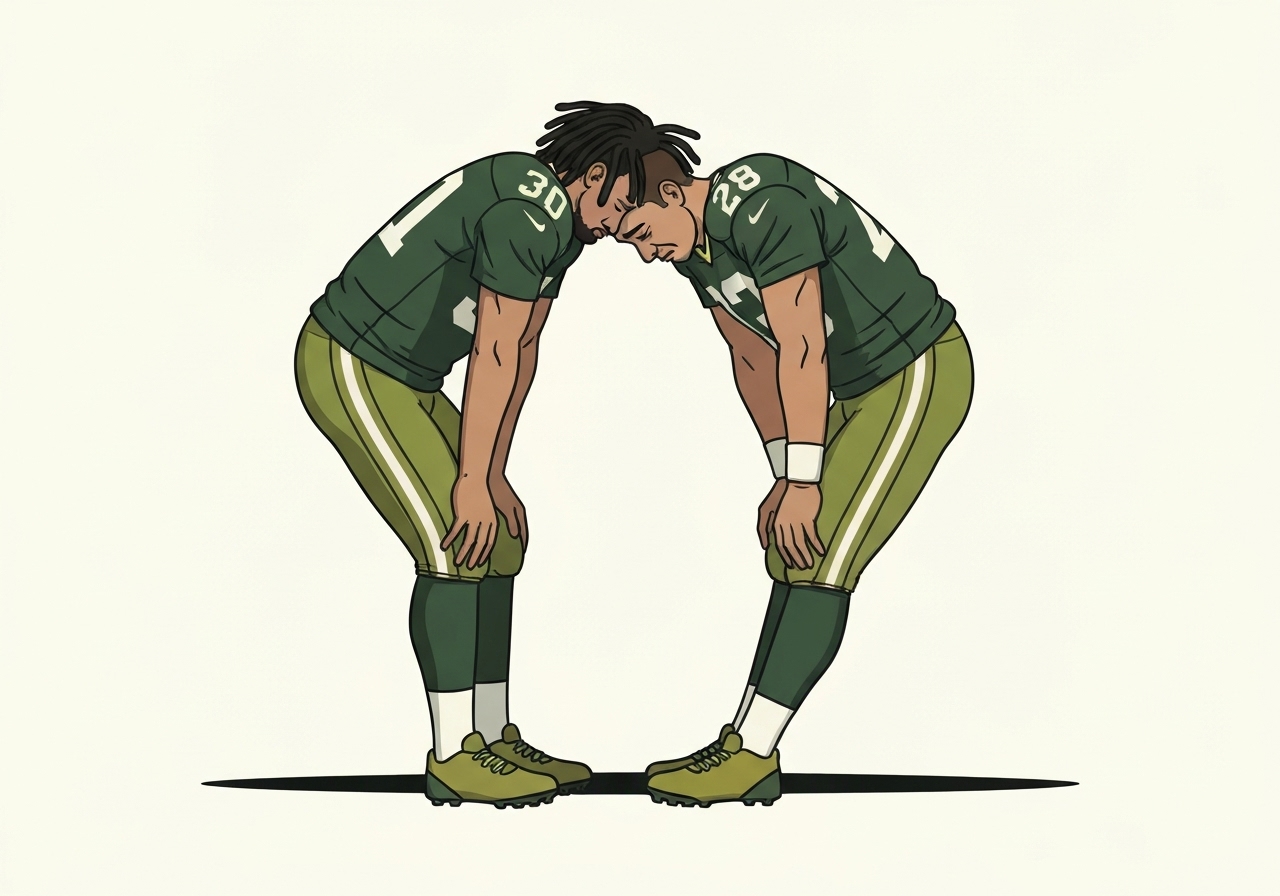
In a Wild Card game at Soldier Field on Saturday night, the Green Bay Packers lost 31-27 to the Chicago Bears after surrendering a 21-3 halftime advantage and a 27-16 lead in the fourth quarter. The defeat eliminated the Packers from the 2025 playoffs and capped a season marked by recurring late-game collapses and key injuries. While Chicago executed a dramatic comeback, Green Bay compounded its problems with turnovers, special-teams miscues and situational mistakes. Head coach Matt LaFleur and quarterback Jordan Love highlighted composure and execution as central issues after the game.
Key Takeaways
- Final score: Bears 31, Packers 27 in the Wild Card round at Soldier Field on Saturday night.
- Big leads lost: Green Bay led 21-3 at halftime and 27-16 in the fourth quarter before Chicago rallied.
- Turnovers and miscues: The Packers had two fumbles and multiple penalties, including two intentional grounding calls on Jordan Love.
- Special teams struggles: Kicker Brandon McManus missed three kicks; a delay of game extended one attempt by 5 yards.
- Late-game chaos: A false start with 13 seconds remaining and a dropped low shotgun snap from replacement center Lecitus Smith prevented a final sideline completion attempt.
- Injuries factored: LB Edgerrin Cooper and center Sean Rhyan left with injuries during the comeback sequence; Chicago lost LB T.J. Edwards as well.
- Season pattern: The collapse continued a trend that included three losses and a tie in games at Cleveland, Dallas, Denver and an earlier Chicago trip.
Background
The 2025 Packers entered the postseason with strong stretches of play but an inconsistent finish. Across the final months they repeatedly surrendered control of games they had appeared to command, turning promising situations into narrow escapes or defeats. That pattern—late-game breakdowns on offense, defense and special teams—left Green Bay as a low playoff seed for the third straight year. Injuries to key pieces exacerbated the trend, straining depth at line and skill positions and complicating in-game adjustments.
Organizationally, expectations had been higher: the roster showed flashes of top-tier potential but struggled to sustain it through the fourth quarter. Coaching and preparation became focal points of scrutiny after multiple miscues in critical moments this season. For fans and front-office decision-makers, the loss underscored the same seam of problems that had turned winnable contests into a mixed finish. The result—one-and-done in the playoffs for the second consecutive year—frames an offseason that will likely prioritize situational play and roster depth.
Main Event
Green Bay jumped to a 21-3 lead by halftime behind effective early offensive execution and a defense that limited Chicago through the first half. The Bears, however, reversed momentum after halftime and methodically chipped away at the margin, highlighted by a pivotal off-balance touchdown pass from QB Caleb Williams on a fourth-and-8 sequence that erased a late fourth-quarter deficit. That completion proved to be the turning point; the final two Chicago touchdowns followed with relative ease.
The Packers’ game deterioration included two fumbles—one on a broken-play checkdown to an offensive lineman and another on a kickoff return by RB Josh Jacobs—moments that the team admitted were avoidable and fortunate not to be costlier. Jordan Love also incurred two intentional grounding penalties, and a defensive substitution error burned a timeout that could have been decisive late. Brandon McManus missed three kicks, and a delay of game—called inexcusable by LaFleur—moved one of those attempts back five yards.
Late injuries further complicated Green Bay’s final possession. Center Sean Rhyan exited with a knee injury with 32 seconds remaining, costing the team 10 seconds because they were out of timeouts. On the play that became the final snap, Love mishandled a low shotgun exchange from replacement center Lecitus Smith, turning a likely quick sideline throw into a scramble against a crowded end zone and a throw with no chance to tie or win.
Analysis & Implications
The loss sharpened questions about discipline and situational preparation. Repeated procedural errors—time-management lapses, avoidable penalties and special-teams miscues—point to systemic attention points in practice planning and in-game communication. When routine fundamentals unravel in high-leverage moments, the margin for error shrinks; Green Bay’s season provided multiple examples where one self-inflicted mistake altered the outcome.
Coaching accountability will be a central offseason subject. LaFleur acknowledged the need to find answers and called certain mistakes ‘‘inexcusable,’’ placing responsibility on staff and players to bridge execution gaps. The front office must weigh personnel depth across the offensive line, special teams and linebacker corps, given injuries that tested the roster. While talent exists, closing the gap between potential and consistent fourth-quarter execution will require targeted changes in practice emphasis and perhaps schematic adjustments.
Special teams stand out as an actionable weakness: a three-missed-kick night by McManus, a costly delay, and a fumbled kickoff return are concrete errors that can be corrected with personnel review and technique work. The psychological element—composure under playoff pressure—also requires focus; situations that once would be manageable became compounding problems when players and coaches failed to execute basic processes. Across the league, teams that sustain postseason runs typically combine talent with low-error situational football; Green Bay must progress on both fronts to advance deeper in future playoffs.
Comparison & Data
| Game Item | Detail |
|---|---|
| Halftime lead | Packers led 21-3 |
| 4th-quarter lead | Packers led 27-16 |
| Final score | Bears 31, Packers 27 |
| Fumbles | 2 (checkdown, kickoff return) |
| Missed kicks | Brandon McManus 3 |
| Intentional grounding | 2 on Jordan Love |
| Late false start | 13 seconds remaining, ball at 23 yards |
This table summarizes critical, verifiable game events that shifted momentum and field position. Many of these items are routine elements of football fundamentals; their accumulation in one game magnified the consequence. Comparing this collapse to earlier late-game losses this season highlights a repeating pattern rather than an isolated failure. Addressing each item in practice and personnel reviews would reduce the probability of recurrence.
Reactions & Quotes
After the game, LaFleur repeatedly cited a lack of composure and the cost of simple mistakes, framing the issue as both a performance and a preparation problem.
“We’ve just got to do a better job of keeping our composure as a football team, and going out and doing the fundamental things that we practice all the time.”
Matt LaFleur, Head Coach
LaFleur called the delay of game ‘‘inexcusable’’ and said losing a timeout because of a substitution error ‘‘cannot happen,’’ emphasizing accountability at multiple levels. Quarterback Jordan Love acknowledged that the team had put itself in a difficult position by giving up the second-half momentum but pushed back on characterizing the issue solely as composure.
“It’s the situation we put ourselves in, jumping out to a lead in the first half and then second half, different story.”
Jordan Love, Quarterback
Those remarks framed internal questions about situational practice, communication, and the ability to respond when momentum shifts. Public reactions from fans and analysts immediately focused on the accumulation of avoidable errors as a defining theme of the season.
Unconfirmed
- No official decisions have been announced regarding staff changes; any coaching or coordinator moves are still unconfirmed.
- The full medical timelines for Edgerrin Cooper and Sean Rhyan have not been released and remain uncertain at this time.
- Internal evaluations of practice protocols and situational drills are ongoing; specific corrective measures have not been publicly detailed.
Bottom Line
Saturday’s 31-27 loss at Soldier Field was emblematic of a 2025 season in which Green Bay repeatedly undermined its own promise through avoidable mistakes. The combination of turnovers, penalties, special-teams failures and late-game miscues turned a game that looked in control into an early postseason exit. While injuries played a role, the decisive factor in this contest and several others was self-inflicted error rather than purely opponent excellence.
For the Packers to convert potential into sustained postseason success, the organization will need to address fundamentals, situational preparation and depth—particularly on special teams and along the offensive line. The postgame admissions from LaFleur and players signal awareness; translating that into measurable change will determine whether this season is viewed as a corrective turning point or a continuing pattern.