
Lead
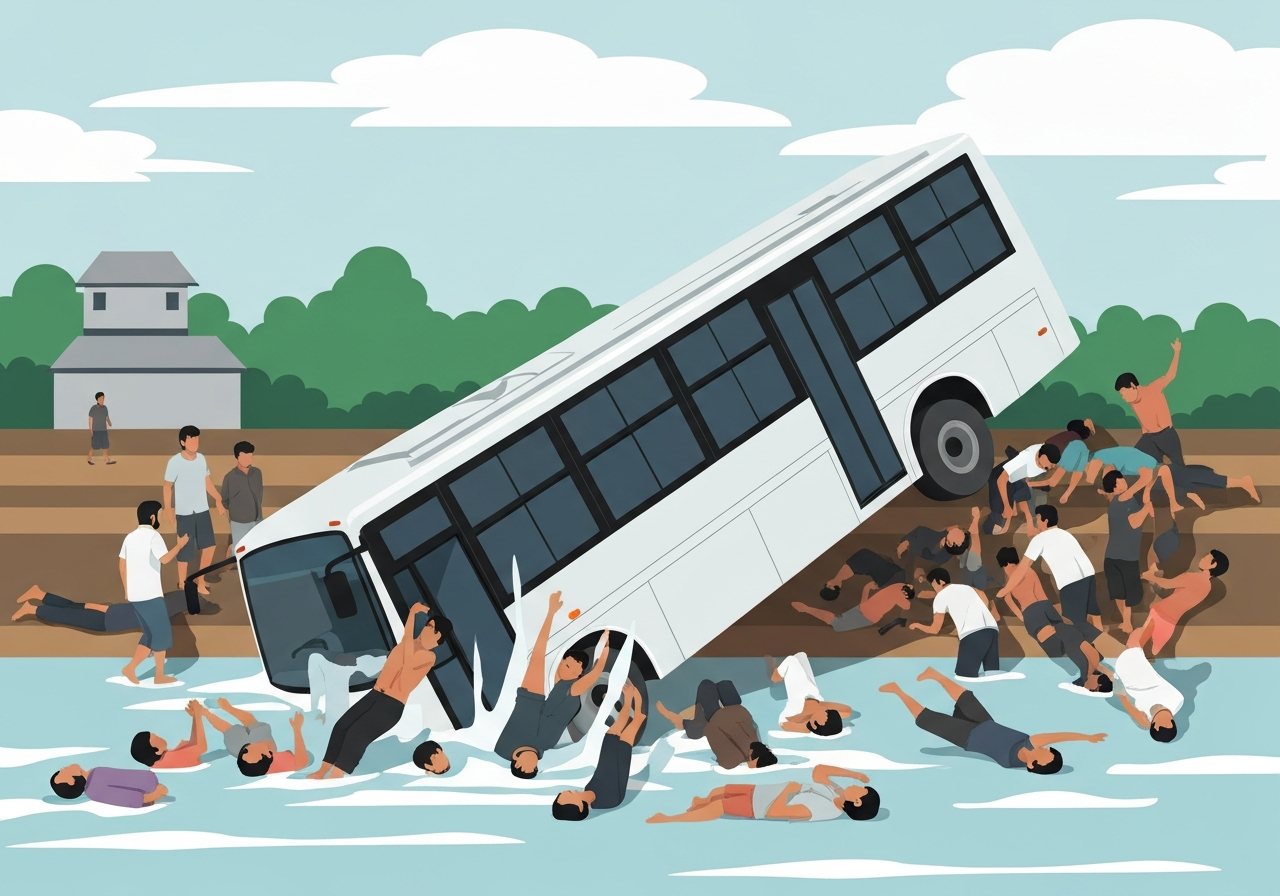
At least 24 people died after a passenger bus carrying 40 people toppled into the Padma River on Wednesday while trying to board a ferry at the Daulatdia terminal in Rajbari district, about 100 km from Dhaka. Emergency teams recovered 22 bodies from inside the submerged vehicle; two more women died after being pulled from the water. The overturned bus sank nearly 9 metres (30 feet) and rescue crews, including divers and military personnel, continued searching for possible survivors and missing passengers. Local witnesses and officials described chaotic rescue efforts as bystanders and authorities tried to pull people from the river.
Key Takeaways
- Fatalities: At least 24 people have died after the bus plunged into the Padma River; 22 bodies were recovered from inside the vehicle, and two additional fatalities occurred after rescue.
- Passengers: The bus was carrying 40 people when it toppled while waiting to board a ferry at Daulatdia in Rajbari district, roughly 100 km (62 miles) from Dhaka.
- Victim profile: Recovered bodies included five children, 11 women and six men, according to fire service officials.
- Rescue response: Four fire service units and 10 divers led the search, backed by the army, police, coastguard and local authorities.
- Depth and damage: Emergency crews reported the bus sank about 9 metres (30 feet), complicating salvage and recovery operations.
- Safety context: Bangladesh records hundreds of deaths annually from road and ferry accidents, with official and estimated figures diverging markedly.
- Recent trends: The Bangladesh Road Safety Foundation reported more than 200 deaths over the recent Eid holidays; a separate train-bus crash killed 12 during the same period.
Background
Daulatdia is a busy river crossing on the Padma River where long lines of road vehicles often wait to board ferries. Terminals at major crossings see significant traffic pressure, especially during holiday periods, and the logistics of boarding can create crowded, high-risk conditions when vehicles queue near river edges. Local transport infrastructure, combined with aging ferries and heavy seasonal traffic, has long been identified by safety advocates as a recurring hazard.
Bangladesh has a chronic road and water safety problem driven by multiple factors: poor road maintenance, poorly serviced vehicles, lax enforcement and risky driving behaviors. Nonfatal and fatal accidents spike during mass-movement periods such as Eid when travel volumes surge and enforcement resources are stretched. Independent organizations and international bodies have repeatedly urged systemic reforms to vehicle inspection, driver training and terminal safety standards.
Main Event
The incident occurred on Wednesday as the bus approached the Daulatdia ferry terminal in Rajbari district. Eyewitnesses described the bus sliding or toppling over the ferry ramp edge and plunging into the river while a queue of vehicles waited to board. Video footage circulating online and verified by news teams shows the vehicle tipping over an embankment and sinking amid cries for help.
Rescue teams from the fire service reported recovering 22 bodies from inside the submerged bus; those recovered included five children. Two additional women who had been pulled from the water later died in hospital, bringing the confirmed death toll to at least 24. Emergency workers said the depth of the sunken bus—around 9 metres—made retrieval and underwater searching hazardous and time-consuming.
Four fire service units and 10 divers led the immediate search-and-recovery operation, supported by the army, police and coastguard. Local residents joined initial rescue attempts; some threw long scarves and ropes to try to pull people out when the vehicle first began to sink. Officials warned that more passengers may still be missing and that investigations into the precise cause were ongoing.
Analysis & Implications
The accident highlights persistent safety gaps across Bangladesh’s road and river transport interfaces. Terminals where vehicles queue to board ferries are choke points: a single driver error, mechanical failure or structural lapse in a ramp or holding area can rapidly convert routine waiting into a fatal event. Improving the safety of ferry terminals—through physical barriers, regulated queuing and stricter vehicle checks—would reduce the risk of vehicles going over edges or rolling into the water.
At a systems level, repeated deadly incidents point to weaknesses in vehicle maintenance regimes, driver oversight and emergency preparedness. Many commercial buses in Bangladesh operate with minimal inspection, and drivers often work long hours under pressure to meet schedules. Strengthening mandatory maintenance inspections, licensing standards and fatigue-management rules would address root causes beyond the immediate terminal environment.
The human toll is concentrated and immediate, but the broader economic and social consequences are also significant. Losses of breadwinners, medical costs for survivors, and disruptions to local transport can have long-lasting effects on families and communities. Recurrent high-profile crashes also pressure authorities to act; however, past cycles of inquiry without sustained policy or enforcement changes have limited long-term impact.
Comparison & Data
| Measure | Reported figure | Estimated/Context |
|---|---|---|
| Deaths from this crash | 24 confirmed | Two more died after rescue; some missing |
| Passengers on bus | 40 | Typical small-to-medium intercity bus |
| Reported annual traffic deaths (Bangladesh) | ~5,000 (reported) | WHO estimate >31,500 (2023) |
The disparity between reported annual traffic fatalities (~5,000) and the WHO’s 2023 estimate of more than 31,500 indicates large undercounting in official tallies, driven by gaps in reporting systems and definitions. That gulf suggests that single incidents such as the Padma River crash are part of a much larger, under-recognized public health burden. Better data collection would allow targeted interventions and clearer measurement of progress.
Reactions & Quotes
Witnesses and officials gave immediate, stark accounts from the scene as rescue operations unfolded.
“Some passengers got out of the bus, but their family members died, trapped inside.”
Noor Jahan Begum, witness (told AFP)
The witness account underscores the suddenness of the event and the community’s role in initial rescue attempts. Video verified by journalists shows bystanders throwing ropes and scarves in an effort to reach people as the bus sank.
“Rescuers recovered 22 bodies from inside the submerged bus; two others later died in hospital.”
Talha Bin Qasim, fire service official
Officials framed the operation as a multi-agency effort involving specialized divers and the military; they also cautioned that searches would continue while investigations into cause and accountability proceed.
Unconfirmed
- The exact mechanical or human cause that led the bus to topple—whether driver error, brake failure, ramp collapse or another factor—has not yet been publicly confirmed.
- The final tally of missing passengers remains uncertain while underwater searches and manifest checks continue.
- Whether vehicle overloading or improper parking procedures at the terminal contributed to instability has not been independently verified.
Bottom Line
The Daulatdia crash is a tragic example of how terminal design and weak transport-system safeguards can turn routine waiting into deadly incidents. With at least 24 lives lost and a significant number of injuries, the event will likely intensify calls for immediate measures at ferry crossings: physical protections, regulated queuing and mandatory vehicle checks before boarding.
Longer term, reducing Bangladesh’s heavy toll from road and water transport will require sustained policy and enforcement changes—improved vehicle inspection regimes, tighter driver oversight and investment in safer terminal infrastructure. Accurate, comprehensive data and follow-through on investigations will be critical to preventing similar losses in the future.