
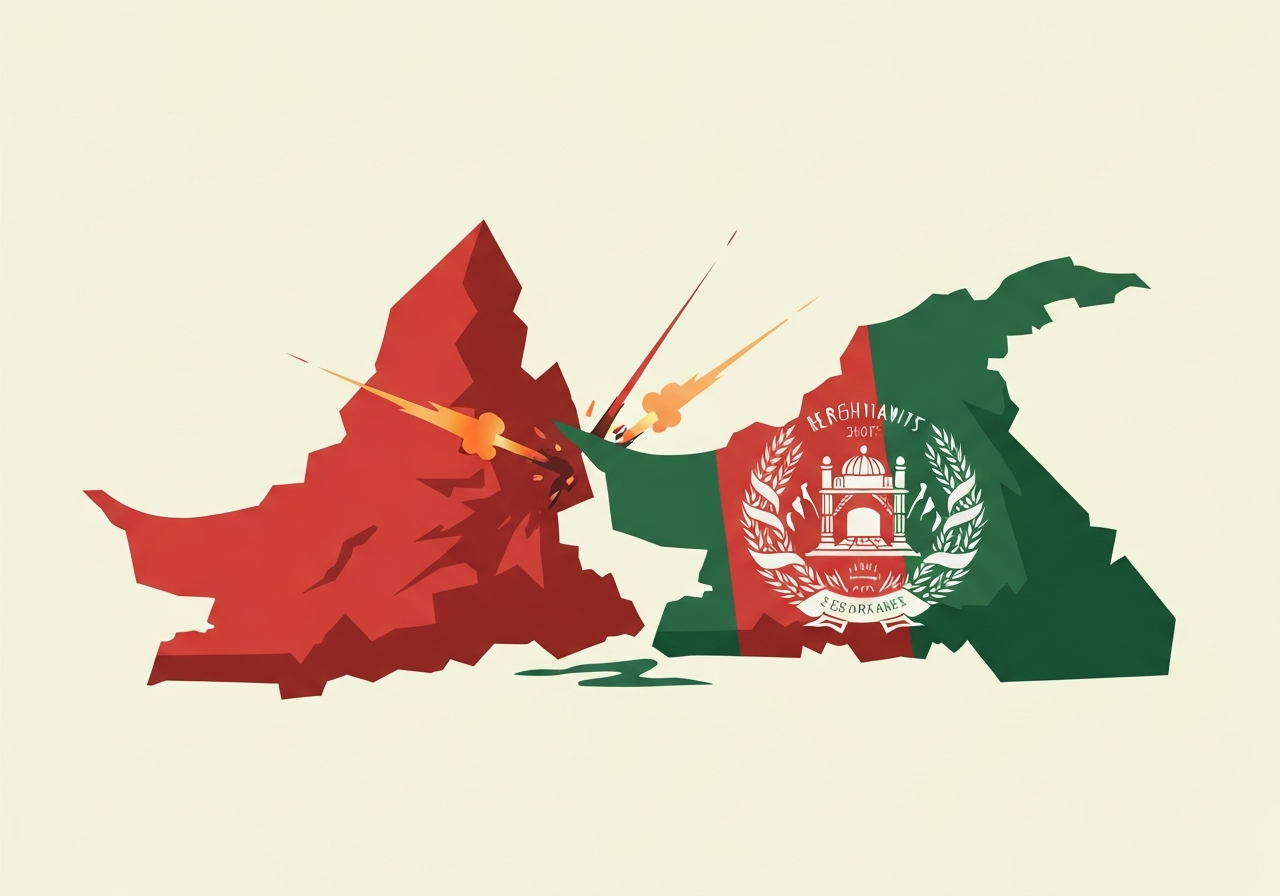
Overnight cross-border attacks between Pakistan and Afghanistan on Feb. 27, 2026 escalated sharply after weeks of tension, with both capitals reporting air and ground strikes. Pakistan said it launched retaliatory strikes on targets in Kabul and two other provinces after Afghanistan mounted an earlier cross-border operation that Islamabad said followed Pakistani air raids on Sunday. Pakistan’s defense minister declared that “our patience has now run out” and described the situation as an open war; Afghan officials said their actions were retaliatory and accused Pakistan of aggression. International actors called for restraint as refugee movements and unverified casualty tallies raised alarm across the region.
Key Takeaways
- Pakistan and Afghanistan exchanged air and ground strikes late Thursday into early Friday, centered on border areas including Torkham and strikes reported in Kabul and at least two other Afghan provinces.
- Pakistan’s military spokesperson said Pakistani operations killed at least 274 Afghan forces and affiliated militants and wounded more than 400; Pakistan reported 12 soldiers killed, 27 wounded and one soldier missing in action.
- Afghan government spokesman Zabiullah Mujahid rejected those figures as false, saying 13 Afghan soldiers were killed, 22 wounded, and alleging 55 Pakistani soldiers were killed with 23 bodies taken to Afghanistan.
- Pakistan’s Defense Minister Khawaja Mohammad Asif publicly declared the two countries to be in a state of “open war,” signaling a significant rhetorical escalation on Feb. 27, 2026.
- A Qatari-mediated ceasefire and earlier rounds of talks in Istanbul had temporarily reduced fighting, but negotiations in November failed to produce a durable settlement.
- Humanitarian pressure is rising: Pakistani authorities reported evacuations near Torkham and the U.N. refugee agency says roughly 2.9 million people returned to Afghanistan in 2025, with nearly 80,000 returning so far this year.
Background
Tensions along the Pakistan–Afghanistan border have been high for months, driven by recurring clashes, mutual accusations of sheltering militants, and long-standing geopolitical rivalries. Islamabad has repeatedly accused Kabul’s de facto authorities of harboring the Tehrik-i-Taliban Pakistan (TTP) and Baloch separatist groups; Kabul and the Taliban deny those charges and describe Pakistan’s unrest as an internal problem with longstanding roots. The withdrawal of NATO forces in 2021 and the Taliban’s return to power reshaped regional calculations, prompting Pakistan to expect a focus on domestic stabilization and cross-border calm that has not fully materialized.
Violence flared in October when clashes along the frontier killed dozens of soldiers, civilians and suspected militants, prompting third-party mediation by Qatar and intermittent ceasefires. Several rounds of talks in Istanbul later in the year failed to produce a lasting agreement, and both sides have traded intermittent fire since. At the same time, Pakistan has voiced concern about improving ties between India and Afghanistan, which Islamabad views through a security lens given past wars and rivalries since 1947.
Main Event
According to Afghan officials, Afghan forces launched a cross-border attack late Thursday in response to Pakistani airstrikes on Afghan border districts the previous Sunday. Afghan spokesman Zabiullah Mujahid said the operation targeted Pakistani military positions to send a message that Kabul could strike back. Pakistan responded early Friday with airstrikes in Kabul and two other provinces, saying its aircraft and ground forces hit military installations linked to Afghan forces and militants.
Clashes were reported around the Torkham border crossing and in eastern Nangarhar province where Afghan authorities said Pakistani mortar fire struck civilian areas, including an evacuated refugee camp. Pakistani officials asserted their strikes were precision hits on militant and military infrastructure; Afghan authorities said civilian sites and a madrassa in Paktika province were struck, with casualty information still emerging.
Both sides issued sharply divergent casualty tallies. Pakistan’s military announced hundreds of Afghan casualties and dozens of Pakistani casualties, while Kabul’s spokesman described far lower Afghan losses and accused Pakistan of higher Pakistani soldier deaths and captures. Independent verification of either side’s figures was not available by Friday evening; reporters and international monitors had limited access to strike sites.
Analysis & Implications
The public declaration by Pakistan’s defense minister that relations are now an “open war” marks a rhetorical threshold that could widen the conflict beyond episodic border exchanges. Political leaders often use heightened language to consolidate domestic support; here, Islamabad’s statement also signals a readiness to sustain military responses and to publicly blame Kabul for cross-border attacks. For Kabul, reprisal strikes communicate deterrence and domestic credibility, but risk further international isolation if civilian harm mounts.
Regionally, the escalation complicates efforts by mediators (Turkey, Qatar, Saudi Arabia and others) to contain violence. Russia offered to mediate, while Iran urged dialogue during Ramadan; the U.N. called for protection of civilians and renewed diplomacy. If fighting continues, it could disrupt trade routes, deepen refugee flows back into Afghanistan, and strain Pakistan’s internal security resources already stretched by militant attacks and migration enforcement since 2023.
Strategic rivalries underline much of the rhetoric. Islamabad’s references to India’s growing ties with Afghanistan—framed as turning Afghanistan “into a colony of India” by Pakistan’s defense minister—revive decades-old suspicions and raise the prospect of proxy dynamics. Whether those allegations reflect concrete operational support or traditional geopolitical fear will shape international responses and the willingness of outside powers to press for de-escalation.
Comparison & Data
| Pakistan’s public claims | Afghan government’s claims | |
|---|---|---|
| Afghan forces / affiliated militants killed | At least 274 | 13 |
| Afghan wounded | More than 400 | 22 (soldiers) |
| Pakistani soldiers killed | 12 | 55 (claimed) |
| Pakistani wounded | 27 | Unknown |
| Civilians reported wounded | Not specified | 13 |
These figures are the competing tallies released by Pakistan’s military and Afghan government spokesmen; international observers had not independently corroborated them as of Feb. 27, 2026. Historically, casualty counts in cross-border incidents are frequently disputed, inflated or revised as access remains limited and each side controls narratives in national media and official channels. The discrepancy will be a central obstacle for any third-party mediation effort seeking to establish facts on the ground.
Reactions & Quotes
Afghan officials framed their operation as retaliation for Pakistani strikes and as a warning they could strike deep into Pakistani-held areas.
“We have targeted important military targets in Pakistan, sending a message that our hands can reach their throats and that we will respond to every evil act of Pakistan.”
Zabiullah Mujahid, Afghan government spokesman
Pakistan’s defense minister used direct language on social media to signal a departure from restrained responses and to justify possible follow-on actions.
“Our patience has now run out. Now it is open war between us.”
Khawaja Mohammad Asif, Pakistan defense minister (post on X)
The United Nations urged restraint and stressed the need to protect civilians while encouraging diplomacy.
“We urge both sides to protect civilians and to continue to seek to resolve differences through diplomacy.”
U.N. spokesperson (statement relaying Secretary-General’s call)
Unconfirmed
- Independent verification of casualty counts on either side is lacking; the large discrepancy between the two official tallies remains unresolved.
- Claims that 23 Pakistani soldier bodies were transported into Afghanistan and that many Pakistani soldiers were captured have not been independently substantiated.
- Pakistani assertions that small drone attacks linked to the TTP over Abbottabad, Swabi and Nowshera were directed from Afghan territory remain unverified.
- Allegations of direct Indian operational involvement in Afghan support for anti-Pakistan militants are asserted by Islamabad but lack publicly available, independently corroborated evidence.
Bottom Line
The Feb. 27, 2026 exchange marks a dangerous escalation after months of friction; Pakistan’s official description of an “open war” raises the risk of sustained kinetic exchanges and larger regional spillover. Immediate humanitarian concerns include displaced civilians near Torkham, reports of damaged civilian infrastructure and the potential for widened migration flows into and out of Afghanistan.
International mediation and verified fact-finding will be essential to prevent further escalation. Observers should watch for independent access to strike sites, any formal requests for third-party mediation, and whether regional powers—Turkey, Qatar, Saudi Arabia, Russia and Iran—translate diplomatic statements into concrete de-escalation steps or monitoring mechanisms.
Sources
- Associated Press (news report)
- United Nations (international organization statement)
- UNHCR (UN refugee agency — displacement data)
- Inter-Services Public Relations, Pakistan (official military statements)
- RIA Novosti (Russian news agency reporting on diplomatic offers)