
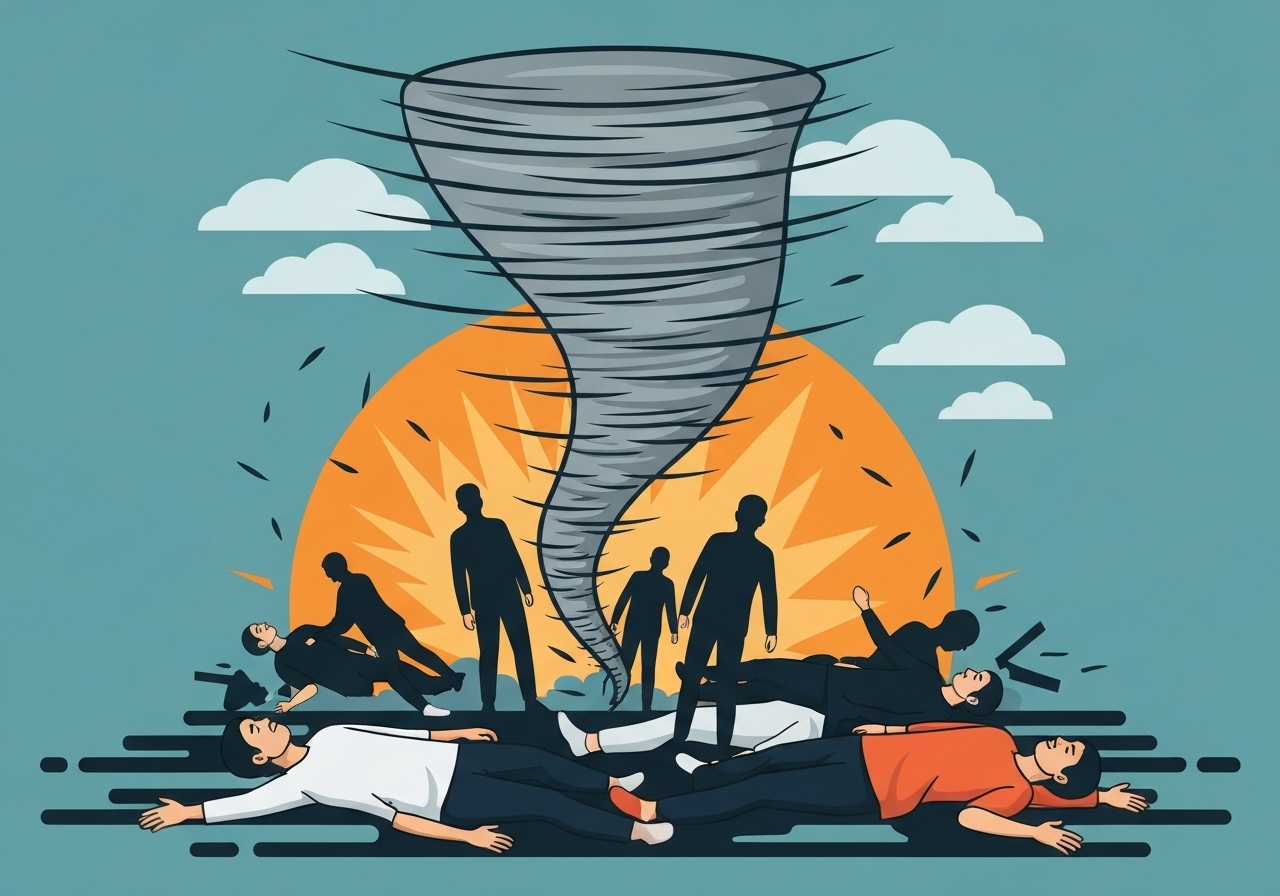
Lead: A violent tornado struck Brazil’s southern state of Paraná on Friday night, killing six people and injuring hundreds, state authorities said. The storm, with winds measured at more than 250 kph (155 mph), flattened dozens of homes and prompted an official emergency declaration. Officials reported at least one person missing hours after the touchdown and announced a three-day period of mourning. State and federal teams mobilized to deliver medical care, shelter supplies and basic necessities to affected communities.
Key Takeaways
- At least six people were killed, including five adults and a 14-year-old girl, according to state officials in Paraná.
- More than 750 people sought medical attention; at least 10 underwent surgery and nine remained in serious condition.
- Winds exceeded 250 kph (155 mph), causing overturned vehicles, downed trees and widespread roof loss across multiple towns.
- The state government declared an emergency and Governor Carlos Massa Ratinho Jr. announced three days of mourning.
- Five victims were from Rio Bonito do Iguaçu and one from Guarapuava; one person was reported missing in the immediate aftermath.
- Federal officials, including President Luiz Inácio Lula da Silva, expressed solidarity and dispatched aid including food, hygiene kits, tarps and mattresses.
Background
Severe convective storms and tornadoes are less frequent in southern Brazil than in parts of the United States, but the region has experienced notable events before. Paraná lies within a corridor where strong cold fronts can interact with tropical humidity, producing intense storms capable of producing tornadoes. Local authorities and emergency services have protocols for rapid response, but the scale of damage can overwhelm municipal resources when multiple communities are hit.
Brazilian civil-defense agencies coordinate with state and federal health services after major weather events, supplying field hospitals, search-and-rescue teams and logistical support. Infrastructure in smaller municipalities such as Rio Bonito do Iguaçu can be particularly vulnerable, with many homes not built to withstand extreme tornadic winds. The governor’s declaration of emergency unlocks state funds and expedites requests for federal assistance to support immediate relief and initial recovery efforts.
Main Event
The tornado touched down Friday night and swept through populated areas in western Paraná, according to the state statement released Saturday. Emergency crews reported overturned vehicles, uprooted trees and the removal of roofs from multiple structures; dozens of homes were destroyed. Local hospitals received hundreds of people, including children and pregnant women, many with lacerations, fractures and blunt trauma consistent with debris impacts.
Authorities initially listed one person as missing in the hours after the storm; rescue teams conducted door-to-door checks and prioritized areas where structures were leveled. Five of the fatalities occurred in the municipality of Rio Bonito do Iguaçu and one in Guarapuava, the government said. Medical teams performed at least 10 surgeries and kept nine patients in serious condition for continued intensive care.
Governor Carlos Massa Ratinho Jr. declared three days of mourning and ordered the state’s emergency apparatus into full operation. Officials arranged for distribution points offering food, hygiene products, tarps and mattresses, and called on municipal administrations to coordinate shelter for displaced residents. The immediate focus was stabilizing the injured, accounting for missing persons and securing damaged buildings to prevent further harm.
Analysis & Implications
Weather events of this intensity expose gaps in regional preparedness and infrastructure resilience. While Paraná maintains emergency plans for storms, wind speeds above 250 kph produce damage patterns that can outstrip local response capacity, especially in smaller towns. The death toll and high number of injuries will likely prompt a review of building practices, early-warning systems and evacuation procedures in the state’s most vulnerable municipalities.
Economically, recovery will impose short-term costs on municipal budgets and disrupt local commerce and agriculture in affected zones. Reconstruction needs—roofing, utilities, debris removal and temporary housing—will place demands on state and federal resources, and may require external support from NGOs and intergovernmental bodies. Insurance penetration in rural Brazil is limited, which can slow household recovery and increase dependence on public assistance.
Politically, the state and federal response will be scrutinized as residents assess the speed and adequacy of aid. Rapid delivery of supplies, transparent accounting of relief funds and clear timelines for restoring services are likely to shape public perceptions in the weeks ahead. Internationally, the event reinforces that severe convective storms are not limited to traditional tornado-prone regions and underscores the need for broader investments in forecasting and community resilience.
Comparison & Data
| Measured value | Reported figure | Context |
|---|---|---|
| Top wind speed | >250 kph (155 mph) | Comparable to a high-end tornado; exact EF rating not yet confirmed |
| Fatalities | 6 | Five adults and one 14‑year‑old girl |
| People treated | 750+ | Includes children and pregnant women; 10 surgeries reported |
The table summarizes official figures released by state authorities; an exact tornado intensity rating requires an on-site damage assessment. Recorded wind speed gives an immediate sense of scale, but investigators will compare damage patterns to international scales before assigning a formal classification.
Reactions & Quotes
“We are mourning the loss of lives and mobilizing every available resource to assist those affected,”
Governor Carlos Massa Ratinho Jr. (state official)
The governor announced three days of mourning and directed state emergency teams to prioritize rescue and relief operations, emphasizing rapid distribution of supplies to displaced families.
“My solidarity goes out to the families hit by this tragedy; federal aid is being sent to support the response,”
President Luiz Inácio Lula da Silva (federal executive)
The president expressed solidarity on social media and his cabinet confirmed the dispatch of emergency assistance, including medical support and basic necessities for survivors.
Unconfirmed
- The exact tornado intensity rating (EF scale) has not been confirmed pending a detailed damage survey.
- Initial reports listed one missing person; the current status and outcome of that search had not been verified at the time of the state statement.
Bottom Line
The tornado that struck Paraná on Friday night caused significant loss of life and widespread destruction, with more than 750 people treated for injuries and dozens of homes destroyed. Immediate priorities are stabilizing the injured, accounting for missing persons, and providing shelter and supplies to displaced residents.
In the coming days, authorities will undertake damage assessments that determine reconstruction needs and any formal tornado classification. The event highlights the urgency of strengthening early warning, building resilience in smaller municipalities and ensuring swift, well-coordinated relief to minimize long-term social and economic impacts.