
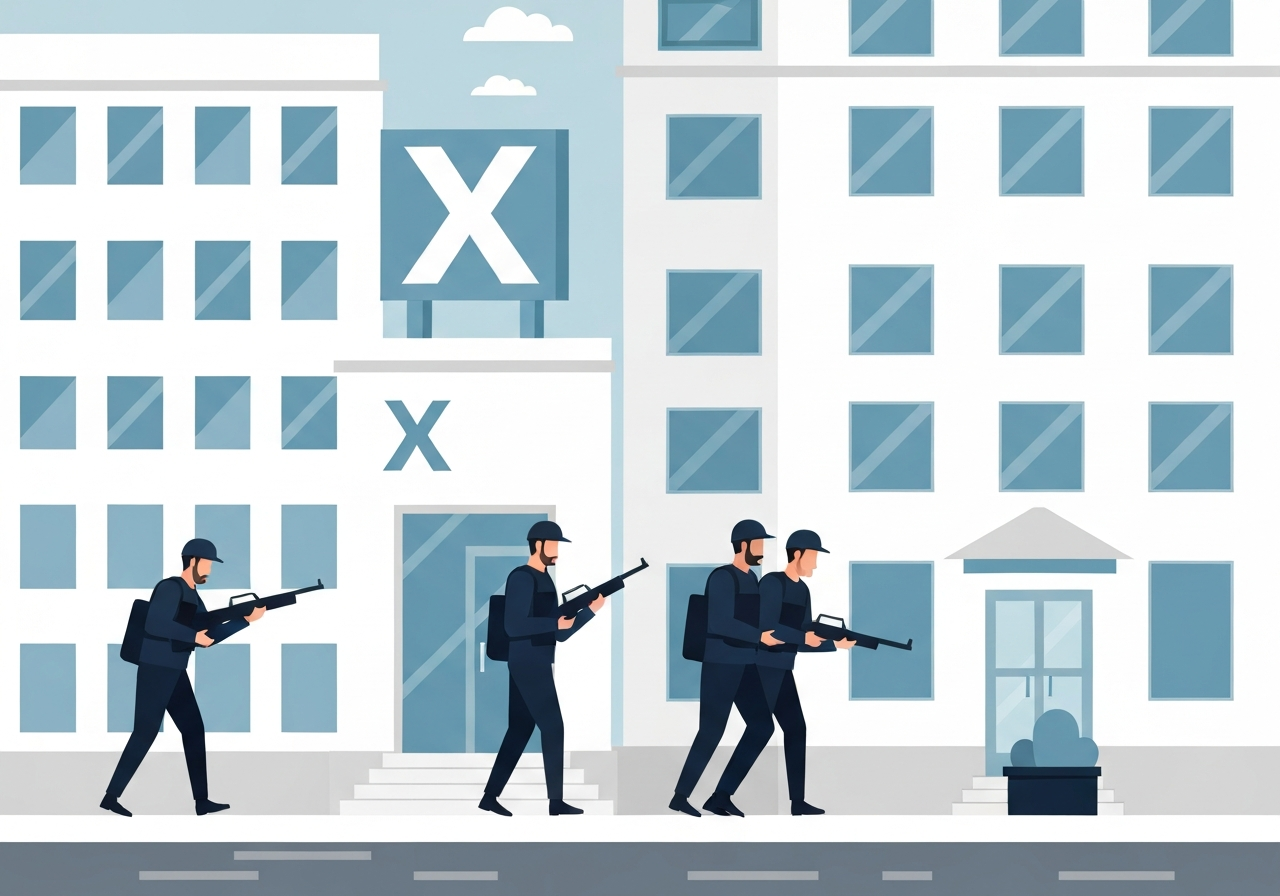
Paris prosecutors’ cyber-crime unit raided the French offices of Elon Musk’s social network, X, on Tuesday as part of an investigation that began in January 2025 into content recommended by X’s algorithm and later expanded to include the company’s AI chatbot, Grok. Authorities say the probe now examines suspected unlawful data extraction and possible complicity in possession or organised distribution of images of children of a pornographic nature. The office has summoned Elon Musk and former X chief executive Linda Yaccarino to appear at hearings in April; X has not issued a fresh public response to the raid.
Key takeaways
- The investigation opened in January 2025 and was broadened in July 2025 to include Grok, X’s AI chatbot.
- Paris prosecutors’ cyber unit executed a search of X’s French offices on the day of the raid; officials cited multiple suspected offences under inquiry.
- Formal lines of inquiry include complicity in possession or distribution of child sexual images, sexual deepfakes infringing image rights, and large-scale fraudulent data extraction.
- The prosecutors’ office has said it will stop using X for official communications and will instead post on LinkedIn and Instagram.
- UK regulators Ofcom and the Information Commissioner’s Office (ICO) are separately examining Grok-related deepfakes and personal data processing; Ofcom called the matter urgent but said it currently lacks full chatbot-specific powers.
- Pavel Durov, Telegram’s founder, publicly criticised the French action; Durov was arrested in France in August 2024 and allowed to leave in March after platform changes.
Background
The probe began in January 2025 after investigators reviewed material recommended by X’s algorithm, raising concerns about the platform’s role in surfacing harmful content. That initial inquiry later expanded in July 2025 to include Grok, an AI assistant developed under Elon Musk’s direction that can generate images and text. Regulators and victims’ groups say Grok-generated sexualised images used real people’s photographs without consent, prompting public and official scrutiny.
French authorities have been increasing pressure on social platforms over moderation and illegal content following a series of high-profile cases across Europe. The Paris public prosecutor’s cyber-crime unit has jurisdiction over online offences and has previously pursued cases involving platform moderation failings. X’s leadership has characterised past probes as politically motivated, while prosecutors maintain their actions follow specific complaints and legal inquiries.
Main event
On the day of the search, officers from the Paris prosecutor’s cyber unit entered X’s French premises to secure materials and question staff as part of the widening probe. Prosecutors said the search is linked to suspected crimes spanning child sexual images, the production or distribution of sexual deepfakes, and organised mass extraction of user data. Officials indicated they aim to establish whether illegal image material was knowingly hosted or distributed via X or produced using data processed by Grok.
The prosecutor’s office disclosed it had summoned Elon Musk and Linda Yaccarino to appear at hearings scheduled for April. The summonses underscore the inquiry’s focus on corporate decision-making and the role of senior management in content moderation and product design. X has previously posted statements defending its moderation approach and denying targeted algorithmic manipulation.
Beyond the raid, prosecutors said they would cease using X for official announcements and transition to LinkedIn and Instagram for communications. The move signals a lack of confidence in the platform as an official channel while investigations proceed. X has not offered an immediate comment on the raid; the company has earlier described probes as attacks on free speech and politically motivated.
Analysis & implications
The raid marks an escalation from regulatory scrutiny to active criminal investigation, increasing legal risk for X in France and potentially across the EU. If prosecutors can show that Grok or X operations facilitated illegal image creation or distribution, criminal liability could extend to employees or executives depending on proof of knowledge or complicity. The inclusion of alleged organised data extraction also raises privacy-law and computer-fraud exposure, which could trigger parallel civil claims and fines.
For policy and enforcement, the case highlights gaps in regulators’ powers over AI chatbots: Ofcom signaled urgency but said it lacks explicit authority to investigate chatbot-generated illegal images. That inability has prompted the ICO to open a complementary probe focused on personal data processing, potentially prompting new regulatory guidance or legislation on AI tools that generate media using personal data.
Commercially, the investigation may affect user trust and advertiser confidence on X, particularly among markets with stricter content and privacy rules. Other platforms and AI developers will watch closely: legal findings in France could set precedents for how national prosecutors treat AI-generated sexual content and whether platform design choices are actionable under criminal statutes.
Comparison & data
| Timeline | Action |
|---|---|
| January 2025 | Investigation opened into algorithmic recommendations |
| July 2025 | Probe widened to include Grok |
| August 2024 | Pavel Durov arrested in France (related moderation concerns) |
| March (year) | Durov permitted to leave after platform changes |
| Raid date | Paris cyber unit searched X’s French offices |
The table places the raid in the context of an investigation that started with algorithmic recommendations and later expanded to AI-generated content. Past enforcement actions—such as Durov’s 2024 arrest—illustrate French authorities’ willingness to use criminal procedures for online moderation lapses. Policymakers across Europe have been tightening frameworks since 2023, increasing the chance that legal standards will be applied to AI tools.
Reactions & quotes
French authorities framed the raid as a proportional law-enforcement step tied to specific allegations; they also announced operational changes for official communications. Observers in technology and civil-society groups offered mixed responses about proportionality and the need for clearer AI regulation.
“The reports about Grok raise deeply troubling questions about how people’s personal data has been used to generate intimate or sexualised images without their knowledge or consent.”
William Malcom, ICO executive director for regulatory risk & innovation
William Malcom’s comment accompanied the ICO’s move to open a probe into data processing linked to Grok; the ICO is collaborating with Ofcom on aspects of the inquiry. The ICO statement focuses on data-use safeguards rather than criminal liability, signalling overlapping regulatory tracks.
“This is not a free country,”
Pavel Durov, Telegram founder
Pavel Durov used X to criticise French authorities, tying his own experience—arrest in August 2024 and departure after changes—to broader claims about platform freedom. French prosecutors previously said Durov’s platform had failed to curb criminal activity, a claim Durov disputes.
“Ofcom is treating the matter as a matter of urgency, but currently lacks sufficient powers to investigate chatbot-generated images in this case.”
Ofcom (public statement)
Ofcom’s public update emphasised regulatory limits when dealing with chatbots, prompting calls for legal clarifications. The regulator’s posture suggests domestic rule changes or clarified mandates may follow high-profile incidents.
Unconfirmed
- Whether investigators have yet found forensic evidence that Grok directly used specific victims’ images remains unconfirmed.
- It is unconfirmed whether Elon Musk or Linda Yaccarino will face formal charges; they have been summoned to hearings but no charges were announced at the time of the raid.
- The full scope and timing of data exports allegedly used to create images have not been publicly verified.
Bottom line
The Paris raid escalates scrutiny of X and its AI tool Grok from regulatory pressure to criminal inquiry, with investigators examining potential child sexual imagery, deepfake misuse, and organised data extraction. That shift could expose the company to coordinated legal, regulatory, and reputational risks across jurisdictions if evidence links platform design or data handling to illegal outcomes.
Watch for three near-term developments: formal charging decisions or executive testimonies at the April hearings; ICO findings on personal data processing; and any legislative responses clarifying regulators’ authority over AI chatbots. Outcomes in France and the UK may shape how platforms design AI features and how regulators approach cross-border digital evidence.
Sources
- BBC News (media report summarising the raid and ongoing probes)
- Parquet de Paris (official — Paris public prosecutor’s office)
- Ofcom (regulator — public statements on platform safety and investigations)
- Information Commissioner’s Office (ICO) (regulator — announcement on data-processing probe)