
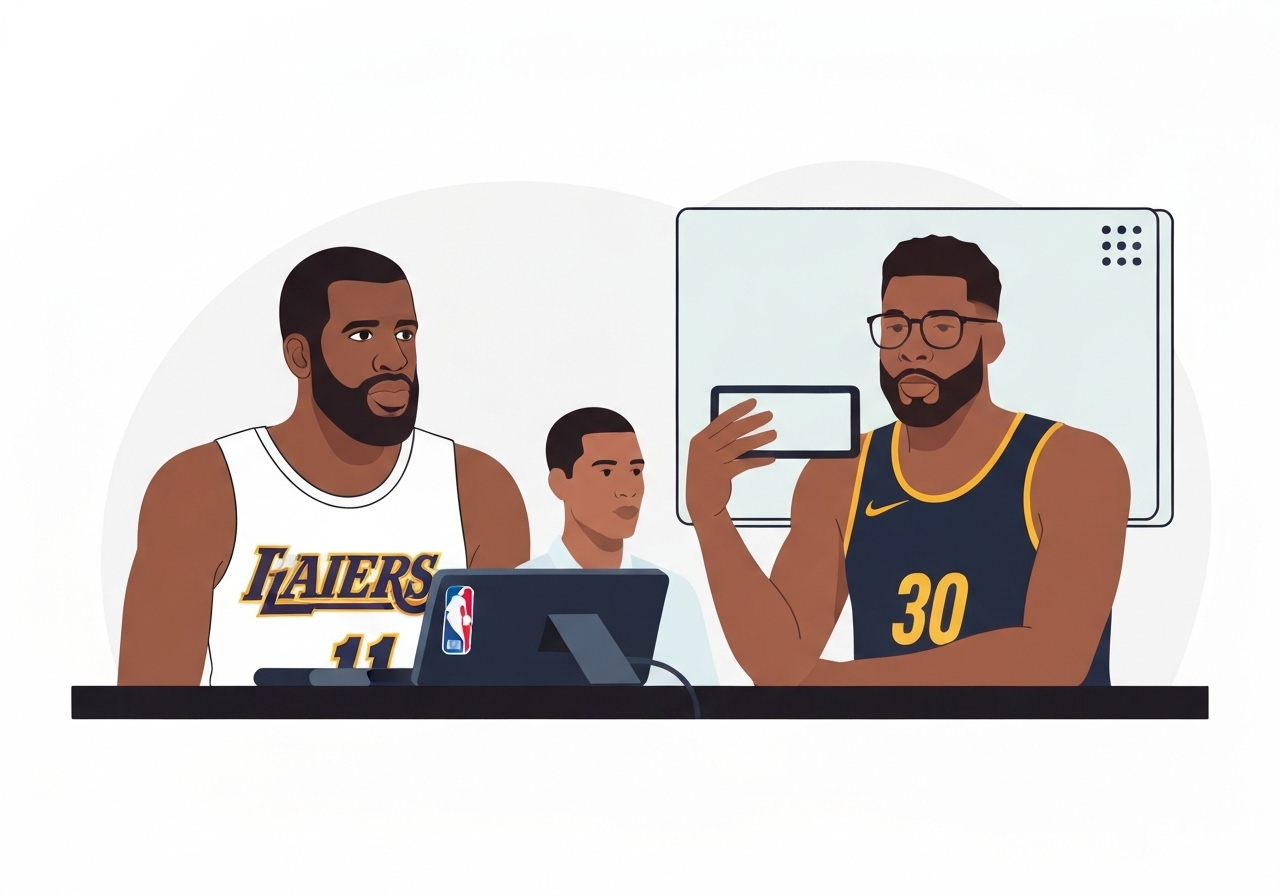
Chris Paul posted video of a laughing reunion with former Los Angeles Clippers teammates Blake Griffin and DeAndre Jordan on Wednesday, hours after the franchise announced it would separate from the 40-year-old point guard. The clip arrived amid surprise and debate about the timing: Paul had said this would be his final NBA season, and the team moved to part ways overnight. Clippers president Lawrence Frank said the club will assist Paul with the next phase of his career, while reports indicated the decision was not initiated by Paul. The brief, convivial call offered a human counterpoint to the abrupt personnel move.
Key Takeaways
- Chris Paul, 40, was informed of the Clippers’ decision to separate from him the night before his Instagram post; he ranks first in franchise assists with 4,076.
- Across two Clippers stints and 425 regular-season appearances Paul has 7,721 points, 2,718 made field goals, 628 made 3-pointers, 913 steals and a team-leading 78.2 win shares.
- The Clippers started the 2025–26 season 5–16 and have been hampered by injuries, limiting roster flexibility.
- The Athletic’s reporting (Law Murray) said Paul did not propose leaving, suggesting the move was organizationally driven rather than player-initiated.
- Paul posted a lighthearted video call with Blake Griffin and DeAndre Jordan, signaling personal solidarity among former “Lob City” teammates.
- History shows abrupt Clippers departures before: Griffin signed a long-term deal in July 2017 and was traded six months later; Jordan left after opting out in 2018 following a decade with the team.
Background
The Clippers’ rise during the early 2010s centered on a core that included Chris Paul, Blake Griffin and DeAndre Jordan. Between the 2011–12 and 2016–17 seasons the team posted a .658 win percentage, tied with the Oklahoma City Thunder for the NBA’s third-best mark behind only the Spurs (.742) and Warriors (.689). That stretch produced multiple All-Star and All-NBA nods for the trio and transformed the Clippers into a legitimate contender for the first time in franchise history, even though the group never reached a Western Conference final or NBA Finals.
Paul returned to the Clippers for a second stint late in his career and accumulated franchise-leading totals in several categories, including assists (4,076) and win shares (78.2) across 425 regular-season appearances. He previously announced the 2025–26 season would be his last, framing the abrupt separation as notable both for timing and for its departure from the public narrative. The organization’s history of sudden partings — notably Griffin’s 2017 trade and Jordan’s 2018 free-agent departure — contributes to a narrative about how the franchise handles veteran stars.
Main Event
On Wednesday, following an overnight announcement that the Clippers and Paul would part ways, Paul uploaded an Instagram post showing him in a video call with Blake Griffin and DeAndre Jordan, laughing together. The post circulated quickly and became shorthand for the emotional dimension of the split: a longtime teammate finding immediate comfort among peers. The franchise statement from Clippers president Lawrence Frank said the club would “work with Paul on the next chapter of his career,” framing the move as cooperative in tone.
Reporting from The Athletic’s Law Murray (published earlier that day) indicated that the decision to separate was not raised by Paul himself, suggesting the roster move originated with the organization rather than the player. That detail has shaped reaction across media and fan circles, because Paul had already said publicly that he intended this season to be his last in the league. The club’s 5–16 start and a roster beset by injuries were cited internally as context for an unusual midseason change.
Observers noted the optics of a Hall-of-Fame-caliber player being sidelined abruptly while on a designated day off. Social media responses ranged from bemused to critical, with commentators using the reunion clip as both balm and commentary. Within league circles the move prompted questions about locker-room leadership, resource allocation, and the franchise’s approach to veteran stewardship.
Analysis & Implications
From a roster-management perspective, the Clippers’ choice reflects competing priorities: short-term attempt to change team chemistry versus long-term reputational effects with veteran players. Paul’s presence on the floor offers playmaking, leadership and playoff experience; removing a figure with his statistical footprint (4,076 assists; 78.2 win shares) reduces those on-court and intangible assets immediately. For a club struggling at 5–16, the calculus may have favored experimenting with roster alignments, but that comes with trade-offs in mentorship and credibility.
For Chris Paul personally — a future Hall of Famer who had announced this season would be his last — separation on short notice complicates retirement narrative and postplaying opportunities. If the team helped facilitate a transition to a new on- or off-court role, that could preserve relationships; if not, the optics risk creating a rupture with a prominent alumni figure. League teams often weigh veteran influence versus developmental minutes for younger players; the Clippers’ decision signals a willingness to prioritize immediate tactical shifts over continuity with franchise icons.
There are also franchise-brand implications. Repeated episodes in which high-profile players depart under sudden terms (Griffin in 2017, Jordan in 2018) can affect free-agent perception and internal morale. Prospective signings weigh on-court fit and organizational culture; patterns of abrupt separations may become a factor in negotiations and perceived stability of the front office. The immediate effect on team performance remains uncertain, but longer-term recruitment and retention risks are real.
Comparison & Data
| Measure | Chris Paul (Clippers) | Clippers 2011–17 Context |
|---|---|---|
| Regular-season appearances | 425 | — |
| Assists (franchise) | 4,076 (1st) | — |
| Points (franchise) | 7,721 (6th) | — |
| Win shares (franchise) | 78.2 (1st) | .658 win pct (2011–12 to 2016–17) |
| Made 3-pointers | 628 (5th) | — |
The table highlights Paul’s standing in franchise history alongside the Clippers’ peak-era win percentage. Between 2011–12 and 2016–17 the team posted a .658 win percentage, a period in which Paul, Griffin and Jordan were central contributors. Those data points underline why the split attracted attention: Paul is statistically one of the Clippers’ most influential players, and the organization’s recent form (5–16 start in 2025–26) provides the immediate operational backdrop for its decision.
Reactions & Quotes
“We will work with Chris on the next chapter of his career,”
Lawrence Frank, Clippers president (team statement)
The Clippers framed the departure in collaborative terms, emphasizing transition support; observers have noted the conciliatory language even as reporting suggested Paul did not propose the move.
“Oh, when they said at home they meant AT HOME”
J.E. Skeets (sports commentator, social post)
Social media responses used the reunion post to highlight the contrast between private camaraderie and public roster moves, often with irony.
“The decision for Paul to leave the team was not broached by him,”
Law Murray, The Athletic (report)
Sports reporting that surfaced the sequence of events has shaped the narrative about who initiated the separation and why.
Unconfirmed
- Whether there were internal offers (coaching, front-office, ambassador roles) made to Paul as part of a negotiated exit remains unconfirmed.
- Motivations behind the timing of the separation—whether strategic basketball decisions or financial/contractual considerations—have not been independently verified.
- Any specific trade or signing plans involving Paul or compensation to him for early separation have not been publicly substantiated.
Bottom Line
The image of Chris Paul laughing with Blake Griffin and DeAndre Jordan provided a human counterpoint to an abrupt personnel decision that surprised many in the league. The facts are clear: Paul is a franchise great by the numbers, the team announced an immediate separation, and reporting indicates Paul did not initiate the move. That combination of prestige, timing and reported process explains the strong reaction.
For the Clippers, the short-term goal may be to change the competitive dynamic of a 5–16 start; for Paul, the episode complicates a planned final season and his retirement arc. Watch for follow-up items: whether the club formalizes a role or severance arrangement, whether Paul signs elsewhere or retires immediately, and how this episode affects the Clippers’ standing with future free agents.