
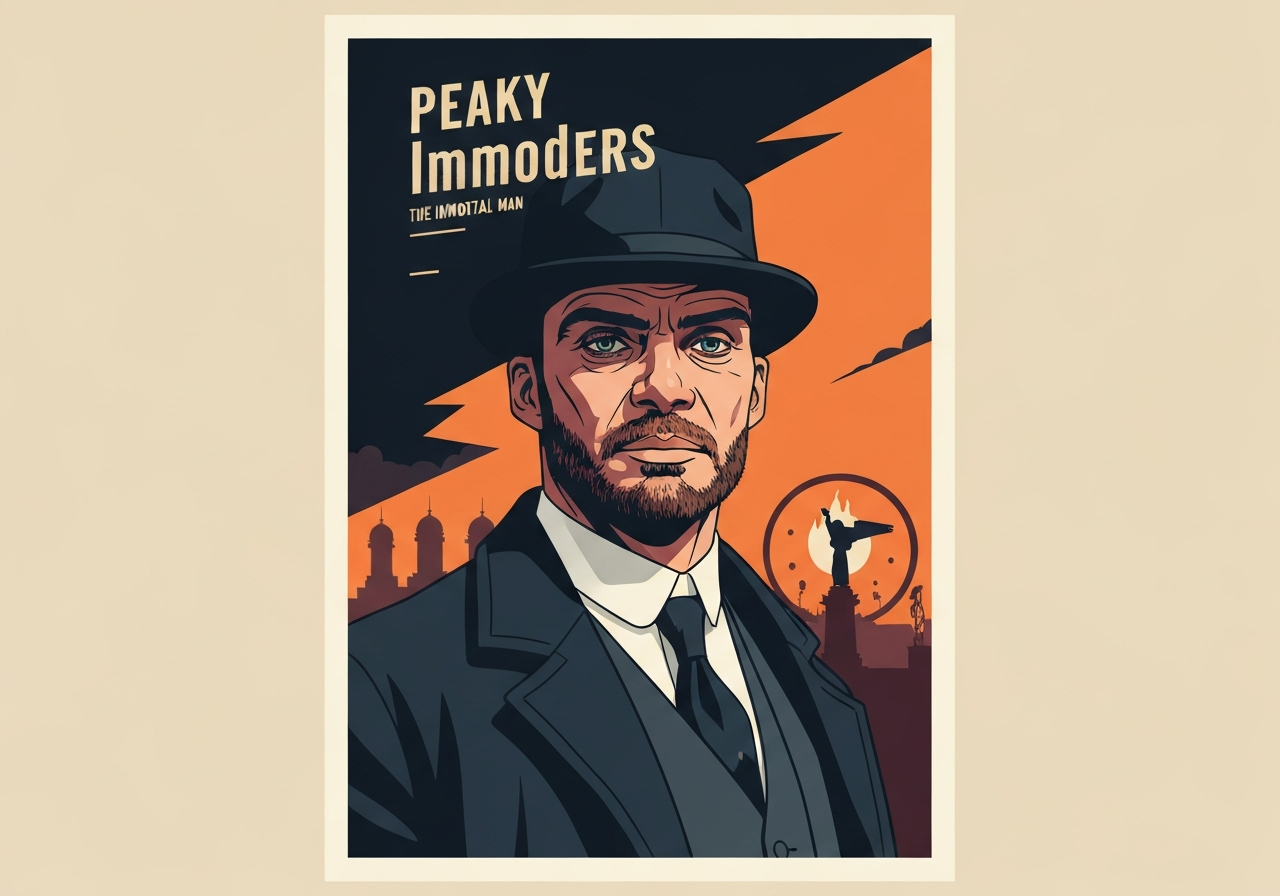
Lead: Peaky Blinders: The Immortal Man returns Tommy Shelby to screens in a 112-minute wartime thriller that opens in select U.S. theaters on March 6 and debuts on Netflix on March 20. Set in 1940 Birmingham amid the Blitz, director Tom Harper and writer Steven Knight frame the film as both a new beginning and a capstone for Cillian Murphy’s antihero. The plot pulls Tommy out of self-imposed exile to confront a counterfeit scheme tied to Nazi sympathizers, with Barry Keoghan playing Duke, Tommy’s estranged son. The movie blends dry humor, action set pieces and a modern soundtrack to deliver a familiar but satisfying Peaky Blinders experience.
Key Takeaways
- The Immortal Man runs 112 minutes and opens in select theaters March 6 before streaming on Netflix March 20.
- The story is set in 1940 during the Birmingham Blitz and centers on a Nazi-linked counterfeit plot to flood British banks with forged notes.
- Cillian Murphy returns as Tommy Shelby, confronting family divisions and wartime threats after four years off-screen since Season 6.
- Barry Keoghan replaces Conrad Khan as Duke, Tommy’s illegitimate son; his performance balances vulnerability with volatility.
- Paul Anderson (Arthur Shelby) is absent from the film; the story addresses this absence with a flashback subplot that some viewers may find uneven.
- Supporting cast includes Sophie Rundle (Ada), Tim Roth (Beckett), Rebecca Ferguson (a Roma seer), Ned Dennehy and Stephen Graham in returning roles.
- Music features original contributions from Fontaines DC’s Grian Chatten and Amy Taylor of Amyl and the Sniffers with needle drops from Massive Attack and Nick Cave.
Background
Peaky Blinders began on television 13 years ago, introducing Tommy Shelby as a morally complex crime boss who rose from Birmingham’s industrial underbelly. The series evolved into a period drama mixing family noir with political and social currents, and built a dedicated global audience across six seasons. After the Season 6 finale, creators signaled a cinematic follow-up; The Immortal Man is positioned as both a continuation and a conclusion to Tommy’s arc. Placing the film in 1940 shifts the story into wartime Britain, widening the stakes from local gang control to national survival against Nazi influence.
The move from serialized TV to a standalone film carries narrative pressures: storytellers must orient returning fans while remaining accessible to newcomers. Tom Harper directs a screenplay by series creator Steven Knight, preserving familiar themes—loyalty, legacy, class and trauma—while compressing them into a feature runtime. Casting choices reflect both continuity and change: some series regulars return, others are recast or absent, which affects how family and organizational dynamics read on-screen. The film also foregrounds the Irish-Romani heritage of key characters, integrating cultural practices into the plot and atmosphere.
Main Event
The Immortal Man opens with an incendiary sequence depicting Luftwaffe bombing raids on Birmingham munitions factories, establishing a grim wartime backdrop. The Peaky Blinders have re-emerged in Tommy’s absence under the leadership of Duke, who seeks to claim power through ruthless methods and an opportunistic deal with German operatives. Keoghan’s Duke is written as a man shaped by abandonment—sold by his Irish-Romani family and raised amid Shelby legend—whose insecurity leads him toward catastrophic choices.
Tommy’s reappearance in a mud-scarred city marks a tonal shift from pastoral exile to confrontational leadership. He reasserts himself in terse, often brutal encounters: a combustible pub confrontation, a physical reckoning with Duke in a pig sty, and strategic moves to foil the counterfeit operation at Liverpool’s dockhouses. Action moments include exploding canal boats and hand-to-hand clashes with Nazi agents, staged as classic Peaky set pieces that emphasize grit over spectacle.
Antagonists are drawn with measured charm and menace. Tim Roth’s Beckett is a smooth-talking war profiteer whose casual sympathies align him with Nazi aims; Rebecca Ferguson appears as a Roma fortune teller who catalyzes Tommy’s return by invoking personal ghosts and desire. Returning allies such as Charlie Strong (Ned Dennehy) and union figure Hayden Stagg (Stephen Graham) help Tommy navigate the criminal and industrial networks necessary to disrupt the counterfeit plot. The film balances character moments with its wartime thriller mechanics, privileging performance and mood.
Analysis & Implications
The Immortal Man functions primarily as a character vehicle for Cillian Murphy, whose portrayal anchors the film even for viewers unfamiliar with the series’ detailed chronology. Murphy conveys Tommy’s internal burden—grief, guilt and a sense of haunted duty—through restrained physicality and charged silences. This makes much of the film emotionally navigable without exhaustive backstory, though longtime fans will read additional subtext in familial exchanges and organizational maneuvering.
Placing the Peaky Blinders narrative against the Birmingham Blitz reframes the gang’s criminality within national survival. The counterfeit scheme, aimed at collapsing Britain’s financial stability, raises stakes from local territory disputes to a form of economic warfare. That shift allows the film to explore collaboration and betrayal on a broader scale: how marginal actors can be manipulated by state or foreign interests during wartime chaos, and how loyalty networks respond to existential threats.
Stylistically, Harper and Knight maintain the series’ anachronistic audio-visual signature—contemporary songs against period backdrops, stylized violence, and symbolic imagery like Tommy riding through ruined streets. The approach preserves franchise identity but limits risk-taking; viewers seeking a radical reinvention may be disappointed, while the core audience will likely appreciate the fidelity. Commercially, the theatrical-plus-Netflix release strategy distributes risk while maximizing reach: a March 6 limited theatrical bow precedes a March 20 streaming arrival, a pattern increasingly common for tentpole TV-to-film transitions.
Comparison & Data
| Metric | Peaky Blinders Series | The Immortal Man (Film) |
|---|---|---|
| Elapsed time since debut | 13 years | 13 years |
| Gap since last season | — | 4 years after Season 6 |
| Runtime | Varied (episodes) | 112 minutes |
| Initial release windows | TV broadcast/streaming | March 6 (select theaters), March 20 (Netflix) |
The table situates the film as a time-compressed extension of a long-running series. Condensing serialized arcs into a 112-minute film requires prioritizing central conflicts—Tommy’s return and the Nazi counterfeit plot—over episodic subplots. That compression benefits focused dramatic scenes but can leave some secondary threads, such as Arthur Shelby’s absence, feeling underdeveloped.
Reactions & Quotes
At its core, critical and audience responses center on two pillars: Murphy’s lead performance and the film’s faithfulness to franchise tone. Below are representative reactions gathered around the March releases.
“Murphy gives the film its emotional spine; you feel the weight he carries in nearly every frame.”
Film critic
That assessment captures the consensus that performance elevates the material. Reviewers note Murphy’s capacity to render Tommy’s trauma legible without extensive exposition, allowing the wartime stakes to resonate through personal consequence.
“The wartime setting widens the scope, but some returning characters get short shrift in a feature runtime.”
Industry analyst
Observers pointedly mention the narrative trade-offs of a feature adaptation: action and central confrontations receive room to breathe, while certain character arcs are telescoped or omitted. Fans voiced mixed feelings about recasting choices and notable absences during early screenings.
“The film delivers the signature Peaky style—grim, stylish and emotionally raw—while keeping the engine of the story tightly focused.”
Audience member at preview screening
Audience reactions emphasize the film’s ability to satisfy franchise expectations: a recognizable aesthetic, memorable set pieces and emotionally charged reunions. These responses suggest the movie will play well with committed viewers while inviting new viewers to explore the series.
Unconfirmed
- Details about Paul Anderson’s legal situation and whether it precluded filming are reported but not fully confirmed by official statements.
- Exact casting numbers for actors of Irish-Romani heritage in Roma roles were not disclosed; sourcing on representation in the production remains incomplete.
- Specifics of any behind-the-scenes deals between the production and historical consultants about Blitz-era depictions have not been publicly released.
Bottom Line
The Immortal Man is a reliable, performance-forward extension of Peaky Blinders that trades sweeping reinvention for concentrated payoff: Cillian Murphy’s Tommy Shelby carries the film, and Barry Keoghan supplies a compelling foil in Duke. The wartime setting raises narrative stakes and provides a fresh framework, even if some franchise elements receive abbreviated treatment in a single film runtime.
For fans of the series, the movie offers familiar hallmarks—stylized violence, mordant humor and a contemporary soundtrack—alongside a decisive plot aimed at closing or reframing familiar arcs. Newcomers can follow the core story, though long-term viewers will gain the most from the film’s callbacks and character histories. Sources and follow-up reporting will be important to clarify casting and production questions left open by the film’s compressed format.
Sources
- IGN (entertainment review)