
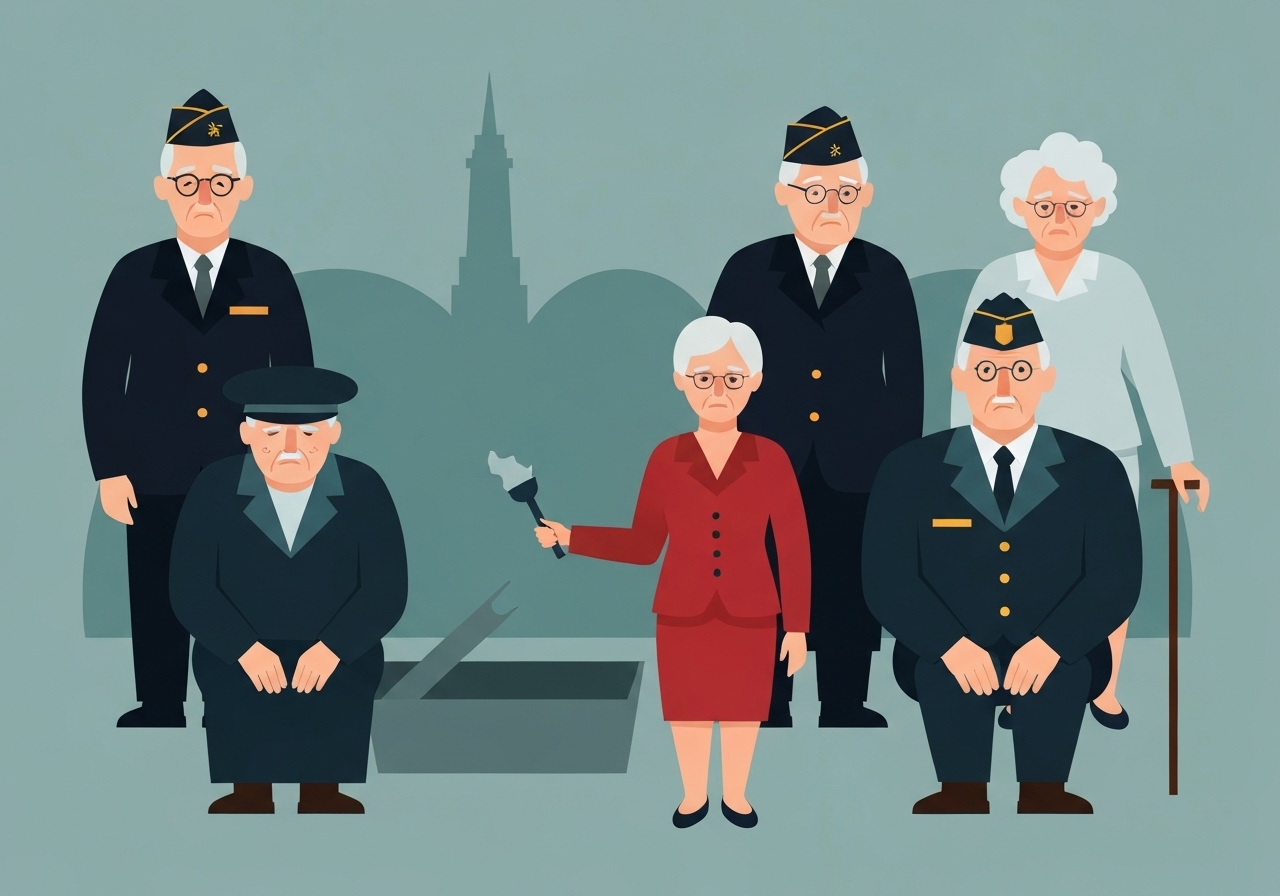
Lead: On December 7, 2025, the 84th anniversary remembrance at Pearl Harbor in Honolulu will proceed without any living survivor in attendance. Only 12 veterans who experienced the 1941 attack are still alive, all aged 100 or older, and none could travel to Hawaii for the ceremony. That absence means no attendee will have firsthand memories of the attack that killed more than 2,300 service members and propelled the United States into World War II. Family members, historians and public institutions are stepping forward to preserve those firsthand accounts.
Key Takeaways
- There are 12 known surviving veterans of the December 7, 1941, attack; all are centenarians and none could attend the 84th commemoration in Hawaii.
- The Pearl Harbor observance opens with a moment of silence at 7:55 a.m., the exact time the assault began; traditional rituals continue though roles once filled by survivors have largely moved to active-duty personnel.
- More than 2,300 service members were killed in the attack; about 87,000 troops were stationed on Oahu that day.
- Attendance has declined from roughly 2,000 survivors at the 50th anniversary in 1991 to only a few dozen in recent decades and two last year.
- National Park Service and Library of Congress collections now house hundreds of oral histories, photos and documents to carry survivors’ testimonies forward.
- Organizations such as the Sons and Daughters of Pearl Harbor Survivors and local chapters continue outreach in schools and public events to maintain public memory.
Background
The December 7, 1941, Japanese bombing of Pearl Harbor destroyed ships and aircraft and killed more than 2,300 service members, a shock that drew the United States fully into World War II. For decades survivors were central to an annual waterfront ceremony on the military base, where wreaths, salutes and flyovers marked the day. As survivors have aged, participation dwindled: from thousands attending milestone anniversaries in the late 20th century to just a handful in the 2010s and 2020s. The changing demographics of survivors mirror earlier patterns seen when Civil War veterans could no longer appear at commemorations, prompting archival efforts to preserve firsthand testimony.
Multiple institutions moved to capture recollections decades ago. The National Park Service has recorded nearly 800 survivor interviews, many on video, and the Library of Congress’ Veterans History Project holds collections from 535 Pearl Harbor survivors, with over 80% available online. Family groups and heritage organizations also stepped in to document letters, photos and oral histories, producing a patchwork of sources that together form much of the living memory of December 7. Those materials now serve as primary inputs for museum exhibits, classroom curricula and audiovisual programs.
Main Event
The annual ceremony at Pearl Harbor still follows long-established rites: a 7:55 a.m. moment of silence, wreath-laying, and a ‘‘missing man’’ flyover in honor of the dead. In recent years, active-duty sailors often perform the physical wreath-laying once done by survivors, reflecting both declining survivor attendance and military participation in commemorative protocol. This year, organizers confirmed no survivor could make the trip to Hawaii, reversing a pattern in which at least a few veterans had attended almost every year except the public closure in 2020 due to COVID-19 concerns.
Family members and local advocates have described the personal and logistical hurdles centenarian veterans face: fragile health, travel risks and the emotional toll of revisiting the attack site. Kimberlee Heinrichs, whose 105-year-old father Ira “Ike” Schab has attended multiple times, said his illness forced him to cancel travel this year and that the absence of survivors at the ceremony was profoundly painful. Veterans who could attend in recent years often used the occasion to reconnect with shipmates and to show younger generations the human face of wartime service.
Survivors’ memories include vivid scenes from ships such as the USS Arizona and USS Oklahoma. Witnesses have recounted the Arizona’s explosion and rescue efforts for sailors trapped on the capsized Oklahoma. Those frontline recollections—raising a flag at a hilltop mobile hospital, racing to aid the wounded, hearing taps on steel as men sought rescue—have been central pillars of the public narrative about December 7 and persist in oral-history collections and museum displays.
Analysis & Implications
The absence of any living survivor at the 84th remembrance shifts the custodianship of memory from living witnesses to recorded testimony, descendants and institutions. Oral histories and digitized collections will now carry greater weight in shaping public understanding, education and commemoration. That means museums, school curricula and documentaries will play a larger role interpreting the attack for new generations, and the fidelity of archival preservation becomes a civic priority.
As firsthand witnesses disappear, the risk grows that nuance and small but meaningful details—personal habits, voice inflections, spontaneous anecdotes—may be lost if recordings and contextual materials are incomplete. Institutions such as the National Park Service and Library of Congress face pressure to expand access, provide interpretive context and correct earlier gaps or biases in the record. Funding, curation standards and outreach strategies will determine how effectively those agencies translate archived testimony into public history.
Politically and culturally, Pearl Harbor’s meaning is multifaceted: some emphasize preparedness and military readiness, others critique wartime decision-making, and still others focus on the sacrifices of individuals. Without survivors to personify these perspectives, public discourse may tilt toward institutional narratives or politicized frames unless educators and curators actively present balanced interpretations. Internationally, the commemoration continues to inform U.S.-Japan relations and broader conversations about remembrance, reconciliation and the ethics of wartime memory.
Comparison & Data
| Anniversary Year | Approx. Survivor Attendees |
|---|---|
| 1991 (50th) | ~2,000 |
| 2024 | 2 attendees |
| 2025 (84th) | 0 attendees (survivors unable to travel) |
The table above shows the steep decline in survivor attendance at public ceremonies over three decades. That reduction reflects natural mortality: of an estimated 87,000 service members stationed on Oahu on December 7, 1941, only a small fraction remain alive eight decades later. Agencies have prioritized digitization: the Library of Congress holds collections from 535 survivors and the National Park Service has nearly 800 recorded interviews, efforts intended to substitute for loss of living testimony.
Reactions & Quotes
“The idea of not having a survivor there for the first time… it hurt my heart in a way I can’t describe.”
Kimberlee Heinrichs, daughter of veteran Ira “Ike” Schab
Heinrichs framed the absence as a personal and communal loss, describing her father’s repeated pilgrimages and the emotional weight of his illness preventing attendance this year.
“They remain as a part of the national memory of a day that changed America and changed the world.”
Daniel Martinez, retired NPS Pearl Harbor historian
Martinez emphasized archival work begun decades ago designed to preserve survivors’ voices and to retain their role in national memory despite physical absence.
“When they’re all gone, we’re still going to be here. And it’s our intent to keep the memory alive as long as we’re alive.”
Deidre Kelley, president, Sons and Daughters of Pearl Harbor Survivors
Kelley pointed to organized descendants and community groups as active transmitters of family histories and public programming.
Unconfirmed
- No independent public schedule lists any survivor confirmed to attend the 2025 ceremony; organizers reported none were able to make the trip.
- Some family-reported health details about individual veterans were not independently verified by official medical statements.
Bottom Line
The 84th Pearl Harbor remembrance marks a turning point: living witnesses to December 7, 1941, are essentially gone from the ceremony, and the event will proceed without any attending survivor. That change does not erase firsthand testimony, but it does alter how audiences experience the past—through recordings, exhibitions and descendants rather than direct encounter. Preserving the texture of veterans’ memories requires continued investment in archives, careful curation and broad public education.
For policymakers and cultural institutions, the transition raises practical questions about resource allocation and interpretive strategy. If the public is to retain a nuanced understanding of Pearl Harbor’s human and historical dimensions, curators and educators must expand access to archival material, contextualize individual testimony, and guard against overly simplistic or politicized narratives. The stewardship of memory now rests with institutions, families and educators as much as with those who lived the day.
Sources
- CNN (news report)
- National Park Service — Pearl Harbor resources (official)
- Library of Congress — Veterans History Project (official/archive)
- The Associated Press (news agency)