
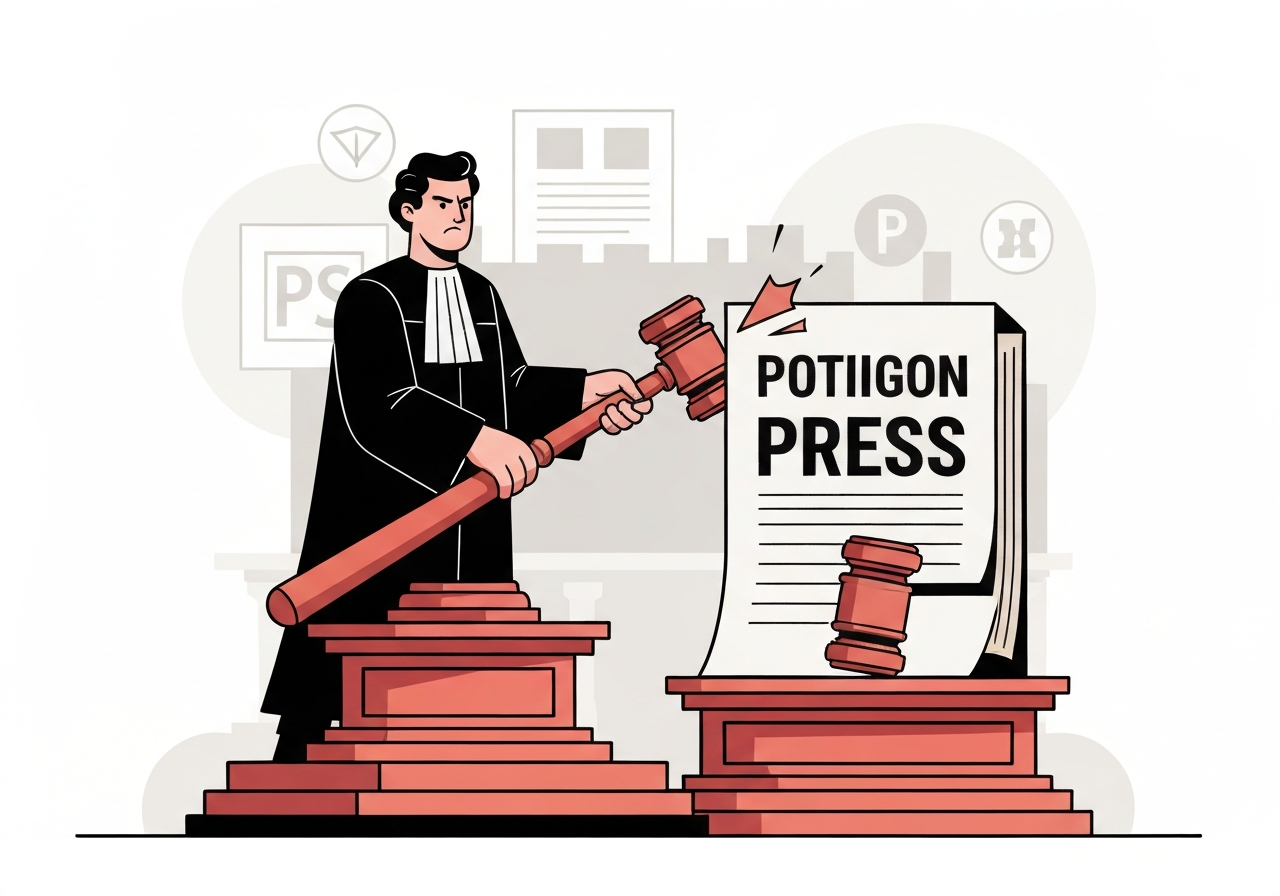
On March 20, 2026 a federal judge in Washington struck down a Pentagon policy that had tied press credentials to agreements restricting unapproved reporting, finding the rule unconstitutional and restoring key protections for independent reporting. The decision, issued in a 40-page opinion by U.S. District Judge Paul L. Friedman, targeted a policy implemented in October by Defense Secretary Pete Hegseth that narrowed who could hold routine Pentagon press passes. The ruling follows a coordinated refusal by a broad swath of news organizations — from major papers to broadcast and conservative outlets — to accept the new agreement and turn in credentials. The court ordered the Defense Department to stop enforcing the policy while litigation proceeds, a move that supporters of press freedom hailed as a major legal vindication.
Key Takeaways
- Judge Paul L. Friedman issued a 40-page opinion on March 20, 2026 finding the Pentagon press-pass policy unconstitutional and enjoining its enforcement pending further proceedings.
- The contested policy, introduced in October 2025 by Defense Secretary Pete Hegseth, required signatories to refrain from soliciting information not approved by the administration.
- A wide coalition of outlets refused the agreement; affected organizations included The New York Times, The Washington Post, The Wall Street Journal, Fox News, Newsmax, The Washington Examiner and The Daily Caller.
- When veteran reporters surrendered credentials, the Pentagon issued passes to a new cohort including activists and pro-Trump commentators such as Laura Loomer, Matt Gaetz, James O’Keefe and Mike Lindell.
- The court emphasized First Amendment values, saying government-imposed conditions that suppress reporting threaten national security by keeping the public uninformed.
- The injunction reinstates the prior credentials regime while litigation continues, preserving reporters’ access to Pentagon facilities for the near term.
Background
The controversy began in October 2025, when the Defense Department tightened conditions for routine press credentials at the Pentagon. Under the new terms, applicants were asked to sign an agreement promising not to solicit or publish information the administration had not authorized, a requirement many news organizations said would amount to prior restraint. Major newsrooms and wire services announced that they would not accept the agreement, arguing it undermined independent newsgathering and legal protections for the press.
The administration framed the measure as a security and access-control step amid an era of intensified geopolitical tensions and ongoing military operations. Critics countered that the policy functionally privileged partisan commentators and allied personalities while sidelining credentialed national security reporters with institutional track records. The dispute quickly escalated into litigation as news organizations and individual reporters sought judicial review of the Department of Defense’s authority to condition access on editorial limitations.
Main Event
On March 20, 2026 U.S. District Judge Paul L. Friedman issued a detailed opinion rejecting the government’s defense of the policy. The court found that conditioning access to Pentagon facilities on an agreement to avoid soliciting unapproved information impermissibly burdened core First Amendment protections. Judge Friedman wrote that the Framers understood an informed public as essential to national security and that government suppression of political speech undermines, rather than secures, that objective.
The ruling recounted how, after the policy took effect, a number of established reporters turned in their Pentagon credentials rather than sign the agreement. Passes were then issued to a different set of individuals — activists, former officials and partisan commentators — sparking further concern that the policy had a discriminatory or viewpoint-based effect on who could cover the defense establishment. The court examined the structure and implementation of the rule and concluded it could not stand under existing First Amendment jurisprudence.
The immediate practical effect of the decision was to bar the Defense Department from enforcing the contested condition while the case moves forward. Practically, that means reporters who had relinquished passes may seek reinstatement under the prior practice, and the Pentagon must revert to credentialing procedures that do not require the challenged agreement. The ruling does not resolve all claims in the litigation; it is an injunction tied to constitutional analysis at this stage.
Analysis & Implications
The court’s decision resonates beyond the immediate dispute about Pentagon access. Legally, it reinforces long-standing doctrine that government may not attach conditions to a general benefit when those conditions suppress protected speech. The opinion is likely to factor in other cases where access or subsidies are conditioned on speech-related promises, and it signals judicial skepticism toward administrative rules that appear to limit independent reporting.
Politically, the ruling undercuts an executive-branch effort to centralize control over what reaches the public from inside a major federal institution. For the press, the decision restores a baseline of operational independence: credentialing is meant to facilitate reporting, not to be weaponized to shape coverage. For the Pentagon and future administrations, the injunction narrows tools for controlling narratives and suggests the courts will police administrative processes that intersect with constitutional rights.
Operationally, the change could affect how national security briefings, on-the-record interviews and hangar-floor access are managed. Reporters and editors may regain direct lines to officials and witnesses, while the department will need to develop security protocols that do not implicate First Amendment constraints. Internationally, allied democracies watching the case may see it as reaffirming norms that separate security management from press oversight.
Comparison & Data
| Aspect | Pre-October 2025 | Oct 2025–Mar 2026 Policy |
|---|---|---|
| Credential condition | No editorial pledge required | Agreement to avoid soliciting unapproved information |
| Typical credential holders | Established national security reporters (print, broadcast, wire) | Some traditional reporters withdrew; new passes issued to activists/partisan commentators |
| Court status (Mar 20, 2026) | N/A | Policy enjoined by D.D.C. judge pending litigation |
The table summarizes procedural and practical shifts. While exact counts of passes issued or turned in are not uniformly published, the defining change was the condition attached to access rather than a numerical cap. The court’s order restores the prior credentialing baseline while leaving open the broader litigation over scope and implementation.
Reactions & Quotes
“A free press is indispensable to national security; governmental terms that mute independent reporting cannot be sustained,” the judge wrote.
Judge Paul L. Friedman, U.S. District Court
The court’s formulation frames the dispute as one in which constitutional principles outweigh administrative convenience. Legal observers said the phrasing echoes precedents that protect the press from governmental conditions that chill speech.
“We acted to defend reporting independence and to avoid a rule that would have chilled critical oversight,” said an editor at a major news outlet who helped coordinate the refusal to sign.
Senior editor, major news organization (commenting on refusal)
Newsroom leaders described the legal victory as an affirmation of presses’ role in holding government accountable, while also noting that returning to regular coverage will require administrative cooperation from the Pentagon.
“The injunction ensures that routine access is not premised on editorial promises to an administration,” a First Amendment lawyer said.
First Amendment attorney
Legal experts emphasized that, although the injunction is a strong outcome, the underlying case will proceed and further litigation could refine the boundary between legitimate security procedures and unconstitutional conditions on speech.
Unconfirmed
- Whether every reporter who surrendered a pass has already requested reinstatement; some newsroom decisions remain internal and unreported.
- How many total press passes were reallocated to nontraditional credential-holders between October 2025 and March 2026 is not fully documented in public records.
- The exact internal Pentagon rationale and security assessments used to justify the October policy have not been published in full.
Bottom Line
The March 20, 2026 injunction is a clear legal rebuke to an unprecedented Pentagon rule that tethered access to editorial constraints. By rejecting a condition that would have chilled independent reporting, the court reaffirmed First Amendment protections at a time when coverage of defense policy and ongoing conflicts is consequential for public understanding.
Practically, the decision preserves reporters’ ability to gather and publish information from the Pentagon without preapproval pledges, but the litigation that produced this ruling is ongoing and could produce further clarifications. Observers should watch subsequent filings and any administrative revisions; the final legal outcome will shape how federal agencies can regulate media access without infringing constitutional rights.
Sources
- The New York Times — news report and analysis (media)