
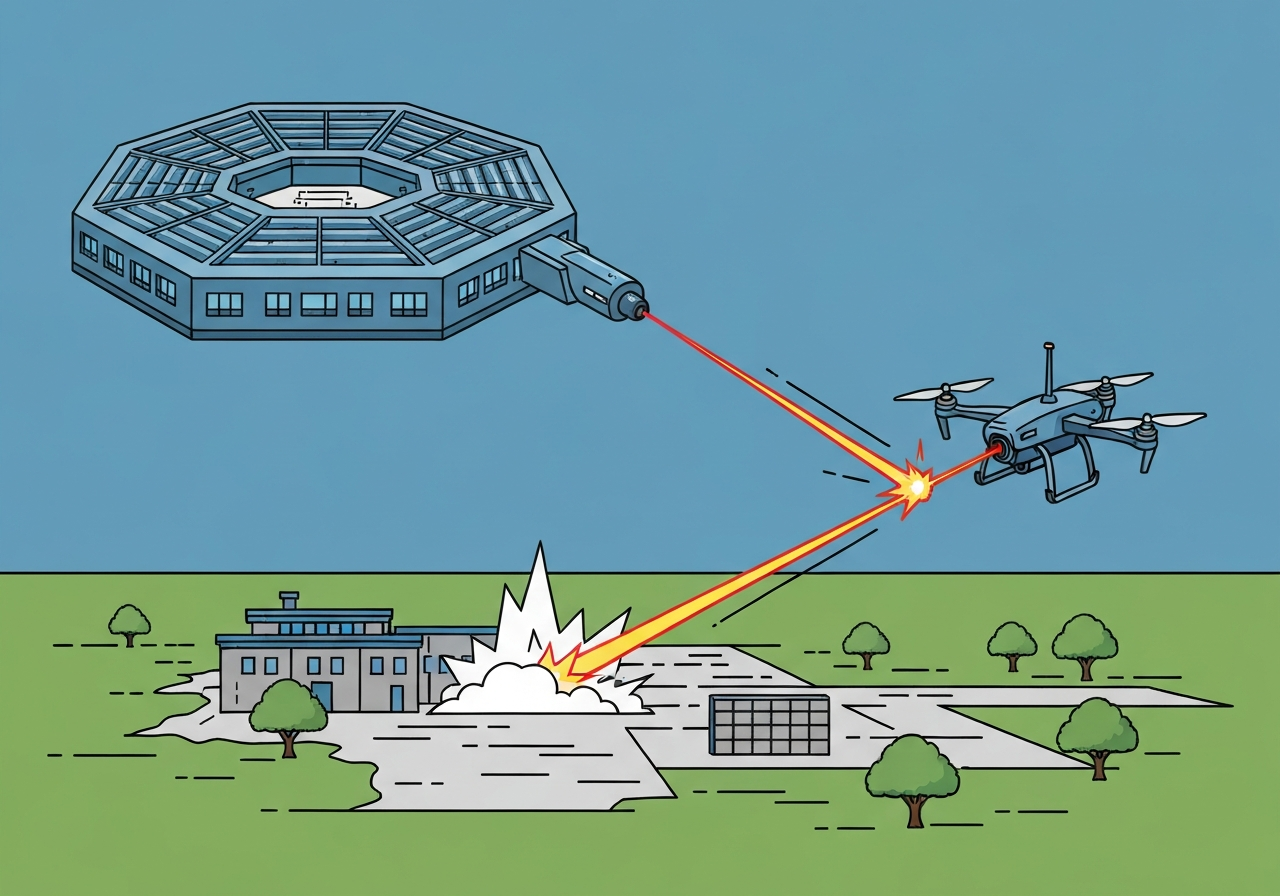
— Federal officials said the Department of Defense engaged and shot down a U.S. Customs and Border Protection (CBP) unmanned aircraft in the Fort Hancock area of southwest Texas on Wednesday. A U.S. official told reporters a laser counter‑unmanned aerial system was used to disable the drone while it was operating inside military airspace, with the engagement occurring away from populated areas and without impact to commercial flights. The FAA expanded an existing temporary flight restriction around Fort Hancock for “Special Security Reasons,” and the agencies said they will work to improve coordination after the incident. Lawmakers on the House Transportation and Infrastructure Committee raised immediate concerns about the risks of military action against another federal agency’s aircraft.
Key Takeaways
- On Feb. 27, 2026, DoD shot down a U.S. Customs and Border Protection drone near Fort Hancock, Texas, officials confirmed.
- A U.S. official said a laser counter‑UAS system was used to disable the unmanned aircraft; the Defense Department described the action as mitigation of a threat in military airspace.
- The FAA widened a temporary flight restriction (TFR) already in place around Fort Hancock for “Special Security Reasons;” agency said the restriction did not affect commercial airline operations.
- Lawmakers including Reps. Rick Larsen, André Carson and Bennie Thompson publicly criticized the lack of interagency coordination after the engagement.
- This is the second notable airspace disruption in Texas this month: on Feb. 11 the FAA briefly restricted airspace around El Paso amid military drone tests near Fort Bliss.
- Sources told reporters the Feb. 11 tests at Fort Bliss involved a high‑energy laser; that closure was announced, then partially reversed hours later.
- Officials emphasized the engagement occurred away from populated areas and that no commercial aircraft were nearby during the event.
Background
Fort Hancock is a small community on the U.S.‑Mexico border in Hudspeth County, Texas. The area lies within ranges where both civilian border security operations and military training can overlap; that proximity has created recurring tensions about airspace control and safety. CBP routinely operates unmanned aerial systems along the southern border for surveillance and interdiction support, while the Department of Defense conducts its own tests of counter‑drone and directed‑energy systems at nearby ranges.
Earlier in February, a related dispute prompted a temporary closure of airspace around El Paso after safety concerns were raised about military drone testing near Fort Bliss, adjacent to El Paso International Airport. White House officials told reporters then that the El Paso action followed incursions of small, nonmilitary aircraft tied to transnational criminal activity; the FAA initially announced a 10‑day restriction on commercial traffic before reversing that decision within hours. Those events set the context for heightened scrutiny of any military engagements involving unmanned aircraft over or near populated flight corridors.
Main Event
Federal agencies released a joint statement late Thursday saying the engagement occurred when the Defense Department used counter‑unmanned aircraft system authorities to mitigate what it characterized as a ‘‘seemingly threatening unmanned aerial system’’ operating in military airspace. The joint statement used the term “Department of War,” a formulation preferred by White House communications, when describing the Defense Department’s role in the action.
A U.S. official briefed on the incident told reporters that a laser‑based counter‑UAS weapon was employed to disable the CBP aircraft. Agency spokespeople said the engagement took place at a safe distance from populated areas and that there were no commercial flights in the immediate vicinity when the drone was taken down.
The FAA said it expanded a temporary flight restriction that had already been in effect around Fort Hancock for “Special Security Reasons.” FAA officials told CBS News the TFR was not affecting scheduled commercial airline operations, though it can alter general aviation and other low‑altitude traffic patterns near the border.
Members of the House Transportation and Infrastructure Committee immediately pressed for explanations, highlighting gaps in coordination. The three committee Democrats who commented urged clearer pre‑flight communication and stricter interagency protocols to prevent similar episodes that could endanger other aircraft or create diplomatic complications along the border.
Analysis & Implications
The use of a military counter‑UAS system against another federal agency’s drone raises procedural and legal questions about airspace authority and deconfliction. Military commanders have certain authorities to engage threats in designated military airspace, but CBP operates under different authorities and mission priorities; overlapping operations require robust, real‑time coordination to avoid misidentification and accidental escalation.
Operationally, laser and high‑energy systems change the calculus of airspace management. They can rapidly neutralize small aerial targets without explosive munitions, reducing risk of collateral damage on the ground, but their integration near civilian flight paths demands precise targeting and confirmation procedures. The Feb. 11 El Paso disruption—tied to similar test activity—shows how fragile local aviation confidence can be when military testing and civilian flights intersect.
Politically, the incident is likely to sharpen congressional oversight and prompt calls for written interagency protocols or mandatory notification windows before high‑risk engagements. Lawmakers will press the Department of Defense, Customs and Border Protection and the FAA for detailed timelines, communications logs and technical assessments of the weapon used to take down the drone.
Internationally, any visible military action near the border can complicate relations with neighboring countries if airspace breaches, stray debris or sensor misreads are suspected. Border communities and commercial operators will seek assurances that safety margins and notice procedures are adequate before conducting further tests or operations in mixed‑use airspace.
Comparison & Data
| Date | Location | Asset | Reported Weapon | Airspace Impact |
|---|---|---|---|---|
| Feb. 11, 2026 | Fort Bliss / El Paso, TX | Military drone tests | High‑energy laser (reported) | Brief FAA airspace restriction; initial 10‑day closure announced then narrowed |
| Feb. 27, 2026 | Fort Hancock, TX | CBP unmanned aircraft | Laser counter‑UAS (reported) | Expanded TFR around Fort Hancock; no reported commercial interruptions |
The table highlights how two separate events this month involved directed‑energy capabilities and prompted FAA action. Both incidents underscore the need for clear notification procedures: temporary flight restrictions were used as a safety tool, but their triggers and scope—announced by different agencies—varied, producing confusion among local operators and lawmakers.
Reactions & Quotes
Officials and lawmakers reacted quickly after news of the shoot‑down became public, calling for details and stronger interagency processes.
We engaged the unmanned system to mitigate what we assessed as a potential threat inside military airspace, conducting the action away from populated areas,
DoD/FAA/CBP joint statement (paraphrased)
The agencies emphasized safety and said they would enhance cooperation to prevent future episodes. Their joint statement framed the engagement as an application of counter‑UAS authority designed to protect military airspace and operations.
The action highlights unacceptable gaps in coordination between defense and border security agencies that must be fixed,
Reps. Rick Larsen, André Carson and Bennie Thompson (paraphrased)
The three lawmakers on the House Transportation and Infrastructure Committee pressed for congressional briefings and documentation, arguing that interagency missteps could endanger commercial and general aviation if not addressed promptly.
We are seeking a full timeline and technical assessment to understand why a CBP aircraft was targeted by a DoD countermeasure,
Transportation committee staff summary (paraphrased)
Committee staff signaled oversight hearings could follow if agencies cannot supply timely information about communications and command authorities in the incident.
Unconfirmed
- The precise technical model and output of the laser weapon used have not been publicly confirmed by the Defense Department as of this report.
- The claim that the El Paso airspace action on Feb. 11 was triggered directly by Mexican cartel drones was reported to reporters by White House officials but lacks public corroborating documents from border enforcement agencies.
- Detailed communications logs showing real‑time coordination between DoD, CBP and FAA during the Feb. 27 engagement have not been released and remain subject to verification.
Bottom Line
The Feb. 27 takedown of a CBP unmanned aircraft by Defense Department counter‑UAS forces in Fort Hancock highlights operational friction when military testing and federal border operations overlap in restricted airspace. While agencies say the engagement occurred safely and away from commercial traffic, lawmakers and local stakeholders are demanding clearer rules of engagement and notification protocols to prevent future incidents.
Expect stepped‑up congressional oversight and requests for after‑action reports that detail the technical means used, the chain of authority, and the timeline of warnings and communications. For aviation operators and border communities, the immediate policy question is whether existing deconfliction tools—TFRs, NOTAMs and interagency liaisons—are sufficient when directed‑energy systems and multiple federal missions operate in proximity.