
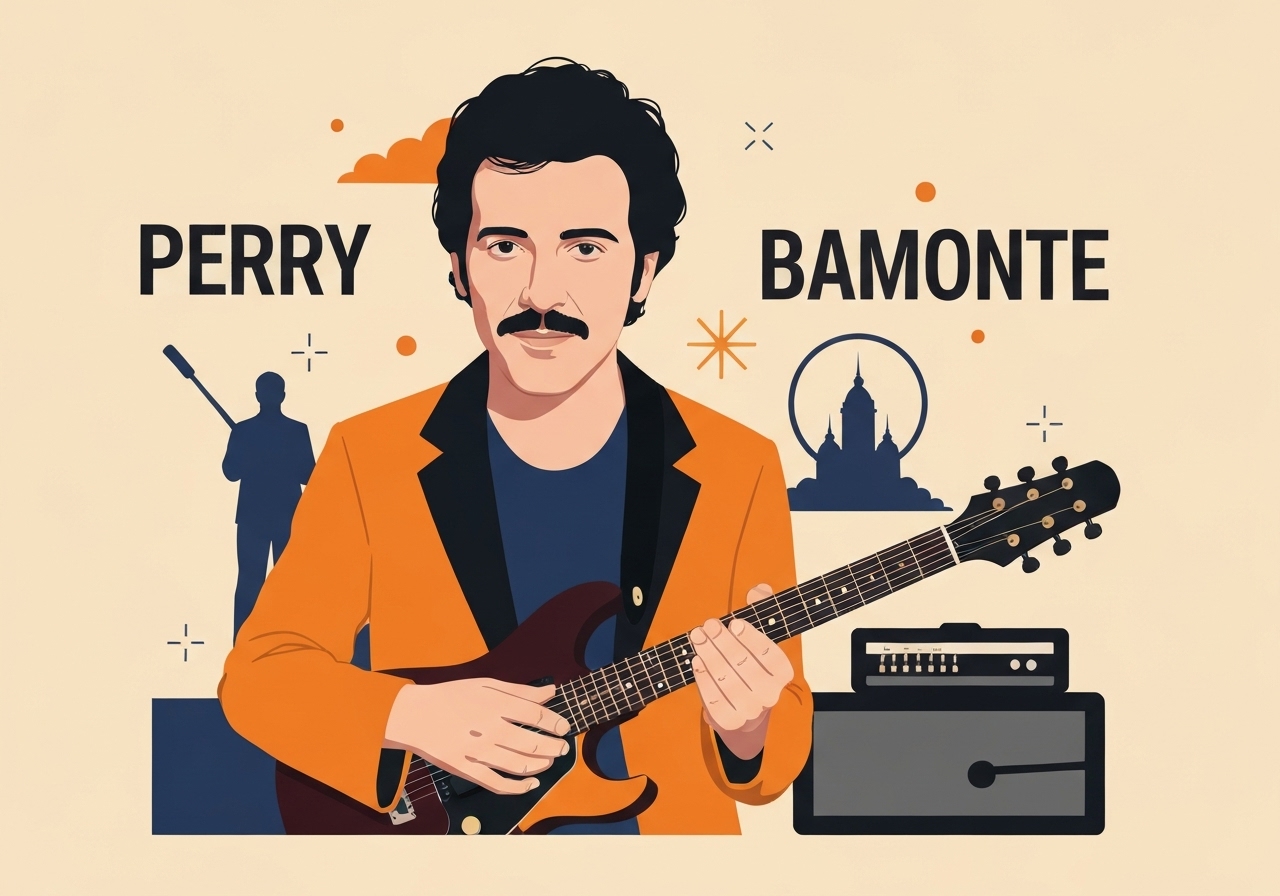
Lead: Perry Bamonte, a longtime guitarist and keyboard player who rose from road crew to full member of the English post‑punk band the Cure, has died at 65. The band announced on Dec. 26, 2025, that he passed away at home after “a short illness over Christmas.” Bamonte joined the group full time in 1990 and contributed to five studio and compilation albums while performing in roughly 400 shows during a 14‑year first stint. The Cure noted his steady creative presence and influence on the band’s sound through the 1990s and early 2000s.
Key Takeaways
- Perry Bamonte died at age 65; the band posted an announcement on Dec. 26, 2025, saying he had a short illness and died at home over Christmas.
- Bamonte became a full member of the Cure in 1990 after serving as a roadie and guitar technician.
- He played guitar, six‑string bass and keyboards on five Cure releases: Wish (1992), Wild Mood Swings (1996), Bloodflowers (2000), Acoustic Hits (2001) and The Cure (2004).
- During his initial 14‑year run with the band, he performed about 400 shows alongside frontman Robert Smith.
- Wish (1992) included the hit “Friday I’m in Love,” which spent 20 weeks on the Billboard Hot 100 and peaked at No. 18 on Aug. 8, 1992.
- The Cure described Bamonte as “a vital part of the Cure story,” emphasizing his creative steadiness and intuitive musicianship.
Background
The Cure formed in the late 1970s and became a defining act of post‑punk and alternative rock, mixing somber, gothic aesthetics with charting pop singles. Through the 1980s and 1990s the band underwent multiple personnel shifts; touring and technical staff sometimes moved into playing roles as the lineup evolved. Bamonte’s path — from road crew and guitar tech to full member — reflects a long tradition in rock where behind‑the‑scenes collaborators step into the spotlight when creative and logistical needs align.
By the time Bamonte joined full time in 1990, the Cure had already established Robert Smith as a singular figure in alternative music, known for his distinctive vocals and stage persona. Bamonte’s multi‑instrumental skills allowed the band to expand textures in studio arrangements and live sets, contributing both guitar layers and keyboard atmospheres that shaped the group’s 1990s era recordings. That period included the commercial success of Wish and extensive worldwide touring.
Main Event
The Cure posted a statement on Dec. 26, 2025, announcing Bamonte’s death and noting he had been ill for a short time and died at home over the Christmas period. The band’s message stressed Bamonte’s creative contributions and his long association with the group, from technical support roles into a full performing member. The announcement did not provide medical specifics beyond the description “short illness,” and offered remembrance of his presence both onstage and off.
Bamonte joined the Cure as a full‑time musician in 1990 after years working as a roadie and guitar technician, a transition that placed him in the lineup for major recordings and tours. He is credited on five principal releases spanning 1992–2004 and is documented as performing in roughly 400 shows during a 14‑year first tenure. Band setlists and live footage from that era show him alternating between electric guitar lines, six‑string bass parts and layered keyboard passages.
Among the albums Bamonte worked on, Wish (1992) remains the most commercially prominent, featuring “Friday I’m in Love,” a single that crossed over to mainstream radio and spent 20 weeks on the Billboard Hot 100, peaking at No. 18 on Aug. 8, 1992. Later albums such as Bloodflowers (2000) and The Cure (2004) leaned into moodier, textured production where Bamonte’s instrumental versatility supported the band’s shifting sonic priorities.
Analysis & Implications
Bamonte’s death highlights the often understated role of multi‑instrumental musicians who sustain a band’s sound while allowing a central songwriter or frontperson to remain the public face. In the Cure’s case, that meant Bamonte supplied sonic depth that reinforced Robert Smith’s songwriting and stage identity without seeking the spotlight. His background as a technician also meant he brought practical touring knowledge that can be critical to maintaining a consistent live presentation.
For the Cure’s historical narrative, Bamonte’s tenure covers a commercially fruitful and stylistically varied period. His contributions on Wish helped the band navigate mainstream exposure without abandoning the darker textures that defined their identity, a balance that influenced alternative rock throughout the 1990s. His death may prompt renewed attention to archival releases, liner‑note credits and retrospectives that reassess the role of non‑founding members in shaping a band’s catalogue.
Practically, the loss affects living memory of those tours and sessions; firsthand accounts from road crews, producers and bandmates help fill gaps that studio credits alone cannot. For fans and historians, interviews and session notes become more valuable as primary sources. Commercially, labels and rights holders sometimes respond to such moments with reissues, curated compilations or tribute programming; those moves both honor the artist and reshape catalog marketing.
Comparison & Data
| Release | Year | Bamonte’s primary roles |
|---|---|---|
| Wish | 1992 | Guitar, keyboards — includes “Friday I’m in Love” |
| Wild Mood Swings | 1996 | Guitar, six‑string bass, keyboards |
| Bloodflowers | 2000 | Keyboards, guitar textures |
| Acoustic Hits | 2001 | Compilation contributions / instrumentation |
| The Cure | 2004 | Guitar and keyboard parts |
The table above maps Bamonte’s credited roles across five principal releases between 1992 and 2004. While credits differ by track, the pattern shows consistent use of his multi‑instrumental skills. That versatility underpinned both studio arrangements and live set adaptability, particularly during extended tours in the 1990s when lineups had to cover complex layers of parts.
Reactions & Quotes
“He died after a short illness at home over Christmas.”
The Cure (official band statement)
“A vital part of the Cure story.”
The Cure (official band statement)
In the hours after the announcement, fans and fellow musicians took to social media to share memories of concerts and recordings where Bamonte’s playing or stage presence left an impression. Music writers noted the practical effect of his transition from road crew to full member, a trajectory that underscored the collaborative and adaptive nature of long‑running touring bands.
Unconfirmed
- No medical details beyond the band’s statement of a “short illness” have been released; specifics about the cause of death are not publicly confirmed.
- Reports about any hospitalization or prior health conditions have not been corroborated by official sources as of this publication.
Bottom Line
Perry Bamonte’s passing marks the loss of a musician whose career bridged technical support and creative performance within one of alternative rock’s most recognized bands. His work across five key releases and hundreds of live shows contributed texture and stability to the Cure’s sound during a period of commercial success and stylistic exploration.
For fans, fellow musicians and historians, Bamonte’s death will likely spur renewed interest in session credits, live recordings and the untold backstage narratives that shaped the group’s output. While immediate facts about his illness remain limited, the archival record—liner notes, interviews and concert documentation—will become the primary means to preserve and reassess his contribution to the Cure’s legacy.
Sources
- The New York Times — news report
- The Cure (official band website) — official band statement