
Lead
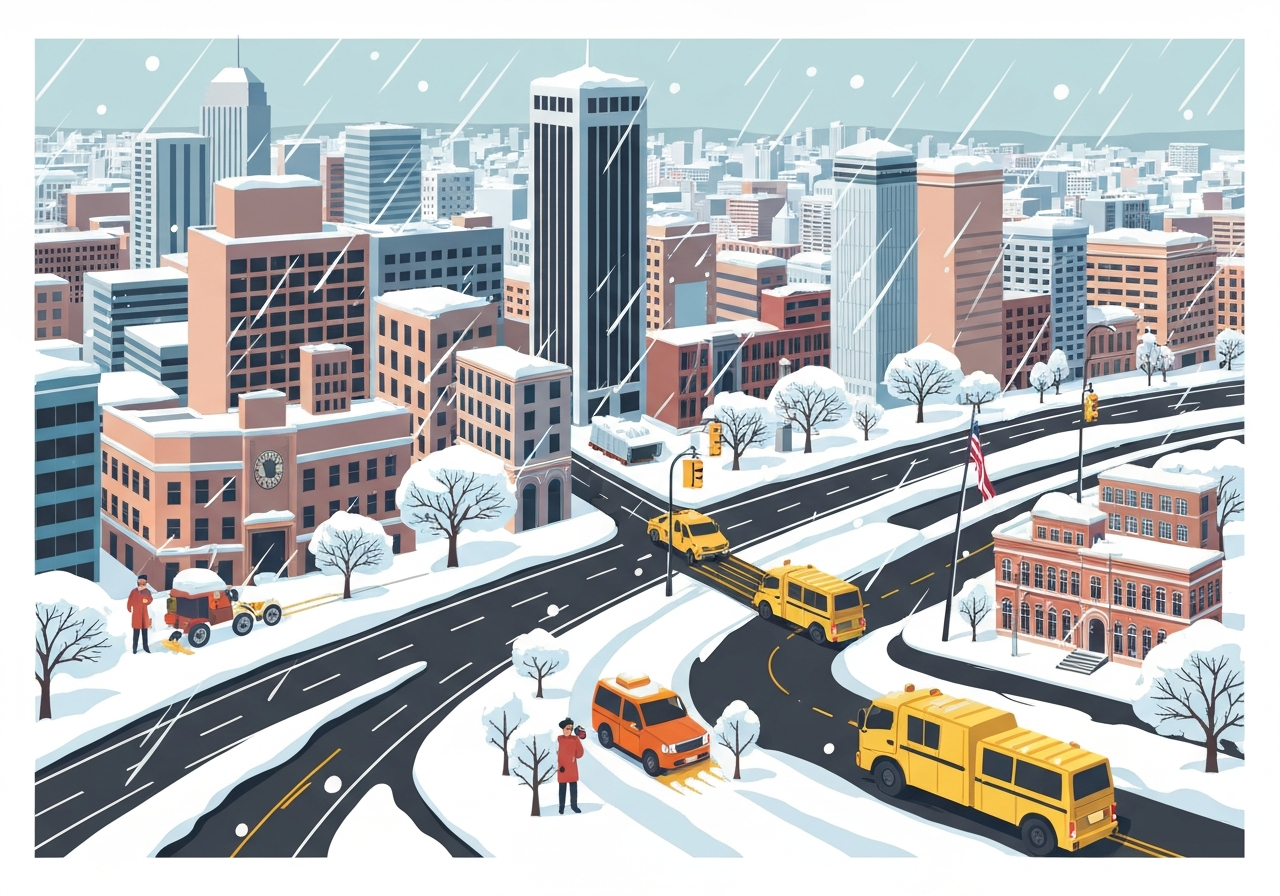
Mayor Cherelle L. Parker declared a Disaster Emergency in Philadelphia on February 22, 2026, as a major winter storm is expected to bring 12–18 inches of snow and dangerous wind gusts through Monday, February 23. The National Weather Service issued a Blizzard Warning citing heavy snow and high winds that could make travel hazardous and cause outages. City agencies have mobilized more than 1,000 personnel and over 800 trucks and pieces of equipment to prioritize emergency routes and critical services. Residents are urged to avoid travel, follow official alerts, and use ReadyPhiladelphia for updates.
Key Takeaways
- The National Weather Service forecast calls for 12–18 inches of snow and issued a Blizzard Warning covering the event; high winds raise the risk of power outages.
- Mayor Parker declared a Disaster Emergency on February 22, 2026, enabling citywide mobilization of resources and emergency measures.
- More than 1,000 city personnel and 800+ trucks and pieces of equipment—including triaxle plows, compactors, bobcats and skid steers—are deployed to clear over 2,500 miles of roadway.
- The City activated its Emergency Operations Center to coordinate across agencies, utilities and regional partners and to share real-time information.
- City services adjustments: administrative buildings, the Free Library branches, recreation centers and courts closed Monday, February 23; School District of Philadelphia moved to virtual instruction that day.
- Sanitation suspended trash and recycling collections for Monday, Feb. 23 and Tuesday, Feb. 24, shifting collections two days later and suspending rear-driveway pickups.
- Office of Homeless Services declared Code Blue at 3 p.m. on Feb. 22; additional shelter capacity and warming centers opened with intake adjustments.
Background
The mid-February system follows meteorological guidance from the National Weather Service that upgraded the event to a Blizzard Warning based on expected snowfall and wind. Philadelphia typically faces elevated hazards when heavy snow coincides with strong gusts: impacts include stranded vehicles, blocked emergency routes and localized power outages. In recent winters the City has expanded its fleet and interagency coordination to reduce response times, invest in pre-storm treatment of primary routes and maintain critical services under prolonged snow events.
Philadelphia’s snow-fighting plan concentrates first on designated snow emergency routes and major thoroughfares to preserve access for Police, Fire and EMS, then moves to secondary and neighborhood streets as conditions allow. The Streets Department and Sanitation have operational protocols that reassign crews and equipment into snow operations, limiting other services like curbside collection during peak response. The Office of Emergency Management (OEM) serves as the central coordinator for resource requests, public messaging and mutual-aid arrangements with regional partners and utilities.
Main Event
As the storm arrived, Mayor Parker’s declaration of a Disaster Emergency authorized the full mobilization of city staff and assets and permitted operational flexibilities to respond quickly. Streets crews deployed plows and salt spreaders across major arteries, and specialized smaller equipment—bobcats, skid steers and excavators—were staged for narrow residential corridors. The City reports more than 800 trucks or equipment pieces and 1,000+ personnel activated to sustain around-the-clock operations during and after the storm.
Service disruptions were announced preemptively: administrative buildings, library branches, recreation centers and courts closed to the public for Monday, February 23, 2026, and School District buildings shifted to virtual learning that day. Sanitation redirected staff to snow operations, suspending curbside collections for two days and moving pickups two days later in affected zones; rear driveway collections will not be performed during the impacted week to reduce the risk of stuck vehicles.
Homeless services enacted a Code Blue beginning at 3 p.m. on February 22, with the City adding beds and opening warming centers including Hub of Hope, Kensington Wellness Support Center and Prevention Point on specified overnight schedules. The Office of Emergency Management activated the Emergency Operations Center to monitor conditions, coordinate with utilities and publish guidance through OEM social channels and ReadyPhiladelphia alerts.
Analysis & Implications
Operationally, the Disaster Emergency declaration gives Philadelphia legal and logistical tools to shift staffing, reassign equipment and coordinate procurement or mutual aid as conditions demand. Mobilizing 1,000+ personnel and 800+ pieces of equipment reflects a large-scale municipal response comparable to prior multi-inch events, but the combination of wind and heavy snow elevates the risk profile by increasing outages and tree damage potential.
The suspension and rescheduling of sanitation services will create a backlog of curbside material and increase demand at Sanitation Convenience Centers; the City advises residents to set materials curbside (not in rear driveways) and to expect two-day delays. Prolonged disruptions could strain residents who rely on scheduled collections or daytime services, particularly seniors and households with limited storage.
Public-health and emergency services face dual pressures: maintaining access for Police, Fire and EMS on prioritized routes while protecting crews’ safety in hazardous travel. The closure of health centers and shift to remote schooling reduce in-person touchpoints but may complicate access to services for those without robust internet or stable shelter. The Code Blue activation and added shelter capacity are critical mitigations for people experiencing homelessness during extreme cold and snow.
Comparison & Data
| Item | Detail |
|---|---|
| Forecasted snow | 12–18 inches (NWS) |
| Personnel mobilized | 1,000+ city staff |
| Equipment mobilized | 800+ trucks and pieces of equipment |
| Roadway coverage | 2,500+ miles prioritized |
| Sanitation collection | Suspended Mon–Tue; two-day delay for week of Feb. 23 |
This table summarizes the numerical scope of the City’s response. The forecasted 12–18 inches and Blizzard Warning justify the scale of deployment; resource numbers indicate a robust, citywide mobilization focused on preserving emergency access and restoring normal operations as quickly as conditions permit.
Reactions & Quotes
City leaders framed the declaration as a preemptive step to protect residents and critical services.
“The declaration of a Disaster Emergency will allow Philadelphia to more effectively fight this large and dangerous storm as it rolls in.”
Mayor Cherelle L. Parker (official statement)
The Streets Department emphasized the priority of emergency routes and urged motorists to avoid unnecessary travel so crews can work safely.
“Our crews are focused on keeping routes open for Police, Fire and EMS; please give them room to operate and move vehicles off snow emergency routes.”
Streets Department spokesperson (city agency)
Homeless services stressed outreach and shelter access during the Code Blue activation.
“We have increased capacity and will continue outreach to ensure people can get into shelter during the extreme cold.”
Office of Homeless Services representative (city agency)
Unconfirmed
- Exact timing for full restoration of trash and recycling collections across all neighborhoods depends on storm evolution and plow progress; specific street-level schedules remain subject to change.
- Precise locations and durations of localized power outages are evolving; utility restoration timelines will depend on damage assessments and access conditions.
Bottom Line
Philadelphia has prepositioned significant personnel and equipment and declared a Disaster Emergency to streamline response as a Blizzard Warning and forecasted 12–18 inches of snow threaten the region on February 22–23, 2026. The City’s priority is keeping emergency routes open for Police, Fire and EMS while protecting public safety through closures, Code Blue sheltering and coordinated communications.
Residents should avoid unnecessary travel, move vehicles off snow emergency routes when required, prepare for service delays—especially sanitation—and sign up for ReadyPhiladelphia and follow @PhilaOEM for real-time updates. The situation remains weather-dependent; officials will adjust operations and provide further guidance as conditions and impacts become clearer.
Sources
- City of Philadelphia press release (official city announcement)
- National Weather Service (federal weather agency: forecast and Blizzard Warning)
- ReadyPhiladelphia (city emergency alerts and guidance)