
Lead
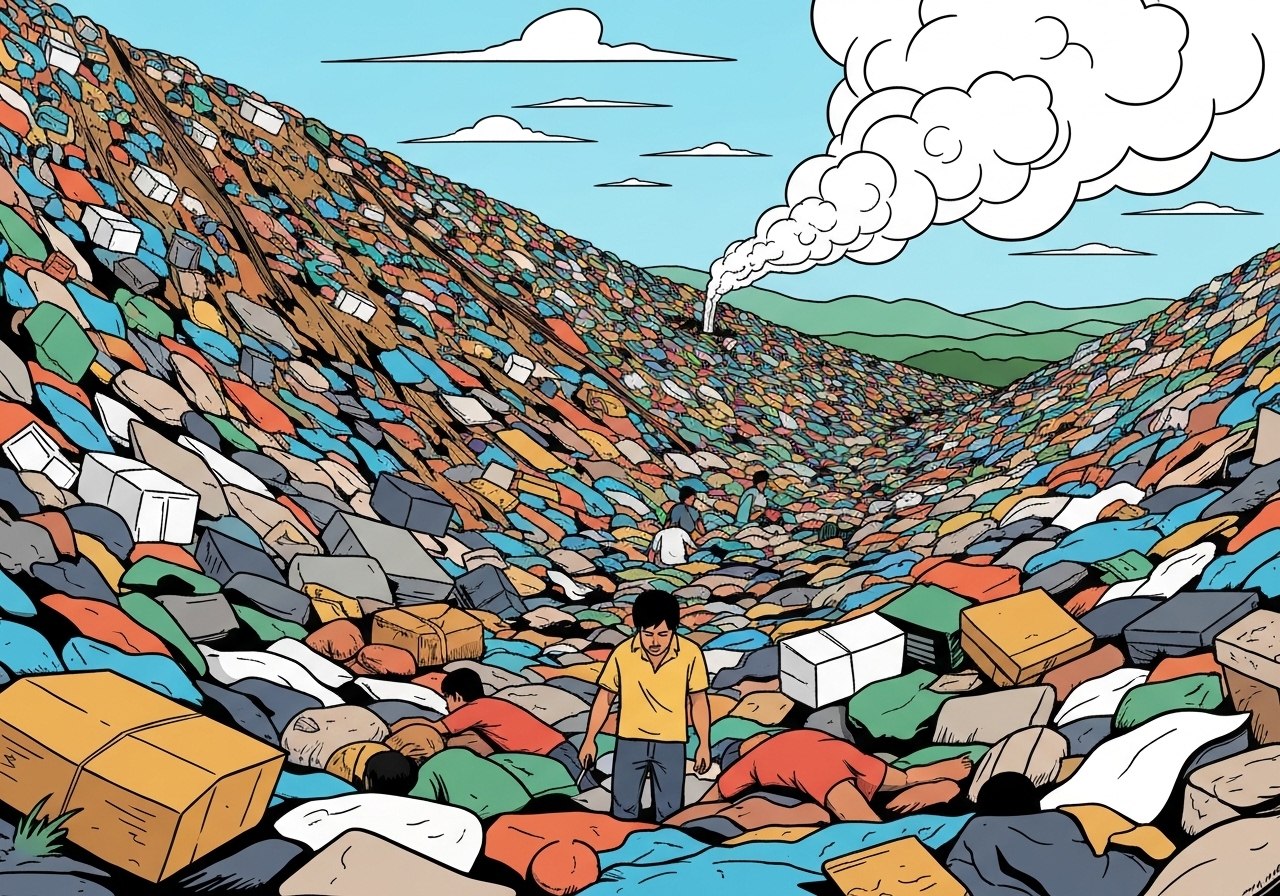
On Thursday afternoon in the village of Binaliw, Cebu City, a large mound of waste and earth collapsed onto low-slung buildings at a municipal landfill, burying and trapping dozens. Emergency crews recovered 13 survivors overnight while one person died in transit to hospital and about a dozen others sustained injuries. As of Friday officials reported 38 people remained unaccounted for and intensive search-and-rescue operations continued. Local authorities said landfill staff were among those affected and an emergency meeting of facility managers was convened.
Key takeaways
- Location: Binaliw landfill, Cebu City, Philippines; collapse occurred Thursday afternoon and was reported Friday.
- Casualties: 1 confirmed dead (a female landfill worker), roughly a dozen injured and hospitalized.
- Missing: 38 people reported missing and presumed trapped after the slide; 13 people were rescued alive overnight.
- Facility size and workforce: The affected waste facility employs about 110 people, according to local officials.
- Response: Multiple rescue teams using earth-moving equipment continued search-and-retrieval with safety protocols in place.
- Damage: Buildings used for sorting recyclables and offices were crushed; photographs show twisted tin roofs and deformed iron beams.
- Historical context: The Philippines has experienced deadly dumpsite collapses before, notably the July 2000 Quezon City disaster that killed over 200 people.
Background
Open dumpsites and poorly managed landfills have long posed safety and health risks across the Philippines, particularly near low-income communities where informal waste scavenging occurs. In many municipalities, economic pressure and constrained waste management budgets have resulted in large exposed waste mounds and makeshift sorting structures that lack engineered slope protections. Previous catastrophes have prompted legislative and regulatory responses, yet enforcement and resource gaps remain in some areas.
The most consequential precedent is the July 2000 Quezon City landslide, which followed days of stormy weather and resulted in more than 200 deaths, numerous missing persons and prompted laws to close illegal dumpsites and improve municipal waste handling. Municipal waste operations typically combine mechanized equipment with manual labor for sorting and scavenging, mixing vulnerable workers, informal recyclers and heavy machinery in constrained spaces. That combination raises both safety and occupational-health concerns when piles become unstable.
Main event
Officials reported that a mass of garbage, earth and debris suddenly gave way on Thursday afternoon at the Binaliw landfill, collapsing onto nearby low-rise structures used for waste sorting and administrative functions. Witnesses and survivors described a rapid event that arrived without warning and in fair weather; one employee said he escaped by crawling from beneath rubble after seeing a light and fearing further slides. Rescue teams worked through the night and into Friday, extracting 13 people alive and transporting injured survivors to hospitals.
Regional police director Brig. Gen. Roderick Maranan told reporters that one female landfill worker who had been rescued died while being taken to a hospital; about a dozen other survivors were receiving treatment for injuries. Cebu Mayor Nestor Archival and the Office of Civil Defense announced ongoing operations to find the remaining 38 people reported missing. Municipal crews and national responders deployed excavators and other heavy equipment to comb distorted structures and debris fields while attempting to minimize additional collapses.
Pictures released by authorities show collapsed tin roofs, bent iron beams and a chaotic scene of mixed organic and inorganic waste blended with soil. Relatives of the missing gathered at the site, pleading with crews to intensify efforts as emergency managers stressed adherence to safety protocols to prevent secondary incidents. Authorities indicated an emergency meeting with landfill management was planned to review safety systems and personnel accounting; the facility employs about 110 people in total.
Analysis & implications
First, the collapse highlights the acute hazard that unengineered waste mounds present when slope stability, drainage and compaction are not managed to civil-engineering standards. Even in dry weather, internal instability—caused by decomposition, gas pockets, or subsurface erosion—can trigger sudden slides. Local governments that rely on open or minimally engineered dumps face ongoing risks unless investment is made in safer landfill design and monitoring systems.
Second, the incident underscores the mixed workforce at many Philippine waste sites: formal employees, contract workers and informal scavengers often work in close proximity to heavy machinery and unstable material. That arrangement complicates accountability and emergency planning, and can increase casualty counts when a collapse occurs. Worker safety protocols, routine hazard assessments and clear evacuation routes are critical but unevenly applied across jurisdictions.
Third, the humanitarian and public-health implications extend beyond immediate casualties. Buried workers and scavengers may be exposed to toxins, biological hazards and injury, while families of the missing face prolonged uncertainty. The event may prompt renewed calls for accelerated closure of open dumps, improved waste diversion and recycling programs to reduce mound heights, and expanded social protection and alternative livelihood programs for informal recyclers.
Finally, the political and fiscal consequences could be significant for local authorities. Emergency response and recovery costs, legal inquiries, and potential regulatory scrutiny may follow, while pressure for infrastructure investment may compete with other budgetary priorities. International agencies and civil-society groups that track disaster risk reduction may also see this as an example reinforcing the need for integrated waste and disaster management planning.
Comparison & data
| Event | Date | Confirmed deaths | Rescued/Found | Context |
|---|---|---|---|---|
| Binaliw landfill collapse (Cebu) | Thursday (reported Friday) | 1 | 13 rescued; 38 missing | Unengineered waste mound at municipal facility |
| Quezon City dumpsite disaster | July 2000 | 200+ | Many missing | Collapse after days of stormy weather; led to legislation |
The table contrasts the current Cebu incident with the larger 2000 Quezon City disaster to show scale and context. While the casualty numbers differ markedly, both events point to recurring vulnerabilities in how waste sites are managed and regulated. Data gaps remain on how many informal scavengers were present and on detailed geotechnical assessments of the Binaliw mound; those will affect longer-term mitigation planning.
Reactions & quotes
Local officials emphasized ongoing search efforts and promised transparency and assistance for affected families while cautioning about safety at the scene. Mayor Nestor Archival described the city government’s full engagement in the response and pledged follow-up actions.
“All response teams remain fully engaged in search and retrieval efforts to locate the remaining missing persons with strict adherence to safety protocols,”
Mayor Nestor Archival (Cebu City official statement)
Regional police provided casualty details and the status of rescued workers, noting the death of a female worker during transport to medical care. Rescue leaders emphasized careful excavation to avoid triggering further collapses.
“One of those rescued died while being brought to a hospital; others are wounded and receiving treatment,”
Brig. Gen. Roderick Maranan (regional police director)
Families and on-site workers conveyed the human toll and urgency for swift but safe recovery operations. One survivor recounted crawling from beneath debris after fearing more slides, describing the episode as traumatic and life-changing.
“I saw a light and crawled toward it in a hurry because I feared there will be more landslides,”
Jaylord Antigua (landfill office worker, survivor)
Unconfirmed
- Exact number of informal waste pickers present at the time of collapse has not been independently verified and remains unclear.
- Whether nearby residential houses were directly impacted by the slide has not been fully confirmed by a household-level survey.
- Detailed geotechnical causes (e.g., gas pocket failure, subsurface erosion) of the collapse await formal engineering assessment.
Bottom line
The Binaliw landfill collapse in Cebu City is a tragic, still-unfolding event that has left at least one person dead, about a dozen injured and dozens unaccounted for. It underscores persistent safety gaps at some waste sites where large unengineered mounds, mixed workforces and limited oversight converge to create acute disaster risk.
Short-term priorities are locating the missing, treating the injured and stabilizing the site to prevent further harm; longer-term responses should focus on engineering safer landfill operations, strengthening worker protections, and addressing the socioeconomic drivers that keep informal scavenging prevalent. The incident may prompt renewed policy attention and funding to reduce the likelihood of similar collapses in the future.
Sources
- ABC News (international news report) — media outlet reporting on the incident.
- The Associated Press (news agency) — contributed reporting noted in coverage.
- Philippine local government statements (official) — mayoral and civil defense updates and statements are the basis for operational details.