
Lead
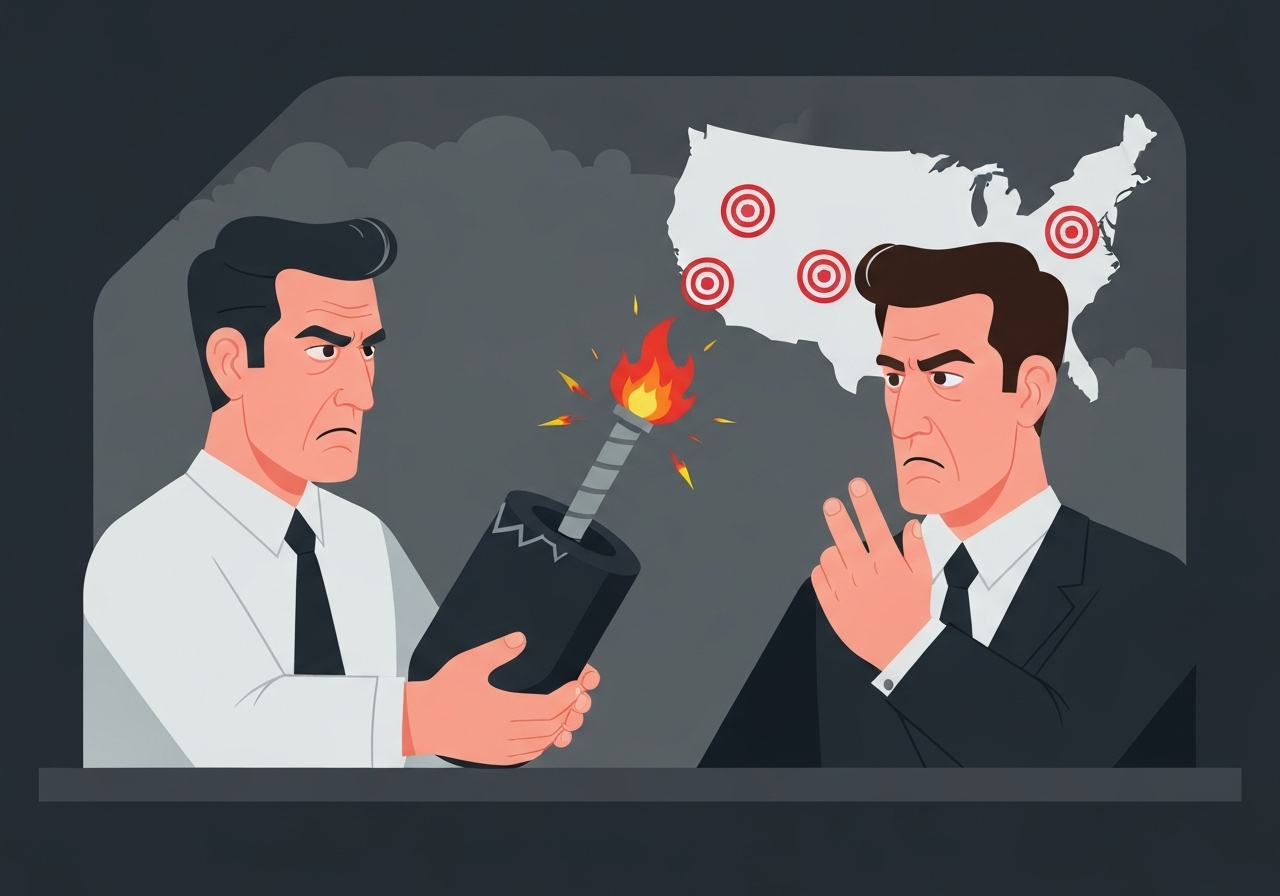
Federal prosecutors say Brian J. Cole Jr., 30, told FBI agents after his Dec. 4, 2025 arrest that he planted two pipe bombs outside the Republican and Democratic National Committee headquarters in Washington on the night of Jan. 5, 2021, because he was disillusioned with both parties and believed someone needed to “speak up.” The devices never detonated and were found on Jan. 6, 2021, the same day rioters stormed the U.S. Capitol. A Justice Department memo submitted this weekend argues Cole should remain detained while his case proceeds, citing bomb-making materials recovered at his home. Prosecutors say his statements and the physical evidence together link him to the placements and pose a continuing danger to the public.
Key Takeaways
- Defendant and arrest: Brian J. Cole Jr., 30, of Woodbridge, Virginia, was arrested on the morning of Dec. 4, 2025, after a nearly five-year investigation.
- Targets and timing: Prosecutors allege Cole placed pipe bombs outside RNC and DNC headquarters on the night of Jan. 5, 2021; devices were discovered Jan. 6, 2021.
- Device specifics: Investigators say timers on each device were set for 60 minutes; neither device detonated.
- Physical evidence: Authorities report finding shopping bags of bomb-making components in Cole’s home and car following the arrest.
- Statements to investigators: In the Justice Department memo, Cole is quoted saying he wanted to “speak up” for people who believed the 2020 election was stolen and that he was fed up with both parties.
- Prosecutors’ detention argument: Officials contend the failure of the devices to explode was luck, not lack of intent, and that Cole presents a danger warranting pretrial detention.
- Court schedule: A federal hearing on detention is set for Tuesday in Washington’s federal court, where defense counsel will present their response.
Background
The alleged placements occurred on Jan. 5, 2021, just before the Jan. 6 breach of the U.S. Capitol that aimed to disrupt certification of the 2020 presidential election. That day has remained the focus of extensive investigations by the FBI, Department of Justice, and congressional committees, and it continues to shape debates over political violence in the United States. The charged conduct here is unique within that broader inquiry because it involves explosive devices placed at national party headquarters, raising specific questions about threat assessment for political institutions.
Law enforcement officials describe the probe into the devices as a nearly five-year effort culminating in Cole’s early December arrest. The case intersects with a long-running effort by federal prosecutors to identify and charge actors linked to violence and plots connected to the Jan. 6 period. Political polarization and unproven claims about election integrity after 2020 created an atmosphere in which some actors adopted extremist rhetoric and, in isolated cases, violent acts.
Main Event
According to the Justice Department memo, Cole initially denied involvement when interviewed after his arrest but then confessed hours into questioning. Prosecutors say he acknowledged driving to Washington, stowing two explosives inside a shoebox in the back seat of a Nissan Sentra, and placing one device outside each party headquarters. The memo quotes Cole describing a sense that “something just snapped” after “watching everything, just everything getting worse.”
The memo reports that Cole told investigators he set each timer for 60 minutes and that he was “pretty relieved” the devices did not detonate because he did not intend to kill anyone, having placed them at night. Federal officials counter that the absence of an explosion resulted from luck rather than lack of effort, and they stress the risk the devices posed to pedestrians, office workers, law enforcement, first responders, and political leaders who were in or near the buildings on Jan. 6.
Law enforcement recovered shopping bags of bomb-making components at Cole’s home and car, which prosecutors cite as physical evidence connecting him to the placements. The government describes the arrest as a major breakthrough in an investigation that spanned almost five years and that relied on interviews, physical evidence, and analysis to narrow in on a suspect.
Analysis & Implications
Legally, the Justice Department’s detention memo is focused on danger to the community and flight risk, two central factors in pretrial custody decisions. Prosecutors emphasize the combination of admissions and physical evidence—timers, components, and the shoebox method—to argue Cole presents an ongoing threat. Defense attorneys are expected to stress his stated reluctance to harm people and his alleged remorse, and the court will weigh those assertions against the government’s portrayal of precaution and planning.
From a security standpoint, the incident underscores vulnerabilities at high-profile political sites. Even non-detonating devices can cause panic, force evacuations, and divert law enforcement resources; the placement of timed explosive devices at party headquarters creates a distinct threat profile that requires tailored mitigation. Agencies responsible for protecting political institutions will likely review screening, surveillance, and perimeter measures in the wake of these allegations.
Politically, the case revives tensions surrounding Jan. 6 and the broader aftermath of the 2020 election. The suspect’s stated motive—disillusionment with both parties and sympathy for election-fraud claims—illustrates how misinformation and partisan narratives can feed violent intent among isolated actors. The prosecution may influence public debate about detection of domestic threats and the balance between civil liberties and preventative security measures.
Comparison & Data
| Target | Date placed | Timer (min) | Detonated |
|---|---|---|---|
| Republican National Committee (RNC) | Jan. 5, 2021 | 60 | No |
| Democratic National Committee (DNC) | Jan. 5, 2021 | 60 | No |
The small table above summarizes details prosecutors included about the two alleged devices. While neither device exploded, prosecutors note that both were active and set with identical timers, a pattern they argue indicates deliberate preparation rather than impulsive or abortive conduct. Comparatively, many Jan. 6-related prosecutions have involved assault, obstruction, or siege conduct; an alleged bombing plot directed at party headquarters carries a distinct domestic-terrorism risk profile and may change investigative priorities.
Reactions & Quotes
Officials from the Justice Department framed the arrest as the product of a long investigation and emphasized public safety concerns.
“The defendant’s choice of targets risked the lives not only of innocent pedestrians and office workers but also of law enforcement, first responders, and national political leaders,”
U.S. Department of Justice (detention memo)
The memo also records an alleged on-the-record comment by the suspect about his feelings toward the parties.
“I really don’t like either party at this point,”
Brian J. Cole Jr. (quoted in DOJ memo)
Defense lawyers have signaled they will press the court on detention, underscoring the presumption of innocence while contesting the government’s hazard narrative.
“Our client is entitled to a full and fair hearing before any determination of danger is made,”
Defense counsel (court filing)
Unconfirmed
- Whether Cole acted entirely alone or had contact with others who helped plan or procure materials remains under investigation.
- No public evidence has confirmed that Cole intended to cause fatalities; his statement about not wanting to kill anyone is recorded in the memo but motive elements are subject to courtroom testing.
- Links between this alleged device placement and other Jan. 6 cases or organized groups are not confirmed and have not been publicly substantiated.
Bottom Line
The Justice Department memo presents a detailed account tying Brian J. Cole Jr. to two pipe bombs placed outside the RNC and DNC on Jan. 5, 2021, and it argues those facts justify continued detention pending trial. Key evidentiary points include alleged admissions, timers set for 60 minutes, and bomb-making components recovered after his Dec. 4, 2025 arrest. The failure of the devices to detonate does not eliminate the legal and security stakes; prosecutors treat non-detonation as fortunate rather than exculpatory.
As the case moves to a detention hearing and, potentially, full criminal proceedings, courts will weigh public-safety claims against defense assertions of intent and character. Independently, the episode is likely to prompt renewed security reviews at political party facilities and sustain public debate about how misinformation and partisan grievance can translate into violent acts against democratic institutions.
Sources
- NPR (news report summarizing DOJ memo and arrest)
- U.S. Department of Justice (official: detention memo and related court filings)