
Lead
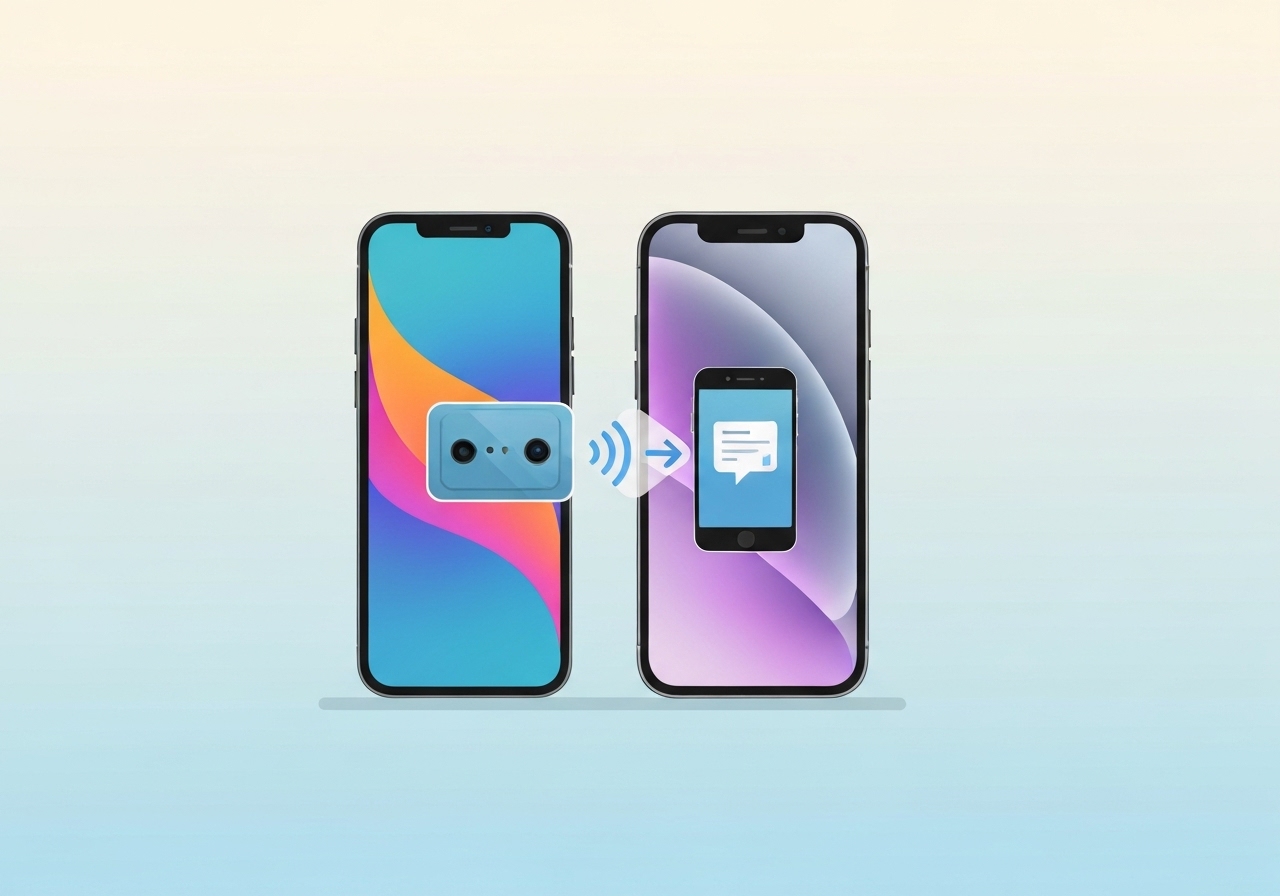
Google has introduced cross-platform AirDrop compatibility for Pixel 10 phones, enabling direct file transfers with iPhone, iPad, and macOS devices. The company announced the capability in mid-November 2025 and says the feature works peer-to-peer without routing content through servers. The rollout is limited to the Pixel 10 series for now, and Google says it plans to expand to other devices later. Users must adjust discoverability settings on the receiving device to make transfers possible.
Key Takeaways
- Pixel 10 series owners can send and receive files with iPhone, iPad, and macOS devices using AirDrop-compatible transfers.
- Transfers are direct peer-to-peer, and Google states shared content is not logged or routed through its servers.
- To send from Pixel 10, the Apple device must be set to be discoverable to anyone; Google documents note a default discoverability timeout of 10 minutes.
- Receiving on Pixel 10 requires enabling a discoverable or receive mode so incoming AirDrop transfers can be accepted.
- Google implemented the feature independently and engaged a third-party security firm for penetration testing.
- The change is currently restricted to Google’s hardware and is not an Android-wide feature.
Background
AirDrop has long been a convenient, private way for Apple users to share files across iPhone, iPad, and Mac devices, with options such as Contacts Only and Everyone to control discoverability. Android has historically lacked a single, ubiquitous equivalent; Google introduced Quick Share as its standard sharing layer but it has been largely Android-to-Android. The persistence of platform-specific sharing has reinforced user lock-in inside each ecosystem, and cross-platform workarounds have required extra user steps or third-party apps.
Over recent years, several messaging and sharing standards, such as RCS for text messaging, have narrowed some gaps between iPhone and Android functionality. Still, seamless proximity-based file transfer remained a notable exception. Google has signaled interest in greater compatibility in the past, and the new Pixel 10 capability represents a deliberate engineering effort to bridge one of the most visible limitations in cross-platform device interactions.
Main Event
Google announced that Pixel 10 phones can now appear to Apple devices in a way that lets users send and receive files using the AirDrop flow. For a Pixel 10 user to send to an Apple device, the Apple owner must temporarily set their device to be discoverable to everyone; Google notes an automatic timeout of 10 minutes for that setting. The Pixel user can then see the Apple device via Quick Share and initiate the transfer, which the Apple user approves just like any AirDrop request.
The reverse process is similar: the Pixel 10 is put into a discoverable receive mode, then the Apple device starts an AirDrop transfer and the Pixel owner accepts. Google says this connection is direct and peer-to-peer, and that no content is routed through Google servers or logged by the company. The company published support documentation and a security post explaining the technical approach and privacy considerations.
When asked whether Apple participated in building the compatibility, Google spokesperson Alex Moriconi confirmed the work was done without Apple collaboration and said the implementation was vetted internally and externally. Google also published an independent security assessment and wrote that it would welcome working with Apple in the future to enable a Contacts Only mode if Apple chose to engage.
Analysis & Implications
Technically, enabling AirDrop interoperability without Apple cooperating is notable because AirDrop is traditionally an Apple-controlled protocol tied closely to its operating systems and identity systems. Google appears to have implemented the necessary discovery and transfer behaviors on Pixel 10 devices so that Apple devices treat the Pixel like any other AirDrop peer when discoverability is set to Everyone. That approach sidesteps Contacts Only protections for now, which both parties acknowledge has privacy trade-offs.
Privacy and security will be focal points for users and regulators. Google emphasizes a peer-to-peer link and a lack of server-side logging, and it engaged an external firm for penetration testing to bolster that claim. Nevertheless, requiring ‘discoverable to anyone’ removes the Contacts Only guardrail that many Apple users rely on to prevent unsolicited transfers, which could make some users or security teams wary until a Contacts Only flow is available.
Commercially, the move lowers a small but visible friction point for mixed-device environments, particularly among families, workplaces, and education settings where both Apple and Pixel 10 devices coexist. For Google, the announcement may increase the appeal of Pixel hardware for users who value frictionless sharing with Apple devices, though the restriction to Pixel 10 limits immediate impact. For Apple, the development creates a choice: technically accept the compatibility as-is, negotiate a Contacts Only extension, or modify AirDrop behavior in ways that could affect cross-platform transfers.
Comparison & Data
| Feature | Apple AirDrop | Pixel 10 with AirDrop compatibility |
|---|---|---|
| Supported endpoints | iPhone, iPad, macOS | Pixel 10 (send/receive) with iPhone, iPad, macOS |
| Connection type | Peer-to-peer (Bluetooth/Wi-Fi) | Peer-to-peer (Google implementation) |
| Contacts-only option | Yes | Not yet; currently requires Everyone discoverability |
| Discoverability timeout | User controlled | Google documents note a 10-minute automatic option |
The table summarizes functional differences that matter to privacy and everyday use. The principal limitation today is the absence of a Contacts Only flow when a Pixel 10 participates, which Google acknowledges and has invited Apple to help address. The net effect is practical interoperability with a measurable privacy trade-off until finer-grained discovery modes are implemented.
Reactions & Quotes
Google provided an on-the-record comment confirming independent development and internal and external security review. Below are two representative statements and context about why they matter to users and security teams.
‘We accomplished this through our own implementation,’ said Alex Moriconi, describing Google’s approach to enabling AirDrop compatibility on Pixel 10 phones.
Google spokesperson Alex Moriconi (company spokesperson)
Moriconi’s statement confirms Google did not collaborate with Apple and emphasizes internal ownership of the engineering and security assessment process. That assertion will shape how analysts interpret the risk profile and whether Apple might consider cooperative extensions such as Contacts Only.
‘We welcome the opportunity to work with Apple to enable “Contacts Only” mode in the future,’ the Google security blog post states, while also describing a third-party security assessment used to validate the implementation.
Google Security Blog (official company blog)
Google’s explicit invitation to collaborate signals a possible avenue for restoring the finer-grained privacy control Apple users expect. The linked security assessment is intended to preempt concerns Apple might raise about the safety of an independent implementation.
Unconfirmed
- Whether Apple will officially approve or block Pixel 10 devices from appearing in AirDrop flows remains unconfirmed and no formal Apple response has been published at the time of writing.
- Google’s timeline for expanding the feature beyond the Pixel 10 series is not specified beyond its statement that Pixel 10 is first in line to receive the experience.
- Details of the third-party security report are summarized by Google; independent verification of every technical claim in that report has not been released publicly.
Bottom Line
This change is a pragmatic step toward reducing one piece of the ecosystem friction that separates Apple and Android users: proximity-based file transfer. For Pixel 10 owners, it delivers a familiar AirDrop-like experience with Apple devices today, but it does so under a discoverability model that temporarily relaxes Contacts Only protections.
How significant the development becomes depends on three things: whether Google extends the feature across Android hardware, whether Apple chooses to cooperate on a Contacts Only extension, and how users respond to the current discoverability trade-offs. In the near term, mixed-device environments will see immediate convenience gains; in the longer term, the move could pressure both companies to negotiate more formal cross-platform sharing standards.
Sources
- The Verge (news media report)
- Google Security Blog (official company blog)
- NetSPI (independent security firm)