
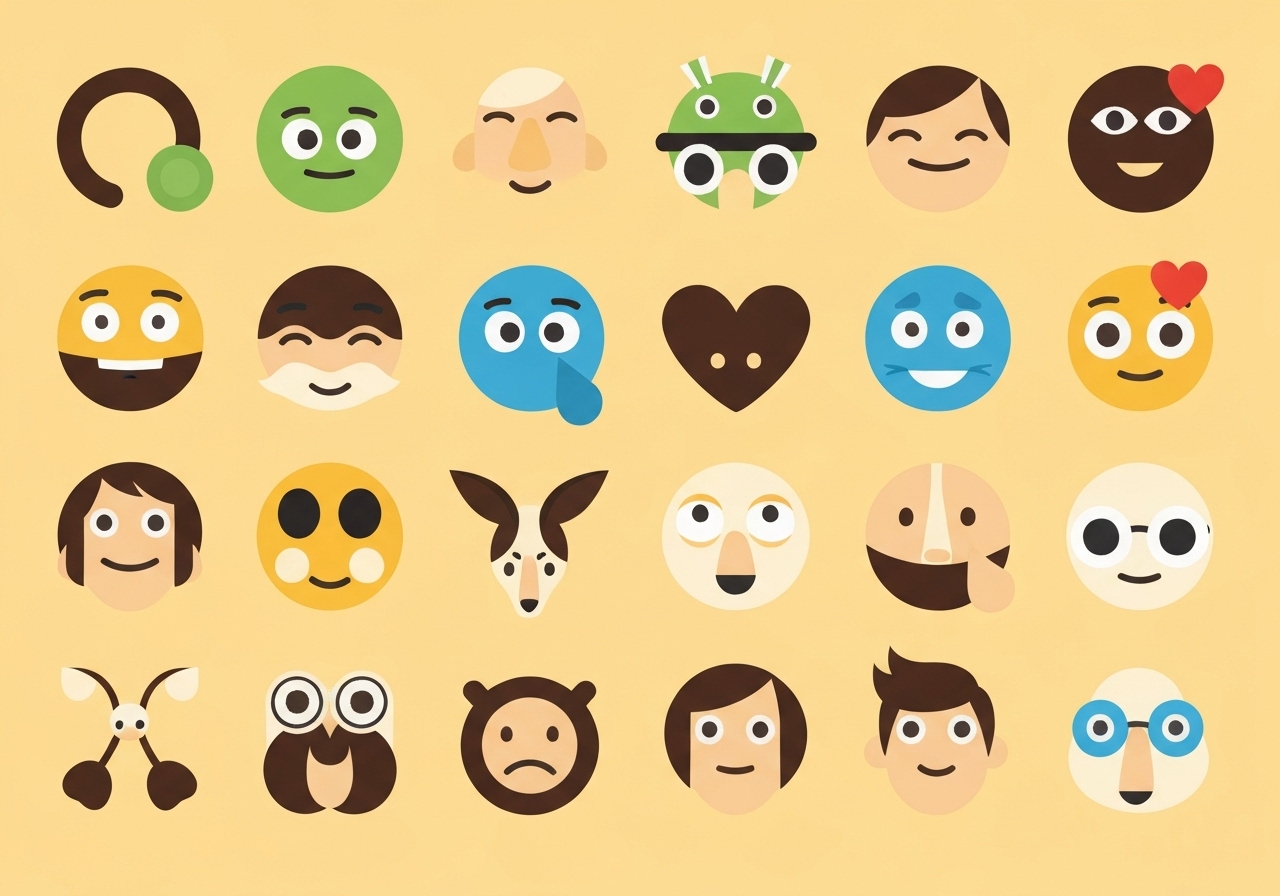
Google rolled out an Android 16 QPR3 beta update on December 17, 2025, that includes a set of refreshed emoji on Pixel devices. The Beta 1 release alters a number of face, animal and object emoji—most changes move visuals closer to Apple’s iOS designs. The tweaks are minor in many cases but visible in side-by-side comparisons and are currently live in the QPR3 beta build for Pixel phones. Some Unicode 17.0 additions remain absent from the beta and are not yet usable on-device.
Key Takeaways
- Android 16 QPR3 Beta 1 (rolled out December 17, 2025) delivers revised emoji artwork to Pixel devices, visible in the first public beta.
- Updated face emoji include Melting Face, Face Exhaling, Nauseated Face, Cold Face and Loudly Crying Face, with subtler expressions and angle shifts.
- Several non-face emoji — notably Raccoon, Flashlight, Foot and Loudspeaker — were adjusted to align more closely with Apple’s iOS appearance.
- Changes are mostly cosmetic: for example, Loudly Crying Face now has a smaller mouth and Cold Face removes the top snow detail to simplify the look.
- Observers confirmed the changes on a Pixel 10 Pro XL running QPR3 Beta 1 versus a Pixel 10 on stable QPR2 (same Gboard version), indicating the updates are tied to the QPR3 build.
- Unicode 17.0 additions such as Distorted Face, Orca and Trombone are viewable in browsers but are not yet integrated or usable in the QPR3 beta on device.
- Emojipedia cataloged dozens of design adjustments; some object emoji received small element changes (e.g., bacon now shows two strips to match Apple).
Background
Emoji artwork across platforms has long varied because each vendor renders glyphs according to brand style, legibility and platform conventions. Google has historically applied a distinctive, often more playful aesthetic on Android, while Apple’s iOS set emphasizes a flatter, more uniform silhouette. Those stylistic differences can create confusion when users switch platforms or communicate across ecosystems.
Unicode defines the semantic codepoints for emoji but leaves visual interpretation to platform implementers; as a result, vendors regularly revise designs when new Unicode releases arrive or when they push a platform refresh. Earlier in 2025, Unicode 17.0 added new emoji entries, which Emojipedia aggregated and documented; however, implementation timing differs by vendor and OS release cadence.
Stakeholders in this process include Google’s design and platform teams, third-party apps that rely on system emoji, and cross-platform communities documented by Emojipedia. Users and accessibility advocates also monitor changes because subtle visual shifts can affect recognition, meaning and assistive technology behavior.
Main Event
The Android 16 QPR3 Beta 1 that reached Pixel handsets brought a batch of refined emoji art. Face emoji adjustments range from viewpoint changes—Face Exhaling shifts slightly forward—to proportion tweaks such as a reduced mouth on Loudly Crying Face. Cold Face removes the snowcap detail, producing a cleaner silhouette closer to Apple’s version.
Non-face emoji changes include animals and objects: the Raccoon and Flashlight designs are now visually similar to Apple’s rendering, tropical fish and zebra designs were refined, and the bacon emoji was modified to include a second strip. These edits are small but consistent in direction: a move toward simpler, less caricatured forms.
Testing on a Pixel 10 Pro XL running QPR3 Beta 1 showed the new artwork in-system; a Pixel 10 on the same Gboard version but still on stable QPR2 did not show the changes, suggesting the updates are packaged with the QPR3 system image. Images and galleries circulated alongside reports, permitting direct top-versus-bottom visual comparisons between old and new assets.
Notably, the beta does not yet include the full set of Unicode 17.0 emoji characters on-device. Entries like Distorted Face, Orca and Trombone are visible in browser renderings that support the new Unicode set, but they remain unavailable for typing or insertion inside apps on the tested QPR3 build.
Analysis & Implications
Shifting Pixel emoji closer to Apple’s look reduces cross-platform friction: users who switch from iPhone to Pixel will see more familiar visuals, which can cut down on misread emotions or unintended tone in messages. That practical benefit likely motivated at least part of the design alignment, since consistency aids comprehension in threaded conversations spanning devices.
There is a trade-off for Google’s visual identity. Google’s earlier, more animated emoji were part of Android’s brand vocabulary; adopting more iOS-like forms narrows differentiation. For designers and brand managers, the question becomes whether improved interoperability outweighs the value of a distinct platform personality.
Developers and product teams should note that system emoji changes can affect UI layout and text metrics, particularly where glyph shapes influence line-height or emoji sizing. Messaging apps, keyboards and accessibility tooling may need to re-evaluate rendering assumptions after a system-level emoji refresh to preserve alignment and clarity.
From a platform-update perspective, bundling emoji adjustments with a QPR (Quarterly Platform Release) beta means users on stable tracks won’t see changes until Google promotes QPR3 to production. That staged rollout reduces immediate disruption but lengthens the period in which cross-device users see inconsistent emoji across the market.
Comparison & Data
| Emoji | Old (Android) | New (QPR3 Beta 1) | Tendency |
|---|---|---|---|
| Melting Face | Higher-lilted melt, expressive tilt | Softer melt, less exaggerated tilt | Closer to iOS |
| Face Exhaling | Side profile, pronounced puff | More forward angle, subtler breath | Neutralized expression |
| Cold Face | Snow cap detail on forehead | No snow, simpler cold cues | Minimalist / iOS-like |
The table highlights representative before-and-after attributes. The edits are largely stylistic rather than semantic — no codepoint changed — but visual alignment to iOS was a consistent theme. Designers working with emoji in UIs should re-run visual QA to ensure line breaks and spacing still meet expectations after the asset update.
Reactions & Quotes
“These changes are now live in Android 16 QPR3 Beta 1,”
Emojipedia (emoji reference)
Emojipedia’s cataloging made the scope of the adjustments visible to the public by listing and comparing the asset revisions across vendors. That documentation helped reporters and users confirm which emoji had been altered.
“The updates are tied to QPR3,”
9to5Google (technology news)
Reporting from 9to5Google observed device-side differences between QPR3 Beta 1 and the stable QPR2 release, supporting the conclusion that the artwork changes ship with the quarterly platform build.
Unconfirmed
- Whether Google intentionally aimed to match Apple’s designs for brand reasons rather than readability has not been confirmed by an official Google design statement.
- Exact timeline for when Unicode 17.0 emoji will be usable on Pixel devices in stable builds remains unspecified.
- Any internal accessibility testing results or user-sentiment metrics tied to these specific glyph changes have not been published publicly.
Bottom Line
Google’s QPR3 Beta 1 for Android 16 brings a modest but consistent set of emoji refinements to Pixel devices, moving several designs toward a look that iPhone users will recognize. The changes prioritize familiarity and simpler silhouettes over the more animated Android-specific styling of past years.
For most users the edits will be subtle and beneficial for cross-platform readability; for designers and platform teams, the update is a reminder to recheck layouts and accessibility after system artwork changes. Watch for the QPR3 stable rollout timeline to see when the wider Pixel user base receives the same emoji set, and for future updates that may add the remaining Unicode 17.0 characters on-device.