
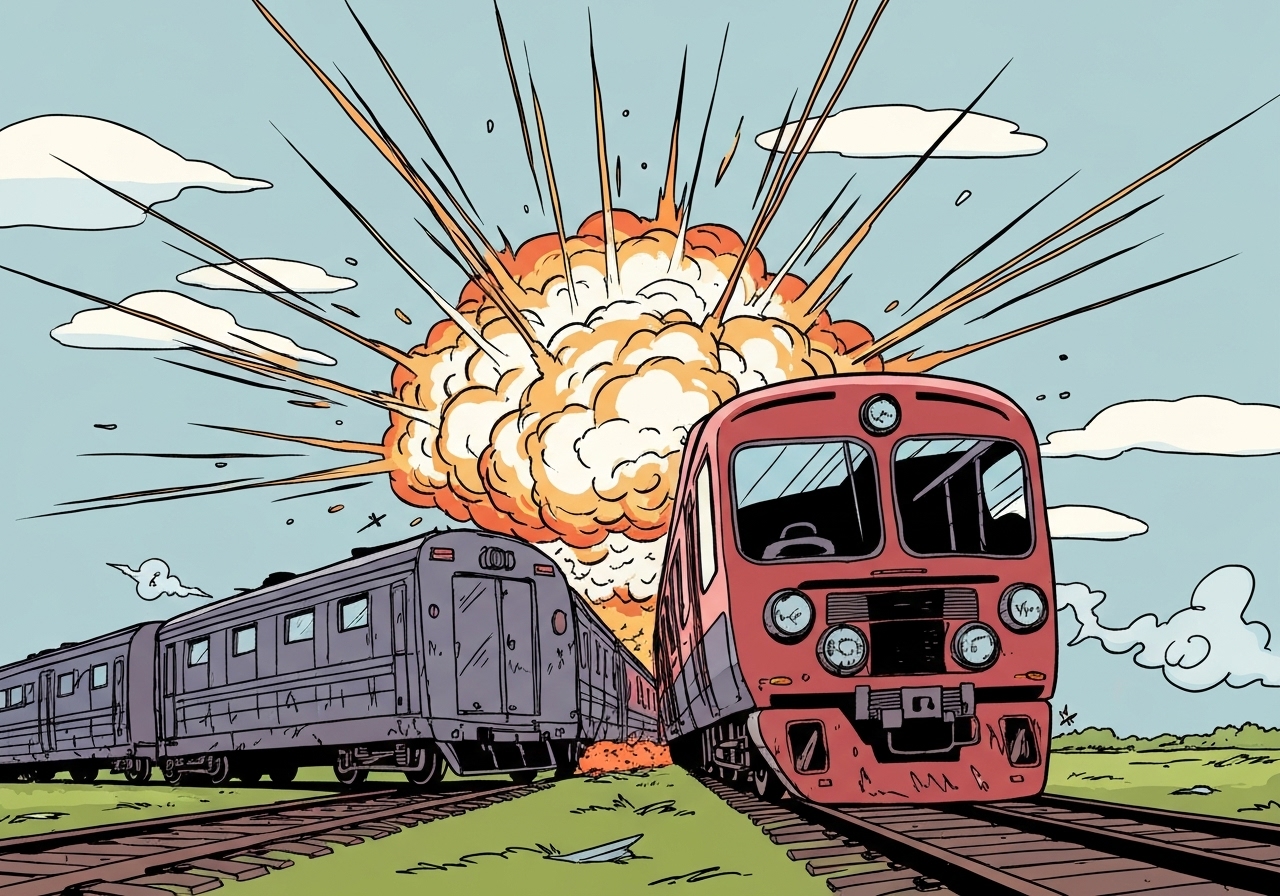
Poland’s prime minister, Donald Tusk, described an explosion on a railway line used for supplies to Ukraine as an “unprecedented act of sabotage” on Monday, 17 November 2025, after visiting the scene near the village of Mika, about 60 miles (97 km) from Warsaw. There were no casualties, but officials said a gap in the track could have caused a catastrophic derailment if a train had been travelling at speed. Authorities opened a criminal probe and convened a national security committee meeting for Tuesday to coordinate military and security responses. Officials also linked the blast to a broader pattern of sabotage incidents that have targeted civilian and transport infrastructure in recent weeks.
Key takeaways
- No fatalities or injuries reported from the track explosion near Mika; gap in rails discovered early Sunday morning by a train driver who stopped in time.
- Incident occurred on the Warsaw–Lublin line, roughly 60 miles (97 km) from Warsaw and within the corridor used for deliveries to Ukraine.
- A second related event on Sunday evening near Puławy involved damage to overhead power lines and a metal brace on the tracks; a train with 475 passengers made an emergency stop.
- Polish authorities have launched investigations into both incidents and will inspect the remaining 120 km (75 miles) of track toward the Ukraine border.
- Officials including PM Donald Tusk and security services minister Tomasz Siemoniak said the probability of foreign intelligence involvement is high; formal attribution is pending.
- Polish State Railways reported an earlier train had flagged an issue on the section, which helped the subsequent train to slow and stop safely.
- The incidents form part of a wider series of sabotage episodes in Europe recently attributed by some analysts to foreign state security services seeking to disrupt support for Ukraine.
Background
Rail links between Poland and Ukraine have been a vital conduit for humanitarian aid, military supplies and commercial trade since Russia’s full-scale invasion of Ukraine in 2022. The Warsaw–Lublin corridor, used frequently by freight and regional services, has seen increased traffic and heightened security concerns as logistics have become integral to allied support. Sabotage against transport infrastructure has appeared across several European countries in recent months, with investigators pointing to organized campaigns aiming to disrupt supply chains and sow public alarm.
Poland has experienced a mix of incidents, ranging from fires at commercial sites to explosions and tampering with tracks and electrical systems. Authorities have reported cases in which individuals from Ukraine, Belarus and Poland were recruited via encrypted messaging apps for one-off operations; investigators say such recruitment complicates attribution because operatives may be acting on behalf of, or at the behest of, foreign handlers. The pattern and timing of recent attacks have prompted Warsaw to treat these events as a coordinated security threat rather than isolated crimes.
Main event
Late on Saturday evening, a resident reported hearing an explosion near the railway line between Warsaw and Lublin; police attended but initially found no visible damage. Early on Sunday morning, the driver of a regional service discovered a gap in the rails near Mika and executed an emergency stop before the train reached the damaged section. Polish State Railways deputy CEO Dariusz Grajda later said a preceding train had reported a track problem on that stretch, and that briefing helped the crew of the later service to travel slowly enough to stop safely.
Later on Sunday evening a separate incident occurred near Puławy, about 19 miles (30 km) from the Mika site, where a passenger train carrying 475 people had to brake suddenly after sustaining overhead power-line damage and after crew members found a metal brace on the track. Preliminary police notes indicate that windows on one carriage were broken and that investigators were examining whether a metal device was also placed on the line. No one was injured in either incident.
On Monday, after inspecting the scene, Prime Minister Tusk characterized the Mika explosion as an attempt to “destabilise and destroy railway infrastructure” that could have produced a rail disaster. He announced that the government’s national security committee would meet on Tuesday with military commanders, heads of security services and a presidential representative to coordinate the probe and protection measures. Defence minister Władysław Kosiniak-Kamysz said the army would review the safety of the remaining 120 km (75 miles) of track toward the Ukraine border.
Analysis & implications
The immediate implication is a tangible risk to civilian passengers and to the integrity of vital supply routes to Ukraine. Had a high-speed train reached the break in the rails, the result could have been mass casualties and a severe disruption of freight flows. The incidents therefore raise the operational stakes for Poland’s rail network and for allied logistics planners who rely on predictable, secure corridors for materiel and humanitarian movements.
Attribution matters politically and operationally. Security services minister Tomasz Siemoniak said the likelihood that a foreign intelligence service ordered the attacks is “very high,” framing the events as state-directed sabotage rather than ordinary criminality or theft. If a foreign state is implicated, Poland and its partners face a diplomatic and defensive choice: escalate public countermeasures and intelligence action, or pursue more discreet responses to avoid immediate public panic or retaliation.
Domestically, the incidents will intensify pressure on Warsaw to demonstrate control and to harden transport infrastructure. The involvement of the army in inspections signals the seriousness with which the government treats the threat, but practical protection of long rail corridors is costly and imperfect. Long-term solutions will require layered defenses: improved surveillance and patrolling, hardened critical points, rapid-response inspection teams, and international intelligence-sharing to disrupt cross-border coordination.
Comparison & data
| Item | Location | Distance from Warsaw | Passengers/Impact |
|---|---|---|---|
| Track explosion | Mika (near Lublin line) | 60 miles / 97 km | No injuries; gap in rails discovered |
| Power-line damage | Puławy | ~19 miles / 30 km from Mika | Train with 475 passengers; broken windows reported |
| Inspection sweep | Borderward track toward Ukraine | 120 km / 75 miles | Planned army safety checks |
The table summarizes distances and immediate operational effects. Planners will weigh the concentration of incidents within a relatively short corridor—roughly 30 km apart—against the broader network risks. Statistical attribution will depend on forensic analysis of devices, communication intercepts, and patterns of recruitment or tasking identified by investigators.
Reactions & quotes
Officials across Poland described the events as serious threats to public safety and national security. The government scheduled a high-level meeting to coordinate the investigative and protective response.
“Unfortunately, there is no doubt that we are dealing with an act of sabotage. Fortunately, there was no tragedy, but the matter is nonetheless very serious.”
Donald Tusk, Prime Minister (after visiting the scene)
Security ministers stressed the likelihood of foreign-state involvement and urged joint action with military and intelligence partners.
“We are dealing with the [intelligence] services of a foreign state, and not a gang of scrap metal thieves.”
Tomasz Siemoniak, Security Services Minister
Defense officials committed to immediate infrastructure inspections along the route to the Ukrainian border.
The army will inspect the remaining 120 km of track between the incident site and the border with Ukraine to ensure safety.
Władysław Kosiniak-Kamysz, Defence Minister
Unconfirmed
- Attribution to a specific foreign intelligence service remains unconfirmed pending forensic and intelligence findings; ministerial statements reflect preliminary assessments.
- Reports of a separate metal device discovered on the tracks have appeared in some accounts but have not been fully verified by police public releases.
- Details about recruitment channels (for example, use of Telegram to hire operatives) have been reported in earlier cases but are not yet confirmed as directly connected to the Mika and Puławy incidents.
Bottom line
The incidents on 16–17 November 2025 underline a growing vulnerability along strategic transport corridors in Poland and Europe. While no casualties occurred, the near-miss at Mika and the narrowly avoided disruption near Puławy highlight how relatively small acts of sabotage can produce outsized risk to passengers and to critical supply lines for Ukraine.
Poland’s swift mobilization of investigators, security services and military inspectors reflects both the immediate need to secure infrastructure and the political imperative to reassure the public. The coming days should clarify forensic findings and whether foreign-state actors ordered the attacks—outcomes that will shape Warsaw’s next steps on security, diplomacy and cross-border cooperation.
Sources
- The Guardian (international media report of the scene and official statements)
- Polish State Railways (PKP) (official operator statements and operational details)
- Lublin Police (official police statements and preliminary findings)