
Lead
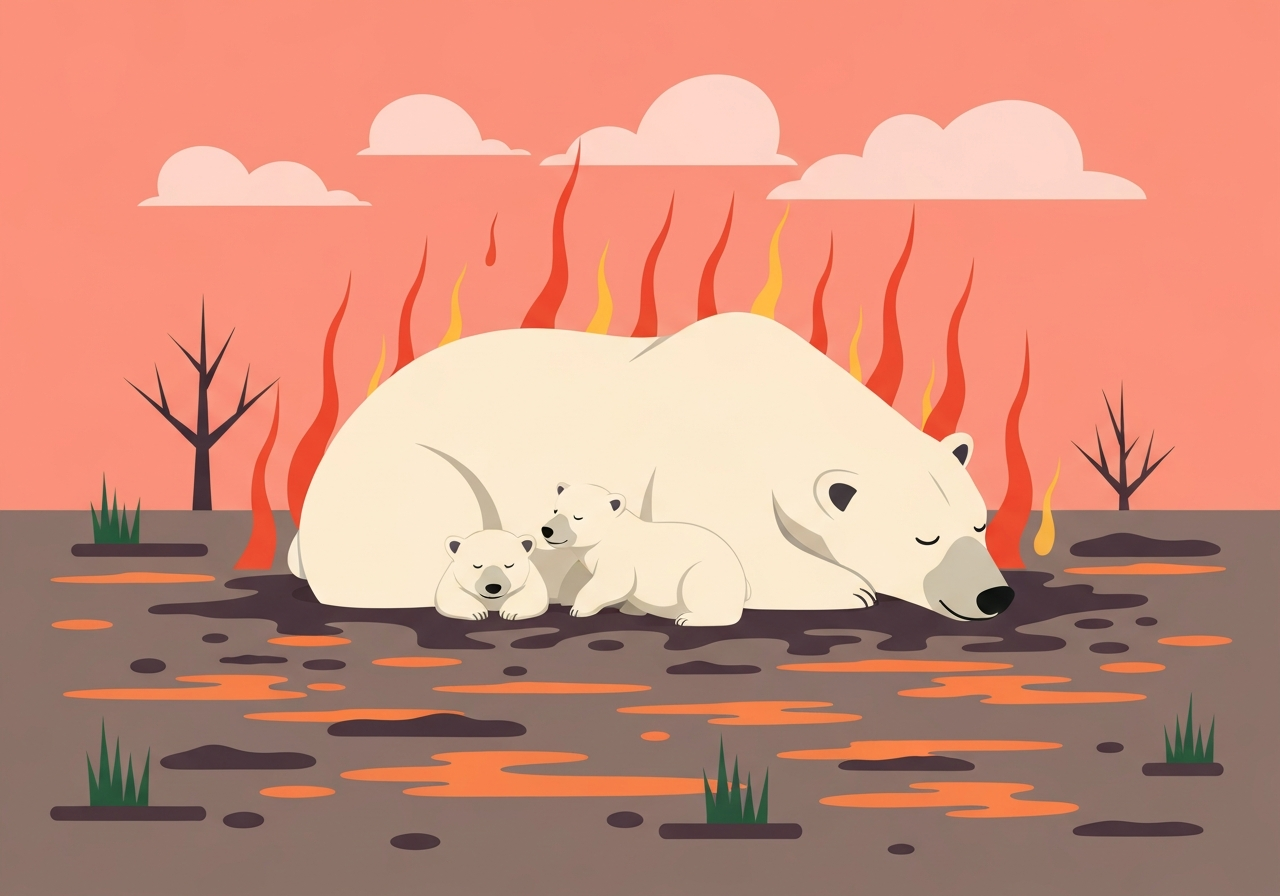
A stark image titled “Family Rest” by photographer Christopher Paetkau shows a mother polar bear and her three cubs lying on bare ground and moss, their white fur stained brown with mud during Canada’s summer heat. The photograph is among 24 images shortlisted for the Wildlife Photographer of the Year Nuveen People’s Choice Award, where the public votes for a favorite entry. The picture highlights the growing pressures on polar bears as Arctic sea ice retreats and animals spend more time on land. Voting runs online through March 18, and winners will be announced March 25.
Key takeaways
- Photographer Christopher Paetkau’s image, titled “Family Rest,” shows a mother polar bear and three cubs on exposed land in Canada; their coats are visibly brown from mud.
- The image is one of 24 photographs shortlisted for the Wildlife Photographer of the Year Nuveen People’s Choice Award; public voting is open until March 18.
- The contest’s winners (one People’s Choice plus four runners-up) will be revealed on March 25 and displayed at the Natural History Museum exhibition through July 2026.
- Polar bears (Ursus maritimus) do not hibernate; historically they spent most of the year on sea ice hunting ringed and bearded seals.
- Arctic September sea ice extent has declined roughly 13% per decade since satellite records began in 1979, reducing prime hunting habitat for polar bears (scientific monitoring data).
- Another shortlisted image depicts a cub on Svalbard in a hunting incident that resulted in the mother’s death and the cub being shot by police after it approached a settlement.
- The photograph and the Svalbard incident together underline rising human–wildlife encounters as bears spend more time ashore seeking food.
Background
Polar bears are highly adapted to an ice-based lifestyle, relying on seasonal sea ice to reach and hunt ringed seals (Pusa hispida) and bearded seals (Erignathus barbatus). For decades, the annual cycle of freeze and melt allowed bears to hunt at sea and spend limited time ashore between hunting seasons. Since satellite monitoring began in 1979, the Arctic’s late-summer sea ice minimum has shown a sustained downward trend, reducing the duration and extent of reliable hunting platforms for many bear populations.
As sea ice retreats earlier in spring and re-forms later in autumn, some polar bears are forced to remain on land longer, seeking alternative food sources such as coastal marine mammals, bird colonies, eggs or terrestrial prey like reindeer. Longer shore periods increase the likelihood of nutritionally poor diets, lower body condition and greater overlap with human communities. Conservation bodies, researchers and managers have flagged that these shifts raise both ecological and public-safety challenges across the Arctic.
Main event
Christopher Paetkau’s photograph shows a family group reclining on exposed ground and moss with mud staining their fur—an image the Natural History Museum and the competition jury shortlisted for this year’s Nuveen People’s Choice Award. The portrait, shot in Canada during summer, has been circulated by Live Science and by the Wildlife Photographer of the Year organizers as part of the 24-photo shortlist open to public voting. The visible mud on the bears is a striking visual cue that these animals are spending time onshore rather than on sea ice.
The shortlist also includes another polar-bear image from Svalbard showing a cub alongside its mother during an encounter that ended tragically: the mother was found dead shortly afterward and local authorities shot the cub after it approached a human settlement and appeared aggressive, according to reporting. That episode has been cited as an example of rising human–bear conflict when bears come into contact with people and infrastructure.
The Wildlife Photographer of the Year exhibition organizers say the shortlisted photographs aim to combine visual storytelling with conservation relevance; the winning image and runners-up will be displayed at the Natural History Museum in London through July 2026. Members of the public can cast their votes online through March 18, with the winners announced on March 25.
Analysis & implications
Visually powerful photographs often serve as catalysts for public understanding; Paetkau’s image acts as both a natural-history portrait and a climate-change prompt. By showing bears on exposed, muddy ground rather than on expansive ice floes, the photograph communicates a shift in habitat use that is measurable—sea ice decline reduces hunting windows and forces alternative foraging strategies that can be less energetically rewarding. Over time, reduced access to high-energy prey like seals can translate into lower reproductive success and declining body condition in some bear populations.
Extended periods on land also raise management challenges. Communities in Arctic regions may face more frequent bear visits to settlements, increasing the risk of property damage, threats to human safety and situations that can end with lethal control of bears. The Svalbard incident highlighted in the shortlist underscores how quickly encounters can escalate when bears and people converge, and it illustrates the complex trade-offs local managers confront between safety and conservation.
On a policy level, images in high-profile competitions can shift public attention and, in turn, political will. Exhibitions that reach broad audiences may bolster support for mitigation measures, such as protecting remaining sea-ice habitat, funding monitoring and non-lethal deterrence programs, and reducing global greenhouse gas emissions—the root driver of long-term sea-ice decline. However, images alone do not substitute for coordinated policy and on-the-ground management needed to reduce conflict and support bear populations.
Comparison & data
| Metric | Figure | Notes / Source |
|---|---|---|
| Shortlisted images for Nuveen People’s Choice | 24 | Natural History Museum competition shortlist |
| Polar bear cubs in Paetkau image | 3 cubs | Photographer credit: Christopher Paetkau |
| Voting deadline | March 18 | Public online voting period |
| Sea ice decline (September) | ~13% per decade since 1979 | Satellite-era trend (NSIDC / long-term monitoring) |
| Museum exhibition end | July 2026 | Natural History Museum display of winners and select works |
The table places the photograph in context: it is one entry among 24 shortlisted works while the broader environmental data show substantial long-term declines in late-summer sea ice, a key driver behind changed polar-bear behaviour. These numeric touchpoints link visual storytelling to measurable ecological trends.
Reactions & quotes
Organizers and museum leadership framed the shortlist as both artistically and thematically strong; the director of the Natural History Museum highlighted the range of stories in this year’s selection.
“Whether showcasing fascinating behaviour or platforming a powerful story, this year’s selection of images is truly exceptional, and we can’t wait to see which one will be chosen as the public’s favourite.”
Douglas Gurr, Director, Natural History Museum (statement)
Photographers and contest commentators have noted that images like Paetkau’s help viewers grasp the lived consequences of environmental change at a glance, even as scientists stress the need for data-driven follow-up.
“‘Family Rest’ captures a quiet but telling moment: bears spending time onshore in summer rather than on sea ice.”
Christopher Paetkau / image title and credit
Public-facing directives from the competition are straightforward and aimed at audience participation, encouraging broad engagement with the images and their underlying themes.
“Voting for the Nuveen People’s Choice Award is now open online until March 18.”
Wildlife Photographer of the Year / public notice
Unconfirmed
- Precise circumstances that led to the mud staining on the bears’ coats are not confirmed in the image caption; multiple local behaviours (wallowing, swimming in shallow ponds, or foraging) could produce similar appearances.
- Details around the sequence of events in the Svalbard incident—timing, exact cause of the mother’s death and the immediate behaviours that prompted police action—were reported quickly and may be subject to official investigation or clarification.
- Population-level demographic consequences for the photographed bears cannot be inferred from a single image; long-term monitoring is required to link individual observations to trends.
Bottom line
Paetkau’s “Family Rest” is more than a striking photograph: it is a visual entry point into the complex, measurable changes affecting Arctic ecosystems. The image and the accompanying Svalbard report together illustrate how sea-ice loss can alter bear behaviour and increase interactions with people—outcomes with ecological, cultural and management consequences across Arctic regions.
As public voting for the Nuveen People’s Choice Award runs through March 18 and the winners are announced on March 25, the exhibition at the Natural History Museum offers a platform to translate visual impact into discussion and policy attention. Photographs can catalyze awareness, but they should be paired with rigorous science, community-led management, and broader climate mitigation to address the root drivers of habitat change.