
Lead
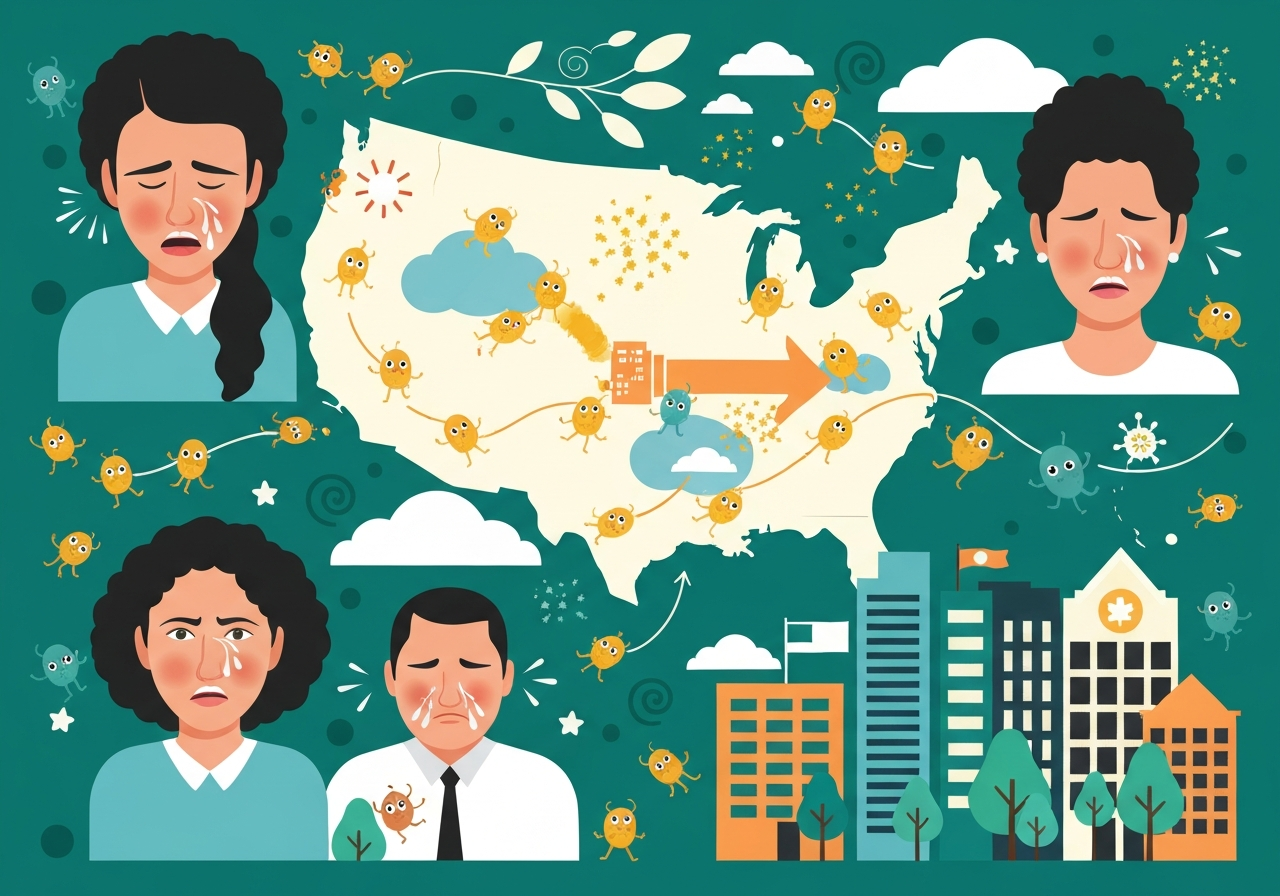
On March 20, 2026, public-health and weather forecasts warned that spring pollen is already increasing across much of the United States, an early sign of a difficult season for people with allergies. An estimated 106 million Americans live with allergies or asthma, and many will face worse symptoms as tree, grass and weed pollen rise from the South and West into other regions. AccuWeather and national allergy groups report pollen levels are elevated in more than 29 states, and earlier warm spells and spring storms are driving sudden spikes. The result: longer exposure windows and higher symptom burden for millions this year.
Key Takeaways
- About 106 million Americans have allergies and/or asthma, making pollen trends a major public-health concern this spring.
- A 2021 peer-reviewed study found North American pollen seasons lengthened by an average of 20 days between 1990 and 2018, a trend linked to climate change.
- AccuWeather’s 2026 U.S. allergy forecast cites high tree pollen moving north from the South and Ohio Valley, with elevated counts reported in over 29 states.
- The Asthma and Allergy Foundation of America reports more western cities among its 2026 “Allergy Capitals,” driven by grass and weed pollen spikes.
- Clinicians and allergists advise starting preventive medication roughly two weeks before symptoms typically begin for best effectiveness.
- Practical steps to reduce exposure include checking local pollen counts, using high-efficiency HVAC filters, and keeping windows closed during peak pollen periods.
- Early spring storms can cause rapid, short-term jumps in airborne pollen, creating sudden symptom flares for sensitive individuals.
Background
Seasonal allergic rhinitis (hay fever) occurs when the immune system reacts to airborne pollen released by trees, grasses and weeds during their reproductive cycles. Pollen grains are microscopic and easily inhaled; in sensitized people the immune system produces antibodies that trigger histamine release and the familiar symptoms—runny nose, itchy eyes, sneezing and throat irritation. Over recent decades, researchers and public-health groups have documented longer and more intense pollen seasons, changes that have been tied to rising temperatures and altered plant phenology.
Multiple stakeholders track pollen trends: meteorologists model transport and timing; the American Academy of Allergy, Asthma & Immunology’s National Allergy Bureau (NAB) provides local counts; health organizations such as the Asthma and Allergy Foundation of America (AAFA) monitor disease burden; and groups like Climate Central analyze climate links. Cities’ “Allergy Capitals” rankings combine pollen levels with medication use and access to allergists, which has shifted the list geographically in recent years as pollen patterns change.
Main Event
As of March 20, 2026, official forecasts and pollen-monitoring networks indicate that tree pollen levels are climbing earlier than typical across the Western and Southern United States, and moving northward into the Ohio Valley and beyond. Warm spells this late winter and early spring have advanced flowering in many species, creating earlier release of pollen. AccuWeather’s seasonal forecast predicts an early, strong tree-pollen season, and weather systems—especially spring storms—are causing episodic rapid increases in airborne pollen counts.
Field monitors and NAB stations have recorded elevated counts across more than 29 states, with notable increases for oak, birch and other common tree pollens in southern and western monitoring sites. Grass and weed pollen are also appearing earlier in some regions, contributing to a longer combined exposure window for allergy sufferers. Local public-health advisories in affected regions have begun to urge residents to monitor daily counts and prepare medications in advance.
Clinicians report that many patients are experiencing more intense and prolonged symptoms compared with some previous years, consistent with the longer seasons documented by researchers. Pharmacies are seeing steady demand for over‑the‑counter antihistamines and nasal corticosteroids, and some allergists report increased inquiries about immunotherapy timing and dose adjustments for patients with severe seasonal patterns.
Analysis & Implications
Longer pollen seasons and earlier onset shift both clinical management and public-health planning. For individuals, an earlier start to pollen release means preventive strategies—such as initiating daily antihistamines or nasal steroid sprays—must begin sooner to blunt peak-season symptoms. From a population standpoint, extended allergy seasons can increase healthcare visits, prescription fills and lost productivity, particularly among the 106 million Americans affected by allergies or asthma.
Climate-driven changes in phenology (the timing of plant life-cycle events) are a key driver: warmer winters and earlier springs cause plants to flower sooner and for longer durations, and wetter conditions in some regions can increase plant growth and pollen production. The 2021 study that measured an average 20-day season lengthening between 1990 and 2018 provides a quantitative baseline linking climate trends to allergen exposure—an effect likely to continue under present warming trajectories unless mitigated.
Geographic shifts in pollen exposure complicate resource allocation. More western cities on the 2026 “Allergy Capitals” list suggest health systems and pharmacies in those areas may face relatively higher demand for allergy care. Forecasting improvements—blending meteorology, plant phenology data and ground counts—can help clinicians advise patients and cities plan mitigation measures, such as public alerts on high-pollen days and guidance for schools and workplaces.
Comparison & Data
| Metric | Value | Source |
|---|---|---|
| Americans with allergies/asthma | 106 million | Asthma & Allergy Foundation of America (advocacy) |
| Average pollen-season lengthening | +20 days (1990–2018) | 2021 peer-reviewed study (academic) |
| States with high pollen levels (2026 forecast) | More than 29 states | AccuWeather (forecast) |
These figures illustrate the scope: a substantial population affected, a measurable seasonal extension tied to climate change, and broad geographic reach for elevated pollen this spring. The table combines prevalence, measured change over decades, and near-term forecasting; together they show both chronic trends and immediate seasonal risk.
Reactions & Quotes
Public-health and allergy organizations have framed this season as another example of climate-linked shifts that affect human health. Below are concise statements from key organizations and the context around them.
“Longer, earlier pollen seasons are happening alongside warming temperatures and are increasing exposure for many people.”
Asthma and Allergy Foundation of America (AAFA)
AAFA’s assessment emphasizes both the scale of those affected and the role of climate factors in extending pollen seasons. Their organization uses national surveillance and patient data to explain how seasonal exposure patterns influence medication use and clinical visits.
“Forecasts show tree pollen moving northward this spring, with early storms triggering fast spikes in counts across wide regions.”
AccuWeather (seasonal forecast)
AccuWeather’s meteorological analysis links specific weather patterns—warm spells and frontal storms—to abrupt increases in airborne pollen, underscoring the importance of daily monitoring for sensitive individuals.
Unconfirmed
- Local, city-by-city spikes reported anecdotally may not yet be verified by NAB station data or peer-reviewed sampling.
- Short-term links between a single spring storm and region-wide increases in hospital visits remain under study and are not confirmed for all affected areas.
- Projections of exact symptom-related healthcare utilization increases for the full 2026 season are estimates and depend on weather variability and public response.
Bottom Line
Pollen counts are already rising in many parts of the United States as of March 20, 2026, driven by earlier warmth and weather patterns that favor pollen release and transport. The combination of a larger exposed population—106 million Americans with allergies or asthma—and a documented multi-decade lengthening of pollen seasons means many people should expect a more burdensome allergy season.
Practical steps can reduce illness and discomfort: check local NAB or weather forecasts daily, start preventive medication before symptoms begin (many clinicians recommend about two weeks in advance), use high-efficiency HVAC filters, and keep windows closed during high-count days. Public-health agencies, clinicians and forecasters will continue to monitor counts and issue guidance as the season evolves.
Sources
- USA TODAY (news media)
- Asthma and Allergy Foundation of America (advocacy organization)
- AccuWeather (meteorological forecast)
- Climate Central (research/analysis)
- Centers for Disease Control and Prevention (official public-health agency)
- World Health Organization (international health agency)
- USA National Phenology Network (scientific network)
- American Academy of Allergy, Asthma & Immunology — National Allergy Bureau (professional monitoring)