
Lead
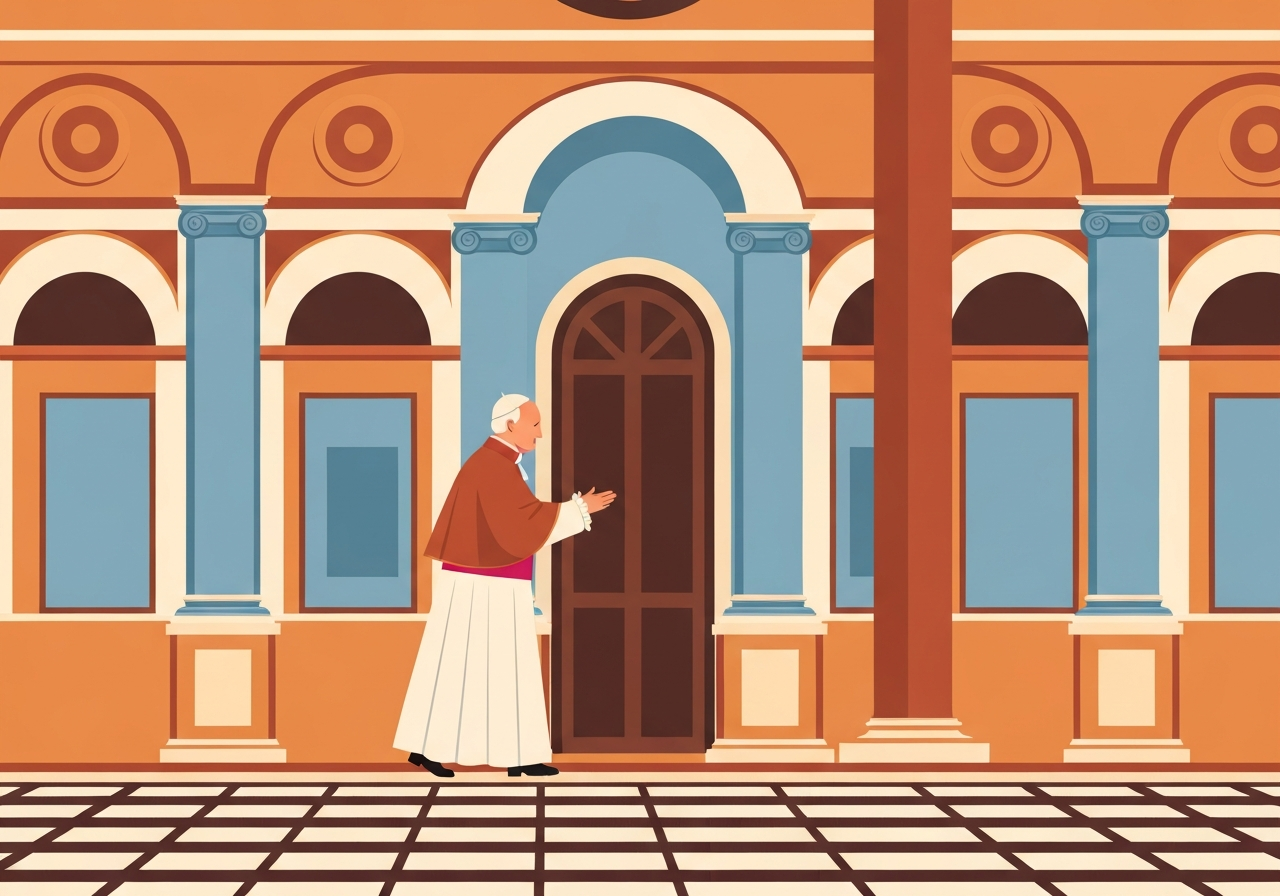
On March 14, 2026, Pope Leo XIV formally took possession of the restored apartments in the Vatican’s Apostolic Palace, a suite his predecessor had declined to use. Ten months after his May 8, 2025 election as head of the world’s 1.4 billion Catholics, the 70-year-old pope moved in with his closest collaborators following extensive renovation. The Vatican framed the transfer as a return to a traditional papal residence; supporters and critics immediately read the decision as a signal about papal style and institutional continuity.
Key Takeaways
- Pope Leo XIV moved into the Apostolic Palace apartments on March 14, 2026, ten months after his election on May 8, 2025.
- The move followed renovations to rooms that had been left unused after Pope Francis chose the Santa Marta guesthouse in 2013.
- The Apostolic Palace suite includes private bedrooms, a chapel, a library, an office, a dining room and a window used for the weekly Angelus address.
- Leo, the first U.S. pope, had been staying at the nearby Palace of the Holy Office, where he lived as a cardinal.
- Francis’s decision to live in Santa Marta (2013–until his death) was praised for humility and criticized by traditionalists who saw it as a break with papal ceremonial space.
- The Apostolic Palace houses the Sistine Chapel, Apostolic Library and the Secretariat of State, making it the administrative and ceremonial heart of the Holy See.
- Pope Leo has also resumed use of Castel Gandolfo as a summer residence and spends many Tuesdays there, combining leisure and work.
Background
The Apostolic Palace is historically the principal papal residence and the locus for many liturgical and administrative functions of the Holy See. Pope Francis’s choice in 2013 to live in the simpler Santa Marta guesthouse marked a visible break with that tradition; he remained there for the remainder of his papacy, a gesture that resonated with supporters who favored a less ceremonious pontificate.
That departure angered some conservatives who argued the move diminished the symbolic stature of the office. When Leo XVI (Pope Leo XIV) was elected on May 8, 2025, observers noted both the novelty of a U.S.-born pope and the practical question of where the new pontiff would live. The apartments in the Apostolic Palace required refurbishment after years of limited use, prompting a measured process of repair and adaptation before full occupation.
Main Event
The Vatican said in a March 14 statement that the pope would “take possession” of the apartment and move in with his closest collaborators; the office framed the step as logistical and ceremonial rather than purely symbolic. Photographs published earlier — including images of Pope Leo visiting the restored rooms on May 12, 2025 — showed attention to maintenance and security upgrades while retaining traditional features such as a private chapel and the Angelus window overlooking St. Peter’s Square.
During the interim period, the 70-year-old pope continued to reside at the Palace of the Holy Office near the Vatican, where he had lived as a cardinal. The Apostolic Palace apartment the pope now occupies contains multiple formal and private spaces: sleeping quarters, an office, a library and dining areas intended to accommodate official visitors and daily papal routines.
Vatican officials said the pope would continue other routines established since his election, including regular stays at Castel Gandolfo, the papal summer residence outside Rome. Local and international media coverage noted the contrast with Pope Francis’s practice of dwelling at Santa Marta, framing Leo’s move as a modest restoration of an older norm rather than an ostentatious reversal.
Analysis & Implications
The decision to reoccupy the Apostolic Palace apartments carries both practical and symbolic weight. Practically, it centralizes the pope’s living quarters within the administrative heart of the Holy See, easing day-to-day access to the Secretariat of State and the papal offices located nearby. Symbolically, the move signals a preference for traditional papal trappings without necessarily reversing Francis-era reforms in governance or theology.
Internally, the choice may soothe curial officials who find logistical advantages in having the pontiff nearby during the working week; it could also reassure those who equate the papal apartments with continuity of office and ceremonial function. For critics who celebrated Francis’s simpler residence as part of a broader pastoral shift, Leo’s move could be read as a recalibration rather than outright repudiation: he is restoring the space while keeping a public tone of moderation.
Internationally, the optics matter: a U.S.-born pope occupying the historic apartments may alter diplomatic choreography and media narratives around the papacy. Security, hospitality and the scheduling of audiences and liturgies will change modestly as the pope’s primary residence shifts, and Vatican logistics — from staff rotations to ceremonial planning — will adapt to the renewed centrality of the Apostolic Palace.
Comparison & Data
| Pope | Residence choice | Start | Notable |
|---|---|---|---|
| Pope Francis | Santa Marta guesthouse | 2013 | Preferred modest, communal living; remained there until his death |
| Pope Leo XIV | Apostolic Palace apartments | March 14, 2026 | Returned to historic papal suite after renovations; combines tradition with active public schedule |
The two rows above summarize a clear contrast in living arrangements since 2013. While Francis’s long residence at Santa Marta emphasized simplicity and accessibility, Leo’s return to the Apostolic Palace emphasizes proximity to the Vatican’s administrative core. Both choices carry pastoral and institutional consequences beyond simple preference.
Reactions & Quotes
Vatican officials framed the move as an administrative step. Context: the statement emphasized possession and continuity rather than a polemical judgment of past choices.
“This afternoon, Pope Leo XIV will take possession of the apartment in the Apostolic Palace, moving, with his closest collaborators, into the spaces previously used by his predecessors.”
Vatican Press Office (official statement)
Religious scholars and commentators see the move as a sign of balance between tradition and pastoral priorities.
“Returning to the Apostolic Palace restores a working arrangement many in the curia find efficient, but it need not erase the pastoral lessons of a pope who lived more simply.”
Religious affairs scholar (academic)
Among lay Catholics, responses were mixed; some welcomed a return to ceremony, others worried about optics.
“I appreciate both gestures—humility matters, but so does the visible seat of the papacy for certain rites and visits.”
Rome parishioner (public reaction)
Unconfirmed
- Specific renovation costs and contractors for the Apostolic Palace work have not been published by the Vatican and remain unconfirmed.
- Initial media speculation about personnel reshuffles tied directly to the move has not been corroborated by official announcements.
Bottom Line
Pope Leo XIV’s move into the Apostolic Palace apartments is a deliberate recentering of the papal household within the Vatican’s historical and administrative core. The transfer blends restored tradition with practical governance needs and is unlikely by itself to alter the theological or pastoral emphases established under Pope Francis.
Observers should watch how the pope uses the residence for audiences, liturgies and diplomatic encounters: those patterns will reveal whether the move signals a subtle change in papal style or merely a logistical consolidation. For Catholics and diplomats alike, the return to the Apostolic Palace will be measured in ceremonies performed there, routine access for Vatican staff, and how Leo balances formality with pastoral outreach.
Sources
- CBS News (news report summarizing Vatican statement and visuals)
- Vatican Press Office (official statements and announcements)
- Getty Images / Vatican Media (photo agency providing images of the papal apartments)