
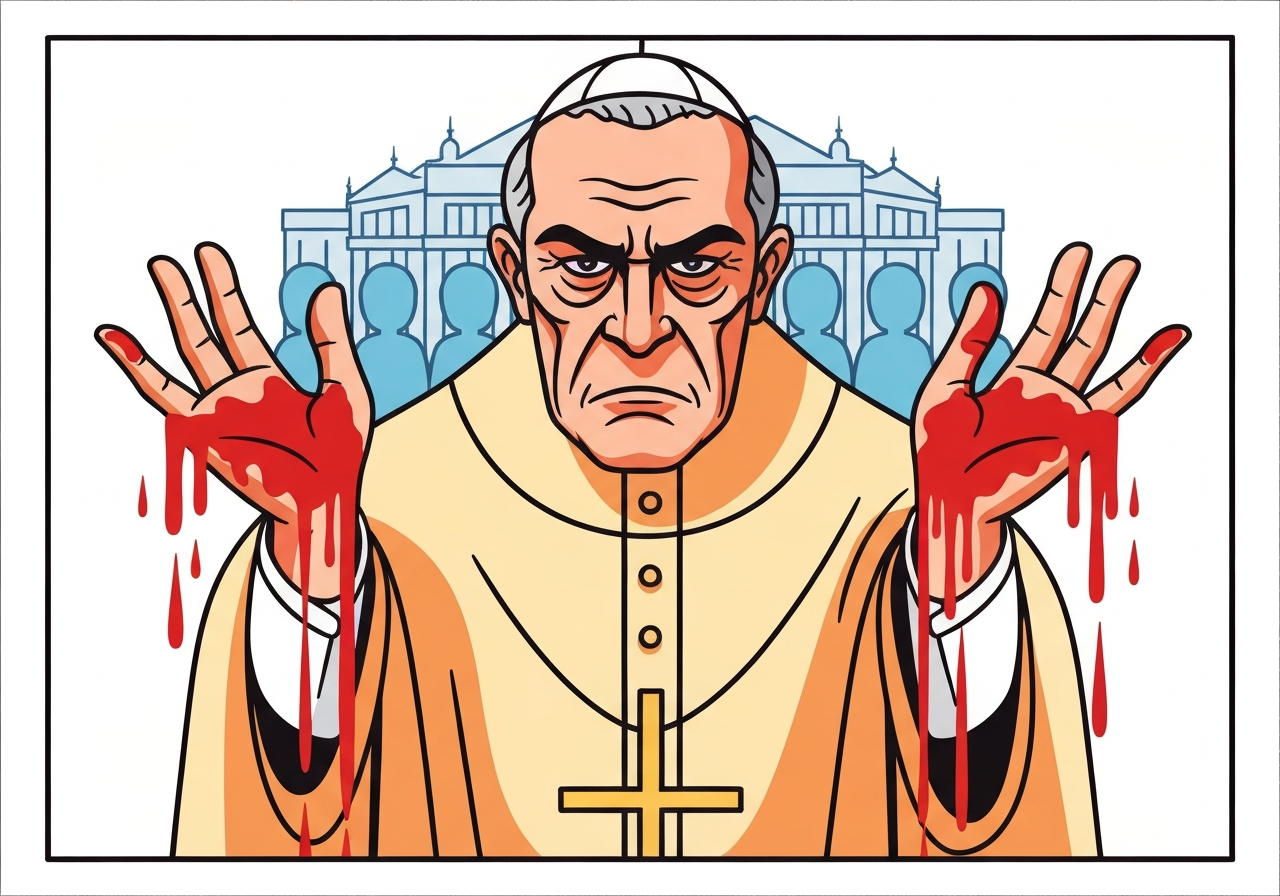
On Palm Sunday (29 March 2026) in St Peter’s Square, Pope Leo warned that God will not hear the prayers of leaders who wage war and whose “hands [are] full of blood,” remarks delivered as thousands of US troops arrived in the Middle East. The pontiff did not name individuals or governments, but his words came days after US defence secretary Pete Hegseth prayed for severe violence against the United States’ enemies and amid rising military posturing in the region. The homily framed Jesus explicitly as a “king of peace” who rejects warfare and cannot be invoked to justify violence. The speech intensified scrutiny of recent religious language used by political and military figures and added to concerns about civilian suffering across Israel, Lebanon and Gulf states.
Key Takeaways
- Pope Leo’s remarks were delivered on Palm Sunday, 29 March 2026, in St Peter’s Square and used a biblical line about hands “full of blood.”
- The comments coincided with the arrival of thousands of US troops in the Middle East as officials prepared for possible extended ground operations.
- US defence secretary Pete Hegseth publicly prayed earlier that week for “overwhelming violence” against perceived enemies, drawing attention and controversy.
- The pope called for ceasefires and an end to airstrikes in a conflict affecting Lebanon, Israel and neighbouring Gulf states.
- Cardinal Pierbattista Pizzaballa was prevented from entering the Church of the Holy Sepulchre in Jerusalem on the same morning, prompting condemnation from Italy’s prime minister.
- After his election last year, Pope Leo accepted an invitation from Donald Trump to visit the United States; no visit has been scheduled.
Background
The region has seen escalating tensions between Iran, Israel and the United States in recent weeks, with a sequence of strikes and counterstrikes that have raised fears of wider conflict. The Pentagon briefed US media that it was preparing for ground operations that could last weeks; in parallel, Tehran’s leadership publicly warned of retaliation and heightened readiness. Religious language and symbolism have featured prominently on multiple sides, with leaders invoking faith to justify or condemn military action and to rally domestic audiences. The Vatican has historically positioned the pope as a moral voice in international disputes, urging restraint, protection for civilians and humanitarian corridors during flare-ups.
Pope Leo’s use of a direct biblical rebuke sits in that tradition but is unusually pointed in tone for a papal homily, given the contemporaneous statements from some US officials. The Vatican typically frames calls for peace in pastoral and diplomatic language; this sermon, however, echoed scripture that condemns violence and those who profit from it. International observers note that the pope’s intervention comes at a time when public opinion in several countries is sensitive to civilian casualties and to the mixing of religious rhetoric with military policy. The cardinal prohibition from entering the Holy Sepulchre on the same morning added a separate flashpoint tied to security and religious access in Jerusalem.
Main Event
During the Palm Sunday liturgy, Pope Leo emphasized that Jesus rejected the sword and did not use violence when confronted by arresting soldiers, saying Christ revealed “the gentle face of God” and accepted suffering rather than fighting back. He quoted a biblical passage—“Even though you make many prayers, I will not listen: your hands are full of blood”—to underline that war cannot be sanctified by prayer. The pontiff stressed that invoking Jesus as a justification for armed conflict is incompatible with the Gospel’s message of peace and reconciliation.
The homily came as tens of thousands of US troops were reported to be moving into the region to support potential operations. US defence secretary Pete Hegseth’s remarks at a Washington worship service earlier in the week—where he prayed for decisive violence against enemies—became a focal point for those interpreting the pope’s sermon as a rebuke. Hegseth is affiliated with a church connected to the Communion of Reformed Evangelical Churches; commentators have noted the overlap of faith language and military aims in his public comments.
Separately, Israeli police prevented Cardinal Pierbattista Pizzaballa, who oversees Catholic pastoral jurisdiction in Israel and the Palestinian territories, from entering the Church of the Holy Sepulchre to celebrate mass on Palm Sunday. Italy’s prime minister, Giorgia Meloni, called that action an offence to the faithful and to religious freedom, while Israeli authorities had no immediate public response. The pope used the liturgy to lament that many Christians in the affected regions might be unable to celebrate Easter due to the conflict’s disruptions.
Analysis & Implications
The pope’s sermon tightens the spotlight on the ethics of invoking religious language in state and military contexts. When senior political or defence figures employ faith-based rhetoric to endorse or request military success, it can blur the separation between pastoral guidance and strategic aims, raising questions about the moral framing of violence. The Vatican’s language is crafted to influence consciences and diplomats; a pointed homily may be intended to prod policymakers toward restraint without entering formal diplomacy.
Diplomatically, the remarks risk creating tension between the Holy See and administrations whose officials were in the pope’s implied sights. While the Vatican rarely names governments in such sermons, the timing and specificity made the intervention consequential: it could complicate behind-the-scenes communications or encourage third-party mediators to press harder for de-escalation. Domestic political actors in the United States who favour a tougher line may portray the homily as interference, while peacemaking constituencies will likely cite it as moral support for ceasefire demands.
For regional actors, the pontifical rebuke reinforces scrutiny of how religious justifications are used to mobilize support for military action. Iran’s parliamentary speaker, Mohammad Bagher Ghalibaf, publicly warned that Iranian forces were prepared to respond to US troop movements, underlining the risk of miscalculation. The pope’s stance thus intersects with strategic calculations: moral pressure from a global religious leader comes amid real operational planning that may be difficult to reverse quickly.
Comparison & Data
| Speaker | When | Statement | Source |
|---|---|---|---|
| Pope Leo | 29 March 2026 (Palm Sunday) | Quoted scripture saying God will not listen to prayers of those whose hands are “full of blood.” | The Guardian / Vatican homily |
| Pete Hegseth | Earlier in March 2026 | Prayed for “overwhelming violence” against enemies and that rounds find their mark. | Public worship service report |
| Mohammad Bagher Ghalibaf | March 2026 | Stated Iranian forces were ready and signalled readiness to respond to US troop movements. | Public statement (Iranian parliament) |
The table is a concise comparison of public language from major figures; it does not quantify troop levels beyond contemporaneous reporting of “thousands” of US personnel arriving in the region. Those movements were described in media briefings as preparatory for potential extended operations, and officials cautioned that plans remained subject to operational and political decisions.
Reactions & Quotes
Public and official responses were immediate and varied. Religious communities and peace advocates welcomed the pope’s message as a moral corrective, while some political figures criticized interference in national security decisions.
“He does not listen to the prayers of those who wage war, but rejects them.”
Pope Leo, Palm Sunday homily
The pope used that line to connect scripture with the present conflict and to call for concrete paths to reconciliation. He framed this as a pastoral appeal to the conscience of leaders and the international community.
“Let every round find its mark against the enemies of righteousness and our great nation… overwhelming violence of action against those who deserve no mercy.”
Pete Hegseth, public worship service
Hegseth’s language injected militaristic imagery into a religious setting and became a focal point for criticism because it appeared to bless lethal force. Critics argued the words blurred the boundary between prayer and military intent; supporters said he was invoking faith in a moment of national defence.
“[Preventing the cardinal’s entry] is an offence not only to the faithful but to any community that respects religious freedom.”
Giorgia Meloni, Italian prime minister
Meloni’s comment highlighted how actions on the ground in Jerusalem can quickly become international diplomatic incidents, especially during Holy Week.
Unconfirmed
- Whether Pope Leo intended the remarks as a direct personal rebuke of any specific US official—this was not stated explicitly and remains interpretation rather than confirmed fact.
- Precise operational plans for the reported US ground operations (timing, scope and troop numbers) remain subject to official military decisions and were described by sources only as preparatory in media briefings.
- The exact security rationale for preventing Cardinal Pizzaballa’s entry to the Church of the Holy Sepulchre has not been publicly clarified by Israeli authorities.
Bottom Line
Pope Leo’s Palm Sunday homily sharpened moral scrutiny of recent statements that invoke faith in support of military action, delivering a high-profile pastoral critique at a moment of heightened regional tension. While the Vatican did not name governments, the timing and content of the sermon made its target clear to many observers and amplified calls for de-escalation and protection of civilians.
The intervention is likely to reverberate diplomatically: it strengthens moral pressure for restraint and could complicate political messaging by officials who have framed military moves in religious terms. For international audiences and religious communities in the region, the homily underscores the separation—at least in papal teaching—between genuine religious practice and rhetoric that sanctifies violence.
Sources
- The Guardian — UK news media report summarising the homily and related events
- The Washington Post — US media (reported Pentagon briefings on potential ground operations)
- Vatican / Holy See Press Office — official texts and homilies (pastoral/official)