
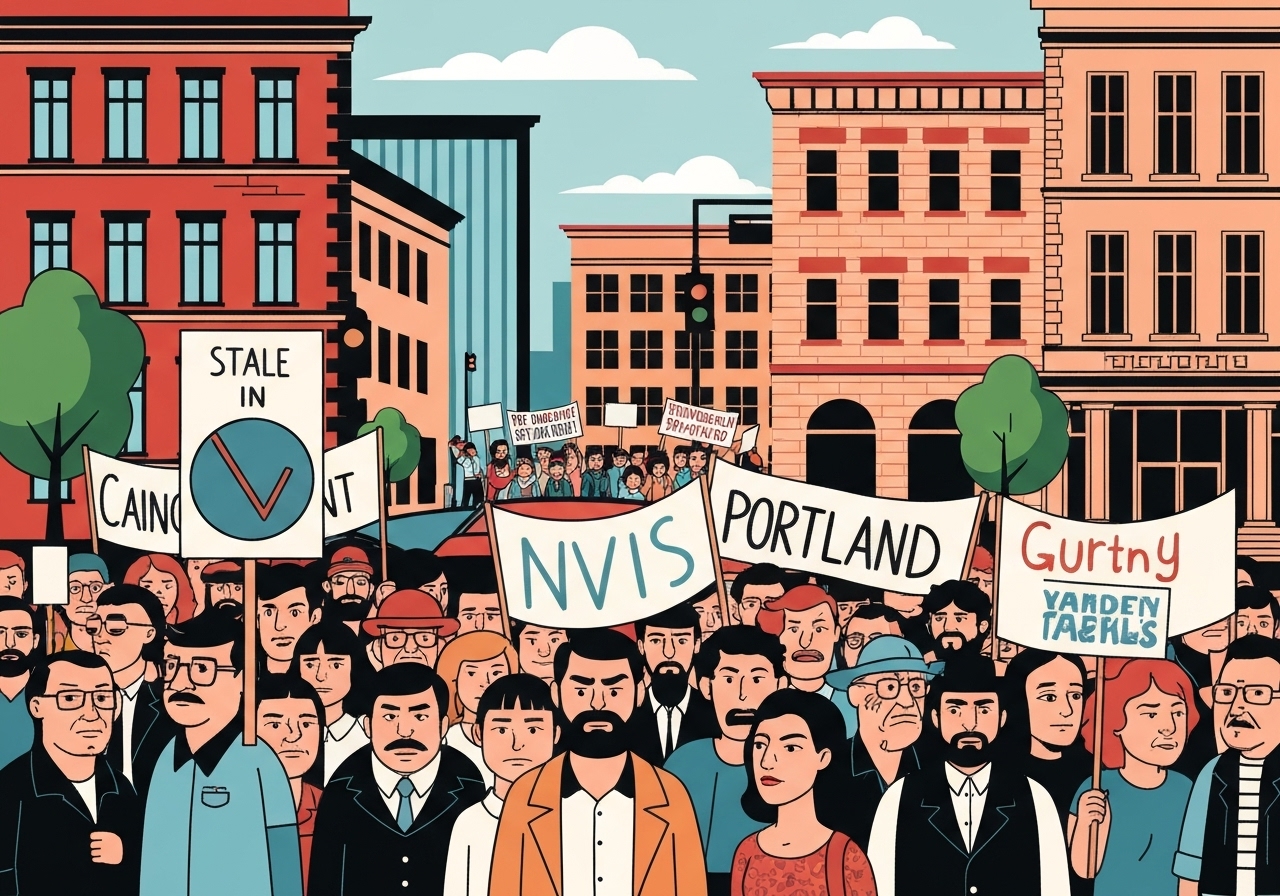
On Jan. 8, 2026, hundreds of Portland residents marched and gathered outside the city’s ICE facility after U.S. Customs and Border Protection agents shot and wounded a man and a woman during a traffic stop in East Portland. Portland police and the FBI say the shooting occurred in a hospital parking lot around 2:15 p.m.; both victims were taken to local hospitals and their identities were not released. Federal officials have described the incident as involving Border Patrol agents and said the FBI is leading a probe; local leaders urged calm while demanding accountability and an immediate pause in federal operations.
Key takeaways
- Incident timing: The shooting occurred about 2:15 p.m. on Jan. 8, 2026, near the Adventist Health campus in East Portland; Portland Police received a 911 call at approximately 2:18 p.m.
- Victims and medical care: A man and a woman were shot, then taken to Legacy Emanuel and Oregon Health & Science University hospitals; hospitals declined public comment and officials withheld identities.
- Federal involvement: The FBI confirmed two Border Patrol agents were involved and said it is investigating the event as “an assault on a federal officer.”
- DHS allegations: Department of Homeland Security Assistant Secretary Tricia McLaughlin alleged the occupants were members of the Venezuelan gang Tren de Aragua and that one passenger had prior involvement in a local shooting; OPB was unable to confirm those claims.
- Local response: Mayor Keith Wilson and Gov. Tina Kotek publicly condemned the shooting and called for ICE to halt operations in Portland pending investigation.
- Public reaction: Nearly 500 people gathered outside the Portland ICE building the same evening; protests shifted focus from a Jan. 7, 2026, killing by immigration agents in Minneapolis to the local incident.
- Law enforcement movements: Portland officers located the wounded pair near Northeast 146th Avenue and East Burnside shortly after the first call and provided first aid before paramedics arrived.
Background
Portland has been a focal point of sustained demonstrations against federal immigration enforcement for months, including repeated protests outside the U.S. Immigration and Customs Enforcement (ICE) building. The city’s tensions with federal agencies escalated after President Donald Trump sought to deploy the military and federal officers to intervene in demonstrations in recent months. The national context intensified following a Jan. 7, 2026, incident in Minneapolis in which immigration agents shot and killed a U.S. citizen; that event prompted protests in multiple cities, including Portland.
Locally, activists, city officials and labor leaders have frequently criticized aggressive immigration enforcement tactics and called for oversight of federal agents operating in Portland. City leaders have limited authority over federal operations, which has produced repeated clashes between city policy aims and federal enforcement actions. The pattern of public demonstrations around the ICE facility reflects deeper disputes over policing, public safety and immigration policy that have played out across state and national politics.
Main event
According to Portland Police Bureau statements, officers first received a report of a shooting around 2:18 p.m. on Jan. 8 and responded to the 10200 block of Southeast Main Street, near the Adventist Health campus. Six minutes later, officers were dispatched to Northeast 146th Avenue and East Burnside, where they found a wounded man and woman who had been shot during an encounter involving U.S. Customs and Border Protection agents. Officers provided immediate medical aid and summoned paramedics.
DHS Assistant Secretary Tricia McLaughlin issued a statement alleging that both occupants were tied to the Venezuelan gang Tren de Aragua and that the driver tried to use his vehicle as a weapon, prompting a “defensive” shot by an agent. The department said the driver then fled the scene with the passenger. OPB was not able to independently confirm those assertions; Portland police corroborated the timeline but deferred further detail to the FBI investigation.
The FBI confirmed that two Border Patrol agents were involved and said the bureau is investigating the matter as an assault on a federal officer. Late the same day, Oregon Attorney General Dan Rayfield announced his office would open an investigation focused on whether any federal officer acted beyond lawful authority. Local hospitals received the two wounded people, but medical staff and institutions either declined comment or had not released patient details by nightfall.
Analysis & implications
The incident highlights a recurring fault line in U.S. governance: federal law-enforcement operations inside cities that have sought to limit or resist certain immigration enforcement practices. When federal agents act within municipal boundaries, questions of oversight, transparency and legal jurisdiction emerge immediately. Portland’s mayor and state leaders framed the shooting as further evidence of the need for stricter scrutiny of federal activity, while federal officials presented a counter-narrative emphasizing officer safety and criminal allegations about the vehicle occupants.
Politically, the episode sharpens tensions ahead of local and statewide campaigns. Elected officials from both parties have used the episode to press competing narratives: some demand immediate suspension of federal operations and independent review; others call for patience until investigations conclude and emphasize public safety concerns. The polarized responses risk amplifying street-level unrest even as authorities seek to keep order.
From an investigative standpoint, the layered jurisdiction—local police, FBI, DHS and the Oregon Attorney General—means parallel inquiries with different legal thresholds and public-reporting obligations. That can slow the release of verified facts and increase the flow of unverified claims into public discourse, complicating community trust. How quickly the FBI and state investigators produce a clear record will shape both legal outcomes and public confidence in the coming weeks.
Comparison & data
| Incident | Date | Outcome |
|---|---|---|
| Minneapolis immigration-agent shooting | Jan. 7, 2026 | One civilian killed |
| Portland Border Patrol shooting | Jan. 8, 2026 | Two civilians wounded; FBI investigation |
The two incidents occurred on successive days and have driven overlapping protest activity. While the Minneapolis event resulted in a fatality, Portland’s shooting produced injuries and prompted both federal and state-level probes. The proximity of the dates and similarity of the actors involved have contributed to heightened public attention and concerted local demonstrations.
Reactions & quotes
“We are calling on ICE to halt all operations in Portland until a full investigation can take place.”
Mayor Keith Wilson
Mayor Wilson spoke at an evening press conference with Gov. Tina Kotek and local leaders, urging a pause in federal enforcement while officials examined the facts and urging protesters to remain peaceful.
“Fearing for his life and safety, an agent fired a defensive shot.”
Tricia McLaughlin, DHS Assistant Secretary
DHS issued a formal statement attributing the shooting to an agent’s response to an alleged vehicle-weaponization; multiple details in that account were unconfirmed by local reporting at the time.
“We are asking the community to remain calm as we work to learn more.”
Portland Police Chief Bob Day
Chief Day emphasized the early stage of the investigation and requested restraint while the bureau and federal partners continued their inquiries.
Unconfirmed
- DHS assertions that both occupants were Tren de Aragua members and that one was linked to a Portland prostitution ring remain unverified by independent reporting.
- Details that the driver intentionally weaponized the vehicle against agents were reported by DHS but not independently corroborated by Portland police or OPB at the time of publication.
- The medical conditions and identities of the two wounded people were not released publicly by hospitals or authorities as of late Jan. 8, 2026.
Bottom line
The Jan. 8, 2026, shooting in East Portland by U.S. Customs and Border Protection agents has deepened local and national scrutiny of federal immigration enforcement tactics. With parallel investigations by the FBI and Oregon’s attorney general, facts will emerge over time; immediate claims from federal officials and political leaders remain contested. That uncertainty is fueling protests and heightening calls for transparent, independent review.
For Portland residents and policymakers, the most consequential near-term issue is whether federal agents will continue regular operations in the city while investigations proceed. The city’s political leaders have asked for an operational pause; federal authorities have not publicly agreed. How investigators report findings and whether prosecutors bring charges will determine legal accountability and shape public trust going forward.