
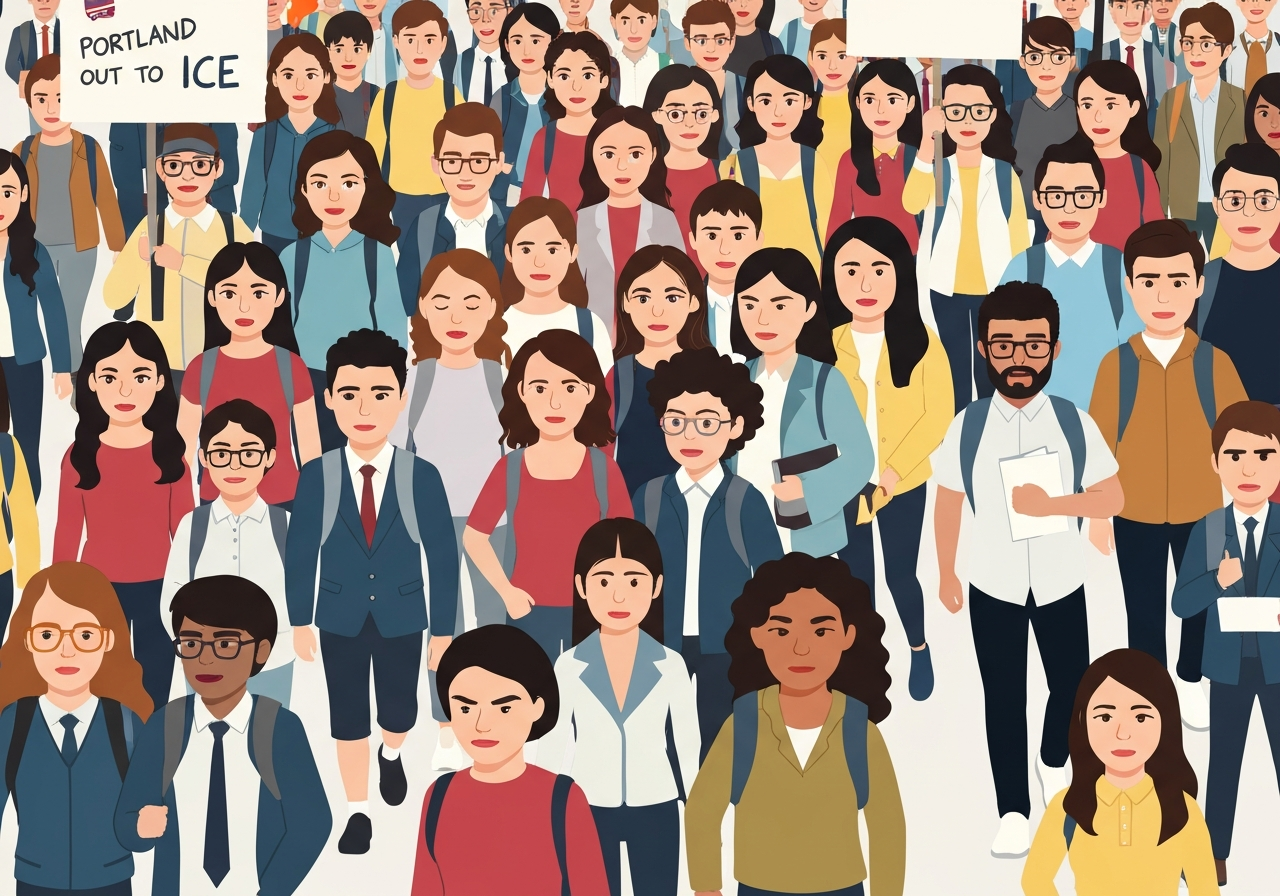
On Jan. 30, 2026, hundreds of high school students across Portland left classes and gathered at Glenhaven Park and along city streets to join a loosely organized national general strike against immigration enforcement. The actions—centered on McDaniel and Roosevelt high schools—were held in response to recent deadly shootings linked to federal immigration operations and broader concerns about deportations. Organizers and participants said the walkouts aimed to pressure officials to curb aggressive tactics by U.S. Immigration and Customs Enforcement (ICE) and U.S. Customs and Border Protection. School leaders acknowledged students’ rights to protest while noting district policies on attendance and extracurricular eligibility.
Key takeaways
- Dates and scale: On Jan. 30, 2026, hundreds of Portland high school students staged walkouts and rallies in multiple neighborhoods, including Glenhaven Park and North Lombard Street.
- Local organizers: McDaniel sophomore Viola DeVigal and Roosevelt senior Jasmin Reyes-Contreras were among student leaders; DeVigal helped organize the Glenhaven Park rally.
- Driving incidents: The protests followed the Jan. 7 and Jan. 24 killings of Renee Good and Alex Pretti in Minneapolis and other recent uses of force, including two people shot in East Portland on Jan. 8.
- School policy impact: Portland Public Schools treated Jan. 30 as a normal school day and warned that unexcused absences can affect athletic and activity eligibility.
- Demographics and fear: About 28% of McDaniel’s students are Latino; students reported fears of encountering ICE agents while traveling to school.
- Business responses: Some small businesses—such as Mis Tacones—closed in solidarity, while others, like Azar Indulgences, remained open and donated proceeds instead.
- Organizing channels: The strike was promoted via websites and social media, including a map-style listing of actions on NationalShutdown.org.
Background
In January 2026 a wave of national attention focused on immigration enforcement after multiple deadly encounters involving federal officers, most prominently the Jan. 7 killing of Renee Good and the Jan. 24 killing of Alex Pretti in Minneapolis. Those events intensified longstanding opposition to ICE and CBP tactics among immigrant-rights advocates, who argue that aggressive enforcement harms families and communities. Activists have long used school walkouts and business solidarity actions to elevate local impacts and link them to federal policy debates.
The general strike that prompted Portland’s protests was loosely organized through online platforms and community networks, with calls for coordinated actions across the Pacific Northwest and the country on Jan. 30. Organizers framed the day as a response both to specific incidents of violence and to rising enforcement levels and deportations. Small-business owners and workers faced difficult trade-offs: closing in solidarity risks lost revenue, while staying open can be seen as declining public support for the protest movement.
Main event
In the early afternoon light rain, McDaniel High School students filled streets in Northeast Portland and marched west carrying signs reading slogans such as “Stop ICE Terror Now” and chanting “This is what democracy looks like!” Around the same time, Roosevelt High School students walked out and processed down North Lombard Street, mirroring demonstrations in other cities. Organizers estimated turnout in the hundreds across multiple sites, and participants described the action as both a protest and a community support effort.
At Glenhaven Park a crowd of mainly high school students gathered for speeches, songs and solidarity statements. Viola DeVigal, a McDaniel sophomore who helped organize the rally, said the event felt meaningful and that many peers showed up to back families affected by deportations. Roosevelt senior Jasmin Reyes-Contreras emphasized that students want action on ICE funding and enforcement because some classmates have experienced family separations.
Portland Public Schools released a message treating the day as a normal school day while expressing support for immigrant students and staff. Superintendent Kimberlee Armstrong said district leaders recognize recent enforcement actions have caused ‘‘real harm and deep anxiety’’ and that the district is committed to supporting affected families. At the same time, administrators noted established attendance rules and the potential consequences of unexcused absences for extracurricular participation.
Analysis & implications
Politically, the walkouts highlight how local communities translate national enforcement actions into sustained civic pressure. Student-led demonstrations can shift public narratives by centering schools, children and families—making the policy impacts more tangible for broader audiences. If similar actions continue, they could increase demands on municipal officials and school districts to publicly press federal agencies for transparency and restraint.
For schools, the events expose a tension between supporting students’ civic engagement and enforcing attendance policies that affect eligibility for athletics and other activities. Districts face reputational and legal considerations: accommodating protest rights while managing compulsory attendance obligations and ensuring student safety. How districts balance those priorities could influence future participation in civic actions.
Economically, the strike underscores unequal capacities among small businesses to participate. Owners like Polo Bañuelos and Carlos Reynoso of Mis Tacones said they closed after consulting staff; others chose to remain open and direct funds to affected communities. These choices reflect differing financial buffers and philosophies about protest tactics, and they affect neighborhood economies and the visibility of solidarity gestures.
Comparison & data
| Date | Location | Incident | Source |
|---|---|---|---|
| Jan. 7, 2026 | Minneapolis, Minn. | Killing of Renee Good | News reporting |
| Jan. 8, 2026 | East Portland, Ore. | Two people shot during enforcement-related incident | Local reporting |
| Jan. 24, 2026 | Minneapolis, Minn. | Killing of Alex Pretti | News reporting |
| Jan. 30, 2026 | Portland, Ore. | Student walkouts and general strike actions | Local reporting / organizer listings |
The table links recent violent encounters and the subsequent wave of protest activity culminating in the Jan. 30 general strike. While the dates and incidents are public record, the causal chain—how each event directly influenced specific local actions—varies by community and organizer networks.
Reactions & quotes
School and district leaders publicly acknowledged the protests while balancing policy enforcement and student support. Portland Public Schools emphasized support for immigrant families and staff, and warned about attendance consequences.
“We know that recent immigration enforcement actions have caused real harm and deep anxiety in many of our schools and neighborhoods,”
Kimberlee Armstrong, Portland Public Schools superintendent
Students framed the walkout as a response to both national policy and immediate local fears about family separations.
“We as students care about the funding that’s going to ICE because this is impacting everybody,”
Jasmin Reyes-Contreras, Roosevelt High School senior
Small-business owners described difficult decisions about closing and solidarity, noting limited financial leeway for many shops.
“In solidarity, we also decided to close our business,”
Polo Bañuelos, Mis Tacones co-owner
Unconfirmed
- The precise nationwide number of participants in the Jan. 30 general strike is not yet verified; available tallies are organizer estimates.
- The extent to which each recent shooting was directly carried out by ICE versus other federal or local officers remains subject to ongoing investigation in several jurisdictions.
- Claims that specific students were intercepted by ICE agents while traveling to school are reported anecdotally; documented, corroborated cases in Portland tied to Jan. 30 require further confirmation.
Bottom line
The Jan. 30 walkouts in Portland turn a national debate about federal immigration enforcement into a local, visible civic moment, driven largely by students and small businesses. The actions put pressure on school districts, city leaders and federal policymakers to address both enforcement tactics and community safety concerns. How officials respond—through oversight, policy change or enforcement posture—will shape whether these protests translate into concrete reforms.
In the short term, expect school districts to refine communications and attendance policies around civic actions, while community organizations continue to mobilize support for affected families. Observers should watch legal developments in the Minneapolis incidents and any formal inquiries into enforcement practices, as those outcomes will likely influence future protest intensity and political responses.