
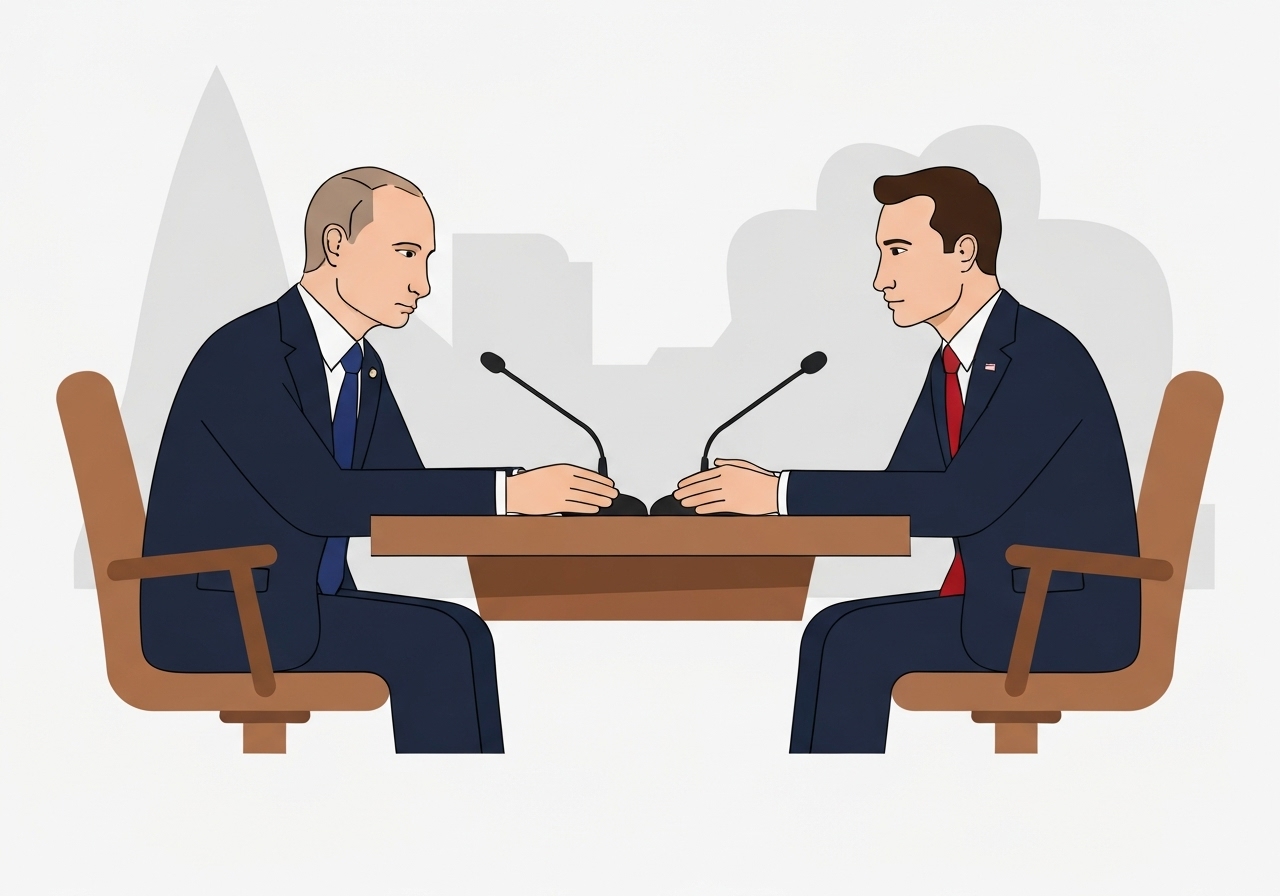
President Vladimir V. Putin will receive Steve Witkoff in Moscow on Tuesday, Dec. 2, 2025, as the United States advances a revised proposal to end the war in Ukraine. Witkoff, President Trump’s special envoy, is expected to present a U.S.-backed text that American officials say was adjusted after talks with Ukrainian diplomats in Miami two days earlier. Kyiv and its European partners have criticized an earlier draft for mirroring long-standing Russian demands; Ukrainian leaders say parts of the plan remain unacceptable. The visit comes amid continued Russian battlefield gains and political pressure inside Ukraine over a corruption scandal, complicating prospects for an immediate breakthrough.
Key Takeaways
- Meeting date and place: Putin will meet Witkoff in Moscow on Dec. 2, 2025, marking the envoy’s sixth trip to Russia since January 2025.
- Diplomatic timeline: U.S. and Ukrainian delegations held talks in Miami two days before the Moscow visit to reconcile differences over the draft plan.
- Core contention: Russia seeks Ukrainian withdrawal from remaining Donbas territory, a renunciation of NATO ambitions, and formal protections for Russian language, culture and the Russian Orthodox Church.
- Ukrainian stance: Kyiv has publicly refused to accept the full set of Russian demands and has sought to soften elements of the U.S.-backed proposal.
- U.S. role: The White House has actively pressed Ukraine to engage with the proposal while signaling a desire to de-escalate the conflict diplomatically.
- Operational context: Russian forces have sustained battlefield momentum since 2022’s full-scale invasion, influencing negotiating leverage.
- Regional diplomacy: President Volodymyr Zelensky met with French President Emmanuel Macron in Paris on Monday and planned travel to Ireland on Tuesday to consult European allies.
Background
The war that began with Russia’s full-scale invasion of Ukraine in February 2022 has reshaped European security and repeatedly stalled diplomatic efforts. Moscow’s declared objectives have included control or influence over eastern Ukrainian regions and preventing Ukraine’s entry into NATO. Those aims have driven demands that Kyiv cede territory in the Donbas and commit to neutrality in security alliances—terms Kyiv regards as violations of its sovereignty.
Since 2022, successive peace proposals and cease-fire offers have faltered because the parties’ core positions remain far apart. Western governments, led by the United States and European Union members, have balanced military support for Kyiv with intermittent diplomatic initiatives. The Trump administration’s envoy, Steve Witkoff, has pursued shuttle diplomacy in multiple capitals; his visit to Moscow is part of a series of efforts to convert back-channel and public talks into a formal negotiated settlement.
Main Event
Witkoff’s meeting with Mr. Putin follows a revised U.S. text that American officials say reflects concessions after consultations with Ukrainian representatives in Miami. U.S. officials describe the Miami session as constructive but acknowledge remaining gaps, particularly on territorial clauses and security guarantees. The revised draft, according to allied statements, attempts to reconcile Ukrainian concerns while addressing some Russian security interests.
The Kremlin has signaled skepticism about the process and reiterated that Moscow’s threshold for an acceptable settlement includes permanent political and cultural safeguards for Russian interests in Ukraine. Russian leaders, citing battlefield gains and strategic aims, have pushed for clauses that Kyiv stresses would amount to loss of sovereignty over core policymaking. Kyiv has publicly resisted those terms and is seeking stronger international guarantees if it were to consider any territorial or security compromises.
European capitals are closely watching the Moscow meeting. President Zelensky’s meetings with European leaders in Paris and Dublin are intended to shore up allied backing and clarify Kyiv’s red lines. Western officials say the goal of U.S. diplomacy is to produce a pragmatic framework that can halt open warfare while preserving a political path acceptable to Ukraine and its partners.
Analysis & Implications
Politically, the Moscow meeting tests whether U.S.-led diplomacy can bridge entrenched positions without preempting Kyiv’s core security needs. The U.S. faces a difficult balancing act: pushing for an end to active combat while avoiding pressure that would force Ukraine to accept terms deemed unacceptable domestically or internationally. Washington’s effort to present a revised text suggests it believes incremental adjustments could bring Kyiv and Moscow closer, but leverage on the ground favors Moscow in some sectors due to steady Russian advances.
Domestically in Ukraine, the timing is sensitive. A corruption scandal that has surfaced in recent weeks has weakened public trust in some institutions and provided fodder to critics of concessionary diplomacy. Ukrainian leaders must weigh immediate battlefield realities against long-term state-building goals; conceding territory or security autonomy risks setting precedents that could constrain Ukraine’s sovereignty for years.
For Russia, securing formal recognition of influence over language, culture and the Russian Orthodox Church would entrench Moscow’s ability to shape Ukraine’s internal politics, even if large-scale formal annexation is not internationally recognized. For NATO and EU members, any negotiated settlement that undermines Ukraine’s ability to choose alliances would carry strategic consequences, potentially altering deterrence arrangements across the continent.
Comparison & Data
| Issue | Russia’s Demands | Ukraine’s Position | U.S.-Backed Draft (reported) |
|---|---|---|---|
| Territory (Donbas) | Permanent control over remaining Donbas territory | Refusal to cede sovereign territory | Proposes localized or phased security arrangements, unclear on permanent cession |
| NATO Membership | Ukraine must renounce aspirations to join NATO | Retain right to future alliance choice | Security guarantees short of formal NATO membership |
| Language & Culture | Formal protections for Russian language and institutions | Protect minority rights without external control | Enhanced minority rights provisions with international oversight |
| Ceasefire Enforcement | Demilitarized zones with Russian-influenced guarantees | International force and monitoring preferred | Multilateral monitoring mechanisms proposed |
The table summarizes reported positions; the U.S.-backed draft is described in public reporting as attempting compromises but leaving key specifics unresolved. Quantitative data on troop deployments and territorial control remain fluid; analysts caution that any deal’s durability will depend on enforceable verification and credible third-party guarantees.
Reactions & Quotes
Both U.S. and Ukrainian delegations described recent Miami discussions as constructive, though they noted important gaps remain.
U.S. official (statement)
Russian officials have signaled that Moscow will press for guarantees of cultural and political influence in Ukraine as part of any settlement.
Kremlin spokesperson (press briefing)
President Zelensky emphasized consultations with European partners to ensure Kyiv’s core security and sovereignty concerns are preserved.
Office of the President of Ukraine (official remarks)
Unconfirmed
- The precise language and full text of the revised U.S.-backed proposal have not been publicly released and remain unconfirmed.
- Whether President Putin will offer concrete concessions in the meeting or merely table the draft for further study is not yet verified.
- The degree to which the recent Ukrainian corruption scandal will alter Kyiv’s negotiating flexibility is still uncertain.
Bottom Line
Witkoff’s Moscow visit is a pivotal diplomatic moment but not a guaranteed turning point. The U.S. effort to present a revised text reflects active mediation, yet major gaps — especially over territory, NATO aspirations and institutional guarantees — persist between Moscow and Kyiv. Any agreement that lacks enforceable verification and credible third-party guarantees risks unraveling once immediate pressures subside.
Observers should watch whether the meeting produces a narrow, implementable cease-fire framework or simply restates positions and buys time. European consultations and the internal political dynamics in Ukraine will heavily influence whether Kyiv can entertain compromises. For now, the negotiations reduce, but do not eliminate, the risk of continued hostilities.
Sources
- The New York Times — Reporting from major U.S. news outlet on the Moscow visit and recent Miami talks (media).
- The White House — Official statements and policy context from the U.S. administration (official).
- The Kremlin — Official Russian statements and press briefings (official).
- Office of the President of Ukraine — Official Ukrainian positions and diplomatic travel notices (official).