
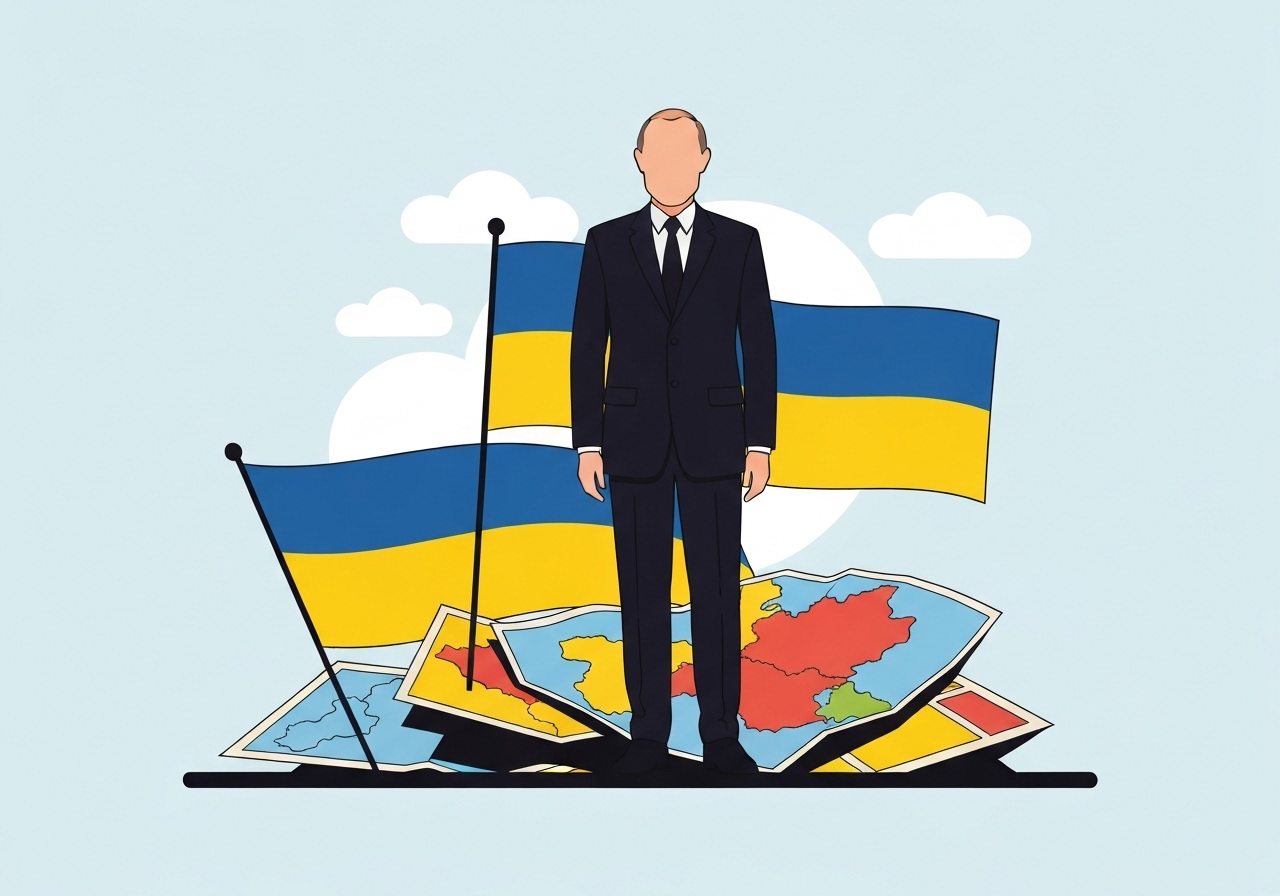
Russian President Vladimir Putin reiterated that Moscow will only cease fighting if Ukrainian forces withdraw from territory Russia claims, comments he made during a trip to Kyrgyzstan ahead of planned US-Russia diplomacy next week. He repeated Moscow’s long-standing demand for legal recognition of areas seized since 2014, including Crimea and large parts of the Donbas, and framed the issue as non-negotiable unless Kyiv concedes. Kyiv and its Western backers reject giving up land taken by force, making this position a central barrier to any negotiated settlement. The public remarks raise the stakes for an imminent US delegation visit and complicate a recently circulated draft peace plan that has been under revision.
Key takeaways
- Putin said Russia will lay down arms only if Ukrainian troops withdraw from territory Moscow claims, reiterating core demands that have shaped negotiations since 2014.
- Russia still controls Crimea (annexed in 2014) and large parts of Donetsk and Luhansk; Kyiv has ruled out ceding those areas as part of any deal.
- The US and Ukraine held intense discussions over a draft peace plan reportedly prepared in October by American and Russian officials; the plan was revised and shown to Russia, according to Putin.
- US envoy Steve Witkoff is expected to visit Moscow next week; President Trump said Jared Kushner might join the delegation, a claim not yet confirmed.
- The Institute for the Study of War estimates that at Moscow’s current campaign pace it would take nearly two more years for Russian forces to seize the remainder of Donetsk region.
- Ukraine has been under martial law since Russia’s full-scale invasion began on 24 February 2022, and Kyiv’s parliament affirmed President Volodymyr Zelensky’s legitimacy earlier this year after his elected term technically ended.
- European leaders remain skeptical that Moscow intends a genuine settlement, with European Commission chief Ursula von der Leyen warning of a continued imperial mindset from Russia.
Background
The dispute traces back to 2014, when Russia annexed the Crimean peninsula after the ousting of Ukraine’s then-president. That move was widely condemned internationally and led to sanctions against Moscow; it also precipitated a protracted conflict in eastern Ukraine in the Donetsk and Luhansk oblasts, collectively known as the Donbas. Moscow has since claimed legal title over those lands, a position that underpins its current negotiating posture and is unacceptable to Kyiv and most Western governments as a matter of international law.
In February 2022 Russia launched a full-scale invasion of Ukraine, expanding the geography of active fighting and prompting Kyiv to declare martial law and mobilize its population. Over the subsequent period, front lines shifted in places but the core dispute—whether Kyiv concedes territory in exchange for a ceasefire and security guarantees—has remained the central diplomatic impasse. Western capitals have supplied Ukraine with military and economic aid while urging a negotiated settlement that respects Ukraine’s sovereignty and territorial integrity.
Main event
Speaking to reporters in Bishkek, Kyrgyzstan, Putin framed the path to ending hostilities in territorial terms, saying Moscow would only stop its military campaign if Ukrainian forces withdrew from areas Russia claims. He described a new draft peace plan as having been shown to Russia and suggested it could form the “basis” for future talks, though he said specific diplomatic language still needs to be negotiated. Putin also repeated hardline rhetoric about Kyiv’s leadership, calling elements of it illegitimate and arguing there was little point, in his view, in signing binding documents with them.
The comments came after intensive US-Ukraine discussions over a draft plan reportedly drafted by American and Russian officials in October, which was later revised. US special envoy Steve Witkoff was confirmed by Moscow to be expected in the Russian capital in the first half of next week; President Trump said the delegation might include Jared Kushner, a claim not yet corroborated by official US confirmations. Separately, Ukraine said US Army Secretary Dan Driscoll plans to visit Kyiv later in the week, underlining active transatlantic engagement on both military and diplomatic tracks.
Military analysts point out that Russia’s battlefield gains in eastern Ukraine have been gradual and costly. The Institute for the Study of War projects that at current operational tempo it would take Moscow nearly two years to capture the remaining parts of Donetsk region, a calculation that feeds into both Russian bargaining positions and Western assessments of how long hostilities could continue absent a settlement. European leaders have publicly expressed skepticism about Moscow’s commitment to genuinely end the war, even as Washington pursues talks it hopes can narrow differences.
Analysis & implications
Putin’s insistence on territorial withdrawal as a precondition for peace transforms what might otherwise be framed as security or political guarantees into a core territorial demand. That raises a profound dilemma for Kyiv and its partners: accepting Russian control over seized land would undercut principles of territorial integrity and could set a precedent for future coercive land grabs. Conversely, refusing to compromise sustains the fighting and the humanitarian toll that accompanies it. International law and the political cost for Western governments of endorsing coerced territorial transfer make any concession politically fraught.
Practically, Moscow’s position also signals how it perceives leverage on the battlefield. Putin’s remarks stress an initiative narrative—claiming momentum—while analysts point to attrition and manpower constraints that slow operational advances. If Russia truly seeks recognition of annexed or occupied regions as a quid pro quo for peace, it will need to weigh domestic political benefits against the long-term economic and security costs of sustained sanctions and international isolation.
For the United States and European partners, the dilemma is twofold: push urgently for negotiations that might de-escalate fighting, or maintain pressure to avoid rewarding aggression. If a compromise emerges that treats Crimea or parts of the Donbas as de facto Russian-controlled without legal transfer, Western actors would face a diplomatic and moral test about when and whether to accept such arrangements. The presence of senior US envoys signals Washington’s interest in exploring options, but any durable settlement will require reconciling deeply opposed red lines.
Comparison & data
| Region | Key date | Current status (as described) | Relevant note |
|---|---|---|---|
| Crimea | Annexed 2014 | Under Russian control since 2014 | Annexation not internationally recognised |
| Donetsk and Luhansk (Donbas) | Conflict since 2014; expanded 2022 | Large portions occupied by Russia; Ukrainian-held pockets remain | ISW estimates ~2 years at current pace to take remaining Donetsk |
The table summarizes the territorial situation and timelines at the core of negotiations. International recognition and legal status remain major stumbling blocks: Crimea’s 2014 annexation is widely rejected by Western states, while the Donbas has been a contested battleground with shifting control since 2014 and intensified fighting after February 2022. The ISW projection about the pace of Russian gains is material to diplomatic calculations because it frames how much time Moscow might need to achieve large territorial objectives by force.
Reactions & quotes
Russian statements and Western responses have been markedly different in tone and implication. Putin used strong language to describe Kyiv’s leadership and framed concessions as a precondition for peace, a posture that prompted immediate skepticism from European officials who view territorial concession as unacceptable. Western capitals welcomed diplomatic engagement but emphasized that any settlement must respect Ukraine’s sovereignty.
“If they don’t withdraw, we’ll achieve this by force of arms,”
Vladimir Putin
Putin’s terse statement reiterated that Russia would continue military operations absent a Ukrainian withdrawal. Observers say such language is intended to harden bargaining positions and signal to domestic and foreign audiences that Russia will pursue its stated aims unless Kyiv cedes territory.
“There are only a few remaining points of disagreement,”
Donald Trump
President Trump’s comment suggested optimism that a negotiated settlement could be within reach, but lacked specifics about which disagreements remain. US officials have not publicly confirmed all elements of the draft plan reportedly discussed in October, leaving questions about whether key territorial issues were addressed.
“A post-World War Two mindset — viewing Europe as a sphere of influence — is unacceptable,”
Ursula von der Leyen, European Commission
European Commission chief Ursula von der Leyen’s warning reflects EU concern that any acceptance of Kremlin territorial claims would signal a return to great-power practices of dividing sovereign nations. Her remarks underline the political and moral stakes for EU members in how they respond to diplomatic overtures.
Unconfirmed
- The exact contents of the revised draft peace plan shown to Russia have not been publicly released and remain unverified.
- Reports that Jared Kushner will join the US delegation to Moscow are not yet confirmed by official US sources.
- Claims about short timelines to reach a comprehensive agreement between Moscow and Kyiv are speculative until both sides publish agreed text.
Bottom line
Putin’s renewed demand that Ukraine withdraw from territory claimed by Russia places territorial recognition at the heart of any ceasefire negotiations and narrows the range of politically acceptable outcomes for Kyiv and its Western backers. That stance reinforces existing red lines: Kyiv will not willingly cede land taken by force, while Moscow treats territorial gains as non-negotiable leverage in diplomacy. As a result, short-term talks risk producing only partial agreements unless they bridge the fundamental divide over ownership of Crimea and the Donbas.
For now, diplomatic activity—US envoys traveling to Kyiv and Moscow, and ongoing talks in Washington—will test whether technical language and security guarantees can create room for compromise. Absent substantive movement on territorial questions, the conflict is likely to persist, with military attrition and political fallout shaping the outlook for months or years ahead. Readers should watch for any released texts of the draft plan, confirmations of delegation members, and changes in battlefield dynamics that could alter negotiating leverage.
Sources
- BBC News — (international news)
- Institute for the Study of War (ISW) — (think tank analysis)
- The White House — (official statements)
- European Commission — (official/European Union)