
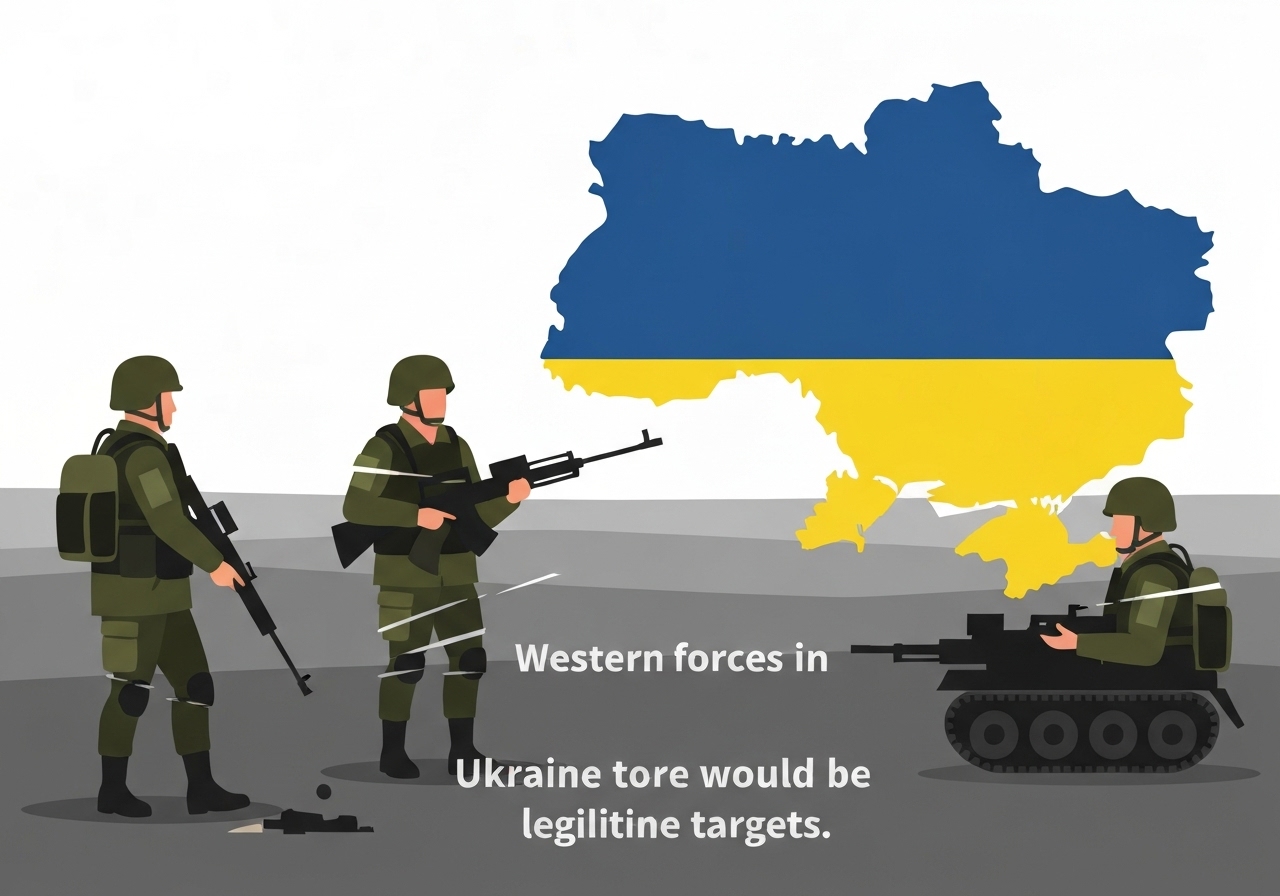
On September 5, 2025 at an economic forum in Vladivostok, Russian President Vladimir Putin warned that any Western troops stationed in Ukraine during active operations would be treated by Moscow as a threat and considered “legitimate targets for destruction.” His remarks followed announcements that 26 countries had pledged forces as part of post-war security guarantees for Kyiv; Ukraine also reported a drone strike on the Ryazan oil refinery the same day.
Key Takeaways
- Putin said Western forces deployed in Ukraine amid military operations would be seen as legitimate targets.
- His comments came after 26 countries committed to post-conflict security guarantees for Ukraine.
- Kremlin spokesperson Dmitry Peskov framed foreign troop presence near Russia as a security threat.
- Ukraine reported a drone strike on Russia’s Ryazan refinery; regional authorities said air defenses shot down eight drones.
- Analysts say recent Ukrainian strikes have reduced about 17% of Russia’s oil refining capacity (Reuters calculation).
- Proposals for a demilitarized buffer zone and non-NATO peacekeepers have been reported but not officially confirmed by Washington.
Verified Facts
At the Far East Economic Forum in Vladivostok on 5 September 2025, Putin stated that if Western troops appear in Ukraine while fighting continues, Russia will treat them as legitimate military targets. The comment was reported by multiple news agencies and carried by Russian state media.
Kremlin spokesperson Dmitry Peskov reiterated the Kremlin view that NATO’s eastward expansion and any armed foreign presence in Ukraine amount to a strategic threat to Russia; he told reporters the Kremlin would act to safeguard national security, according to TASS reports.
Separately, Ukraine’s drone forces commander Robert Brovdi said Kyiv struck the Ryazan oil refinery, about 180 kilometres southeast of Moscow. Ryazan regional governor Pavel Malkov said air defences had intercepted eight drones and that debris fell on an industrial site.
Reuters has calculated that a series of Ukrainian drone attacks in recent months has taken offline processing operations equivalent to roughly 17% of Russia’s oil refining capacity. Multiple facilities in Rostov, Samara, Saratov, Volgograd and Krasnodar regions have been hit.
Context & Impact
Putin’s warning highlights Moscow’s long-standing objection to NATO-related military presence near its borders; Russian leaders have repeatedly cited alliance expansion as a core security concern since 2014 and in the run-up to the 2022 invasion.
The 26-country pledge to contribute forces is part of a wider “coalition of the willing” initiative that aims to provide security guarantees for Ukraine after a ceasefire or peace deal. Nations differ on timelines and the format of any deployments, which raises strategic and political risks.
On the battlefield, attacks on Russian energy infrastructure are intended to erode Moscow’s warfighting logistics and revenue streams. If refinery disruptions persist, they could strain domestic fuel supplies and industrial output inside Russia.
Diplomatically, threats to foreign troops complicate proposals for international security contingents to monitor post-conflict arrangements. Any deployment of Western forces would carry a high risk of escalation unless carefully negotiated and backed by wide diplomatic guarantees.
“If some troops appear there, especially now, during military operations, we proceed from the fact that these will be legitimate targets for destruction.”
Vladimir Putin, Russian President
Unconfirmed
- Reports that the United States would place troops inside Ukraine have been denied; NBC sources described US-led monitoring of a buffer zone but said the US would not deploy forces on Ukrainian soil — this has not been officially confirmed by Washington.
- Attribution of GPS jamming affecting EU aircraft to Russian operations was reported by EU officials and some Bulgarian statements, but definitive technical proof has not been publicly disclosed.
Bottom Line
Putin’s statement raises the political and military stakes around any plan to station foreign troops in Ukraine after a ceasefire. While many countries seek ways to guarantee Kyiv’s security, Moscow’s public threat increases the complexity of designing international deployments that avoid direct confrontation. Continued strikes on Russian energy sites further complicate the security environment and the prospects for stable post-conflict arrangements.