
Lead
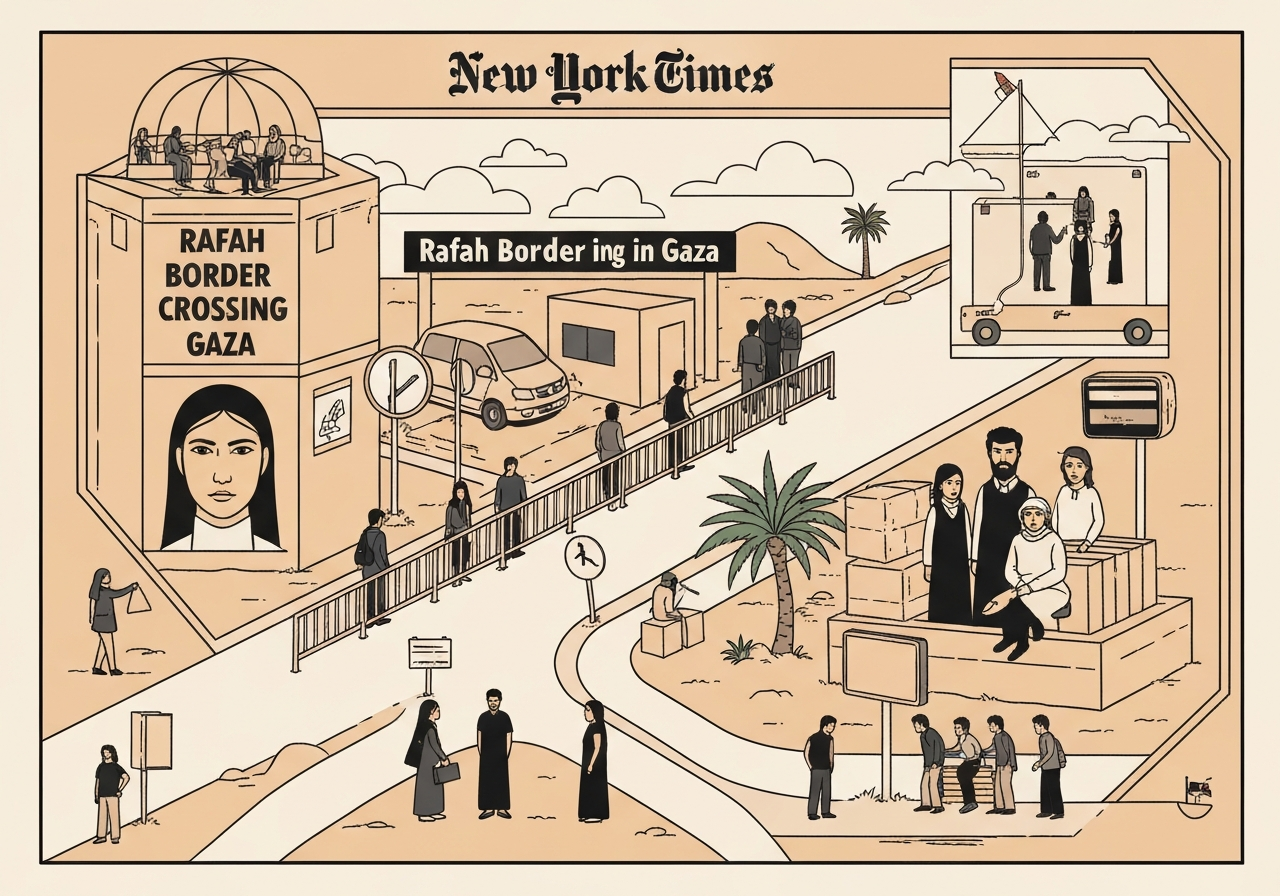
The Rafah border crossing between Gaza and Egypt reopened in late January 2026 after nearly a year of largely uninterrupted closure, restoring a limited lifeline for Palestinians seeking medical care or to return home. The crossing, near the city of Rafah in southern Gaza, had been seized by Israeli forces in May 2024 and remained mostly closed except for a brief winter pause. A long-term cease-fire agreed in October included a provision for reopening Rafah, but Israel delayed implementation pending the return of the final hostage remains from the Oct. 7, 2023 attacks; that repatriation was completed the week before publication. Israeli officials reported that, beginning Monday, a restricted number of people moved through the terminal in both directions, though goods are not yet permitted.
Key Takeaways
- The Rafah crossing reopened after almost a year of closure, offering pedestrian movement but not commercial deliveries.
- The facility was seized by Israeli forces in May 2024 and saw only short, temporary use during a cease-fire in winter 2025–26.
- A long-term cease-fire reached in October called for Rafah to open; Israel conditioned broader implementation on the return of the last hostage remains from the Oct. 7, 2023 attack.
- The repatriation of those remains occurred in the week before publication (late January 2026), enabling the limited reopening.
- Israeli officials said limited numbers crossed in both directions starting Monday (reported Feb. 2, 2026); exact daily totals were not released.
- For now, the crossing will be restricted to people entering and exiting Gaza and will not be used to bring in bulk humanitarian supplies.
- The reopening is immediately significant for medical evacuations and family reunifications but leaves large-scale aid deliveries dependent on other crossing arrangements.
Background
Rafah is Gaza’s only direct overland link to Egypt and has been central to movement and aid into the territory for decades. Control of the crossing has shifted through periods of tension, blockade and conflict; before the 2023–26 war, Rafah was regularly used for both passenger and humanitarian cargo movement under Egyptian and international oversight. The Oct. 7, 2023 Hamas-led attack and the ensuing Israeli military campaign dramatically curtailed crossings and access, producing sustained humanitarian pressure inside Gaza.
In May 2024 Israeli forces seized the Rafah terminal amid military operations, and for much of the following year it remained functionally closed except during short pauses tied to temporary cease-fires. Negotiations between Israel, Egypt and international mediators produced a long-term cease-fire agreement in October that included provisions for Rafah’s reopening. Implementation was delayed while Israel sought the return of the remains of hostages taken on Oct. 7, 2023; that condition was met in the days before the reopening announcement.
Main Event
The reopening process unfolded after weeks of diplomatic and operational planning involving Israeli, Egyptian and international actors. Israeli officials announced that the terminal would initially allow only individuals to cross — for medical treatment, family reunification or return to residency — rather than serving as a conduit for bulk aid or commercial goods. On Monday (reported Feb. 2, 2026), authorities said limited groups began to pass in both directions under controlled conditions and security screenings.
Operational constraints remain tight: checkpoints, verification procedures and restricted time windows are in place as the crossing resumes activity, according to officials. Egyptian authorities control the Egyptian-side terminal operations and have coordinated with international organizations on processing arrivals and departures. Humanitarian agencies have welcomed the ability to move patients and separated relatives but stressed that the opening does not replace the need for steady, large-scale supply routes into Gaza.
The Israeli decision to tie the crossing’s broader reopening to the repatriation of hostage remains shaped the timetable. That repatriation was completed the week before publication, removing the specific precondition Israel cited; however, both sides and mediators emphasize that further steps depend on security arrangements and ongoing negotiations about the movement of goods and the presence of international monitors.
Analysis & Implications
Humanitarian impact: Allowing people to move through Rafah again will have immediate, tangible benefits for those needing specialized medical care unavailable in Gaza and for families seeking reunification. Medical evacuations can save lives, but with goods still blocked at Rafah, hospitals and civilian services will continue to face shortages of supplies, equipment and fuel. The limited nature of the opening means that relief organizations must still rely on alternative corridors and pre-positioned stocks to meet basic needs.
Political and diplomatic effects: The reopening removes a high-profile obstacle cited in cease-fire implementation and offers a visible sign of progress for mediators. For Israel, conditioning a full opening on the resolution of hostage-related issues was a domestic-political signal; for Egypt, reopening Rafah balances humanitarian pressure with security concerns along its border. International backers will likely press for expansion to include cargo as part of confidence-building measures.
Security and sustainability: Strict screening and control at the crossing aim to reduce militant exploitation of the corridor, but tight procedures complicate throughput and increase wait times. Sustained, predictable access will depend on agreed verification mechanisms, possibly including international observers. If those mechanisms prove workable, Rafah could gradually expand to handle more returns and limited aid — but a restoration to prewar commercial capacity would require further negotiation and trust-building.
Comparison & Data
| Date | Status | Notes |
|---|---|---|
| Oct. 7, 2023 | Attack/Conflict | Hamas-led attack that precipitated widened hostilities. |
| May 2024 | Seized by Israeli forces | Terminal largely closed after seizure; limited brief openings later. |
| Late Jan. 2026–Feb. 2, 2026 | Limited reopening | People allowed both ways; goods not yet permitted. |
The table summarizes key milestones tied to the crossing’s operational status. While the reopening in early February 2026 marks a break in near-continuous closure, the absence of cargo movement underscores that the humanitarian bottleneck remains. Quantitative data on daily crossings, processing times and permit approvals have not been publicly released, limiting precise assessment of the reopening’s immediate scale.
Reactions & Quotes
“Limited numbers of Palestinians began passing through in both directions,” officials reported as the terminal resumed operations.
Israeli official (reported)
“This movement can be lifesaving for patients who need treatment outside Gaza, but it does not replace the need for steady humanitarian supplies,” a humanitarian source said.
International aid worker (anonymous)
Unconfirmed
- Whether and when Rafah will be reopened to commercial and humanitarian cargo remains unconfirmed and subject to separate negotiations.
- The precise daily number of people processed since the reopening has not been released by authorities.
- Details of the security and monitoring arrangements for sustained operations at the crossing have not been publicly disclosed.
- Longer-term timetables for expanding hours or capacity at Rafah are still under diplomatic discussion and not yet finalized.
Bottom Line
The limited reopening of the Rafah crossing in late January 2026 restores a narrowly defined humanitarian and personal mobility channel after nearly a year of closure, delivering immediate relief for medical evacuations and family reunifications. However, because the terminal is not yet open to bulk supplies, the broader humanitarian crisis in Gaza will continue to depend on other routes, pre-positioned aid and international logistics.
Moving forward, the crossing’s value as a durable relief corridor will hinge on agreements that expand permitted traffic, the establishment of robust inspection and monitoring mechanisms, and continued diplomatic engagement among Israel, Egypt and international mediators. Observers should watch for published crossing figures, formal arrangements for cargo, and any changes to security or permit procedures that would indicate a shift from a temporary humanitarian channel to a sustained supply route.
Sources
- The New York Times — news report (Feb. 1, 2026; updated Feb. 2, 2026)