
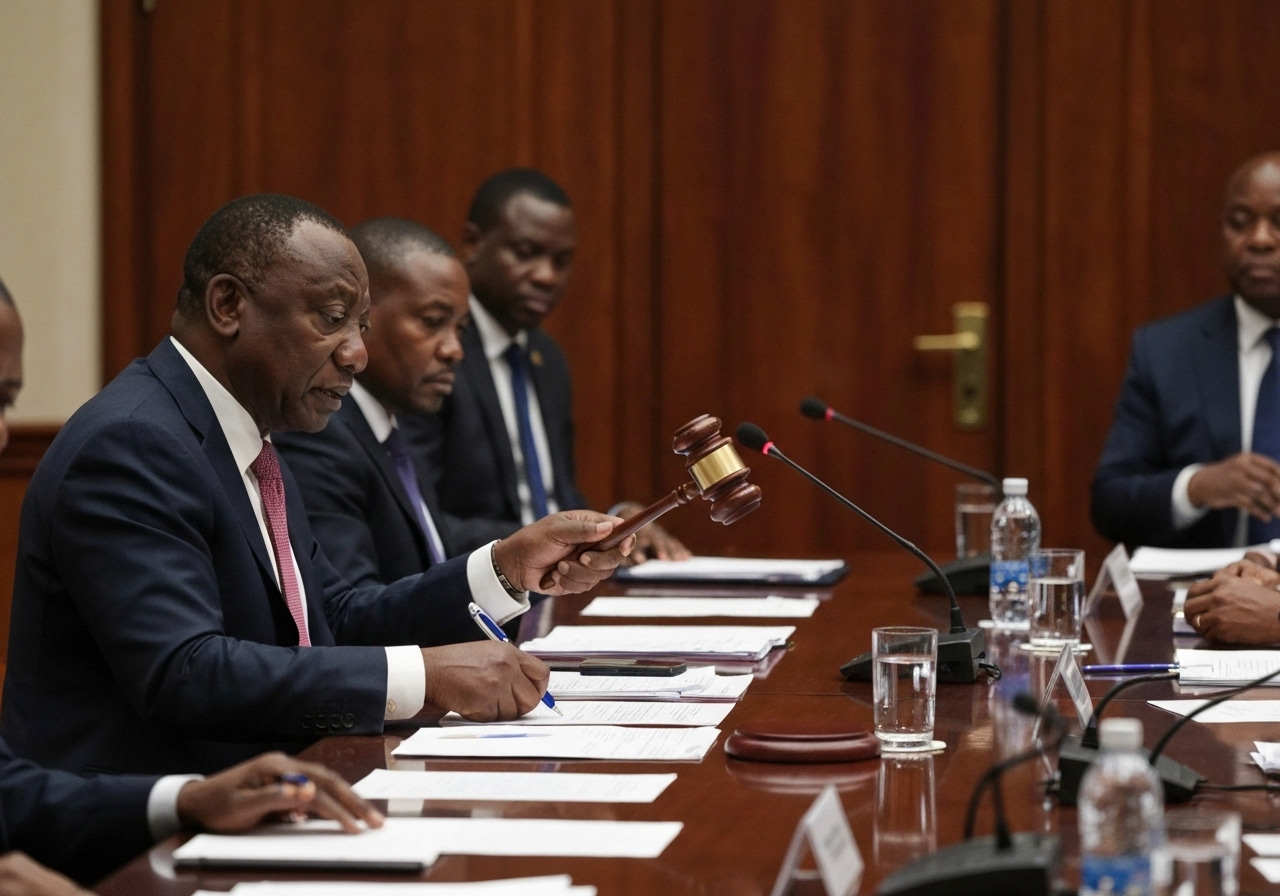
Lead: South African President Cyril Ramaphosa on Wednesday called “regrettable” a public announcement by US President Donald Trump that South Africa will not receive an invitation to the 2026 G20 summit in Miami. The dispute followed the recent G20 leaders’ meeting in Johannesburg, where South Africa says it handed the symbolic instruments of the presidency to a US embassy official after Washington declined to send its leader. Trump, who skipped the Johannesburg summit, framed the move as a snub and said Washington would halt payments and subsidies to South Africa. The exchange has raised diplomatic tensions between Pretoria and Washington and prompted appeals from other G20 members to defend the forum’s integrity.
Key Takeaways
- Donald Trump announced on Truth Social that the US will not invite South Africa to the 2026 G20 summit in Miami, citing an alleged refusal to hand over the G20 presidency.
- South Africa says the G20 presidency instruments were handed to a US embassy official at the Department of International Relations and Cooperation after the US did not send a presidential delegation to Johannesburg.
- Ramaphosa described Trump’s public decision as “regrettable” and said punitive measures are being applied based on misinformation; the South African government has repeatedly rejected claims of “white genocide.”
- Trump also stated his administration would stop “all payments and subsidies” to South Africa effective immediately; the precise programs affected were not specified in his post.
- The Johannesburg summit was the first G20 leaders’ meeting held in Africa; it concluded with a joint declaration endorsing multilateral cooperation on climate and inequality, despite objections from the US delegation.
- South African officials have called for solidarity from other G20 members to uphold the group’s rules and the equal standing of member states.
Background
The 2023 G20 leaders’ summit in Johannesburg marked the first time the gathering convened on the African continent, raising expectations that South Africa’s presidency would spotlight issues such as development, climate resilience and global inequality. The G20 is an informal grouping of the world’s largest economies whose leaders typically attend annual summits to coordinate economic and geopolitical policy. Membership is defined, but attendance and diplomatic practice around presidencies and handovers have normative elements that rely on mutual recognition and protocol.
Tensions rose before and during the Johannesburg meetings after President Trump declined to attend. He has repeatedly asserted, without broadly accepted evidence, that a “white genocide” is occurring in South Africa and leveled criticism at the country’s land and farm policies. South Africa and many international observers have rejected those claims as unsupported and inflammatory. The standoff over physical or ceremonial transfer of the G20 presidency has become the immediate flashpoint between Pretoria and Washington.
Main Event
On Wednesday Trump posted on Truth Social that South Africa had refused to hand over the G20 presidency to a US representative at last week’s Johannesburg summit and that, “at my direction, South Africa will NOT be receiving an invitation to the 2026 G20” to be hosted in Miami, Florida. The post also accused South Africa of misgovernance and announced a halt to unspecified payments and subsidies.
South African officials disputed the narrative that Pretoria refused a handover. According to a statement from President Ramaphosa’s office, because the US leadership was not present at the summit, instruments of the G20 presidency were “duly handed over to a US Embassy official at the Headquarters of South Africa’s Department of International Relations and Cooperation.” Ramaphosa described the public announcement as regrettable, noting that some US businesses and civil-society delegations had attended portions of the Johannesburg meetings.
The events have been inflamed by prior remarks from Trump alleging widespread violence against the white minority and unauthorized land seizures. South Africa has categorically rejected those assertions and emphasized that domestic policy debates do not amount to state-sanctioned mass killings. The Johannesburg declaration nonetheless secured consensus language committing members to multilateral cooperation on climate mitigation and inequality despite reported US objections.
Analysis & Implications
The dispute underscores a growing risk to diplomatic norms when summit-level protocol becomes politicized on social media. G20 presidencies traditionally include symbolic handovers that signal continuity; when a major power publicly contests those gestures, it can undercut confidence in multilateral governance. If Washington enforces visa or financial restrictions, it could set a precedent for using administrative levers to exclude or punish fellow members.
Economically, an explicit US move to halt subsidies or payments could affect bilateral programs, trade facilitation, or financing tied to US agencies, though Trump did not identify which transfers he meant. The practical impact will depend on which streams—development assistance, trade credits, or multilateral contributions—are targeted. South Africa’s economy, the continent’s most industrialized, remains exposed to shifts in foreign investment and diplomatic relations with major partners.
Politically, the episode may strengthen South Africa’s appeals to other G20 members to defend the forum’s impartiality. Several members have vested interests in preserving the group’s rules-based operation: excluding a member from future summits by administrative fiat would raise concerns about reciprocity and the stability of the group’s collective decision-making. For domestic politics in South Africa, Ramaphosa’s response aims to balance defense of sovereignty with attempts to preserve ties to US business and civil society that attended Johannesburg.
Comparison & Data
| Year | Host City | Notable Point |
|---|---|---|
| 2023 | Johannesburg, South Africa | First G20 leaders’ summit held in Africa; presidency held by South Africa |
| 2026 | Miami, Florida, USA | Designated US-hosted summit; Trump announced South Africa would not be invited |
The Johannesburg summit concluded with a joint declaration emphasizing climate action and tackling inequality, even as the US registered objections. The 2026 summit in Miami is designated as the next leaders’ meeting hosted by the US; customary diplomatic practice expects G20 members to coordinate attendance and invitations, though membership is not subject to invitation in the ordinary sense.
Reactions & Quotes
“It is regrettable that punitive measures are being applied based on misinformation and distortions about our country.”
Cyril Ramaphosa, President of South Africa (statement)
Ramaphosa’s office framed the dispute as avoidable and linked it to broader efforts to reset relations with the United States while rejecting allegations leveled against South Africa’s domestic policies.
“Therefore, at my direction, South Africa will NOT be receiving an invitation to the 2026 G20.”
Donald J. Trump, Truth Social
Trump’s post presented the decision as punitive and tied it to his assessment of how the South African government handled the G20 handover and domestic issues; he also claimed he would stop “all payments and subsidies” to South Africa without specifying affected programs.
Unconfirmed
- Precise programs covered by Trump’s pledge to stop “all payments and subsidies” to South Africa were not specified and remain unclear.
- Claims that South Africa “refused” to hand over the G20 presidency conflict with Pretoria’s account that it transferred instruments to a US embassy official; the exact sequence of events needs independent verification.
- Allegations of an organized campaign of killings and state-sanctioned land seizures against white South Africans remain uncorroborated by broadly accepted, reliable evidence.
Bottom Line
The confrontation between Presidents Ramaphosa and Trump over the G20 handover illustrates how summit protocol can be politicized in the era of rapid messaging and social media. Ramaphosa has sought to rebut what he calls misinformation and protect South Africa’s standing within the G20, while the US statement on invitations and payments represents a sharp rhetorical escalation.
Coming months will show whether Trump’s announcement translates into concrete administrative actions—such as visa restrictions or financial measures—and how other G20 governments respond. For South Africa, the immediate priorities include documenting the handover, rallying multilateral support for the integrity of the forum and clarifying any bilateral program risks tied to US funding.