
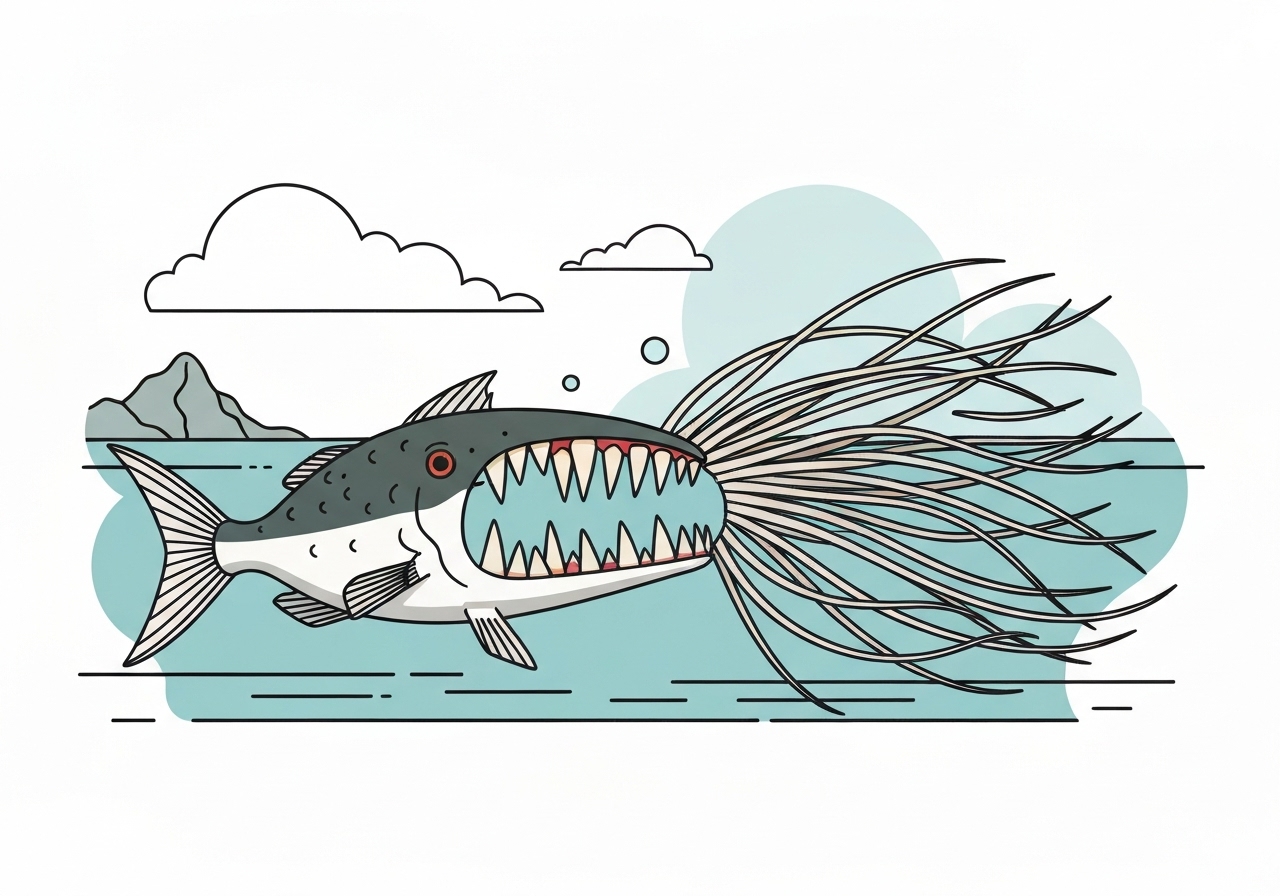
On Sept. 6, 2025, researchers reported that the male spotted ratfish (Hydrolagus colliei) uses a fleshy forehead appendage called a tenaculum, studded with mineralized tooth rows, to grip a female’s pectoral fin during mating — a feature traced by the team to ancient chimaera relatives.
Key Takeaways
- The tenaculum is a forehead clasper used by male chimaeras in mating to hold onto the female’s fin.
- Micro-CT scans of 40 spotted ratfish showed the organ develops from a small bump in juveniles to a club in adults.
- Rows of mineralized, toothlike structures on the tenaculum are built with the same tooth-forming genes found in mouths.
- Fossils such as Helodus simplex, dated about 315 million years ago, show similar tenaculum-like extensions with jawlike teeth.
- Researchers suggest tooth development machinery was retained as the structure migrated away from the mouth over evolutionary time.
- Alternate explanations include a defensive or signaling origin; some female lineages retain a remnant tenaculum.
Verified Facts
The study examined 40 spotted ratfish collected near the San Juan Channel and observed at Friday Harbor Laboratories. Specimens ranged from just under 10 inches to about 2.5 feet in length. Researchers applied micro-CT imaging to document how the tenaculum changes shape as individuals mature.
Imaging revealed the tenaculum houses organized rows of mineralized cusps. Molecular analyses detected expression of canonical tooth-forming genes in the appendage, indicating these bumps are true teeth rather than mere skin projections.
Comparative examination of fossils, including Helodus simplex from roughly 315 million years ago, showed tenaculum-like protrusions bearing whorls of teeth similar to oral dentitions. The team argues this supports an evolutionary continuity of tooth-making ability even after the structure shifted position on the skull.
Context & Impact
Chimaeras, often called ratfish or ghost sharks, are cartilaginous fishes related distantly to sharks; the two lineages split nearly 400 million years ago. Unlike many sharks, most chimaeras lack individual sharp teeth and instead possess tooth plates for grinding.
The discovery highlights how ancient developmental programs can be repurposed to build novel structures. It also reframes a conspicuous sexual appendage as a complex, tooth-bearing organ with deep evolutionary roots.
Practical implications include new avenues for studying the developmental genetics of teeth and of novel appendages more generally, and for understanding how function and location of a structure can change while preserving core genetic mechanisms.
Official Statements
“We haven’t seen anything like this anywhere else in the animal kingdom,” the study lead said, noting the jawlike conveyor of tooth rows on the forehead clasper.
Gareth J. Fraser, University of Florida
Another expert who was not part of the study emphasized that remnants of the structure in some females could mean the tenaculum once served other roles besides mating.
Dominique Didier, Millersville University
Unconfirmed
- Whether the tenaculum originally evolved primarily for defense or display rather than mating remains uncertain.
- Behavioral interpretations of a male flexing its tenaculum during dives — warning versus courtship — are speculative without systematic observation.
Bottom Line
The analysis shows that tooth-forming pathways were co-opted to build a unique forehead clasping organ in chimaeras, linking a striking sexual trait to ancient developmental mechanisms. Future field observations and genetic work will be needed to resolve its original function and behavioral role.