
Lead
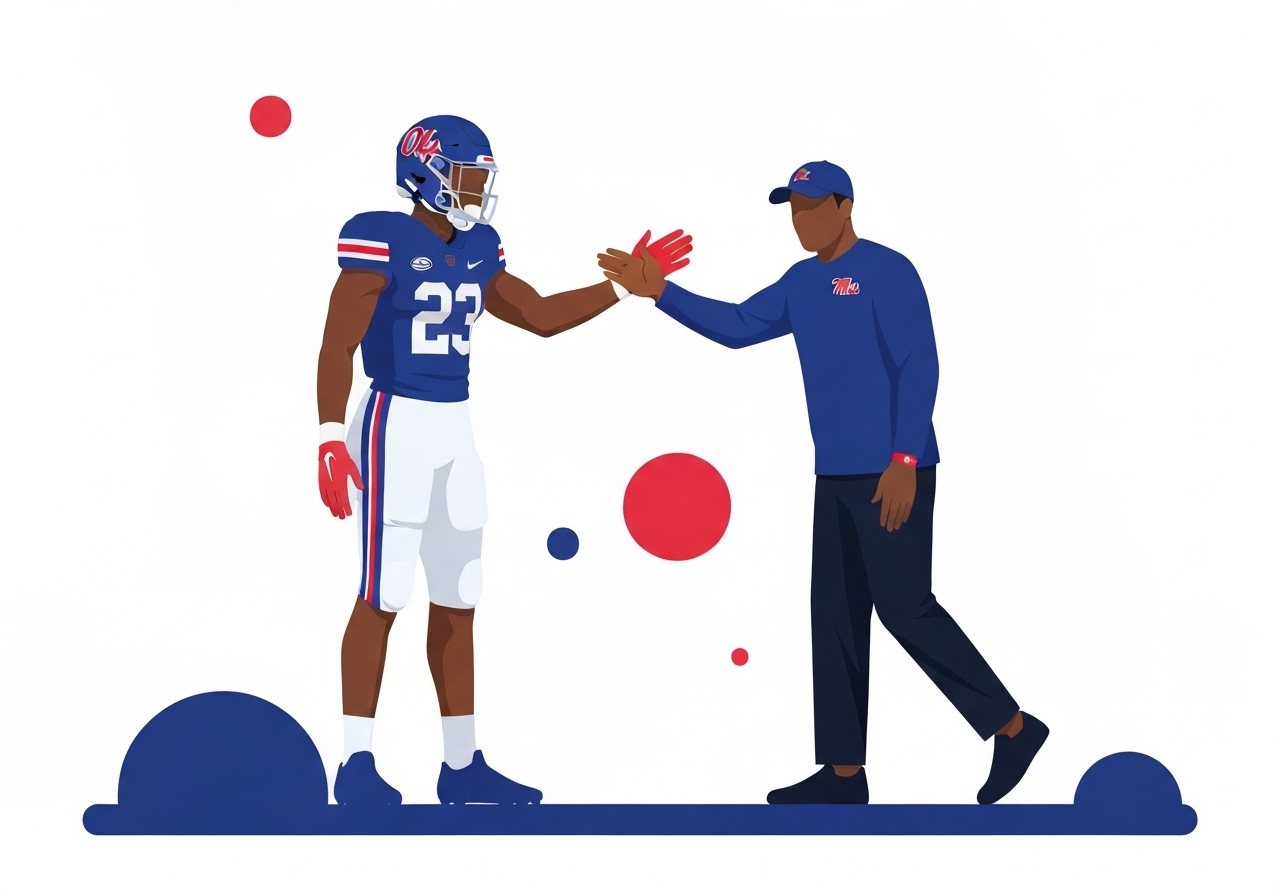
GLENDALE, Ariz. — After Ole Miss fell 31-27 to Miami in the Vrbo Fiesta Bowl, former Miami and Baltimore Ravens linebacker Ray Lewis pulled All-America running back Kewan Lacy aside in the locker room to offer perspective and encouragement. Lacy, nursing a black arm brace and a bandage on a hamstring he hurt on a 73-yard touchdown run, listened as Lewis stressed lessons learned from setbacks. The loss capped a chaotic but historic season for the Rebels, who finished with a school-record 13 wins and the program’s first College Football Playoff appearance. Despite the final result, team leaders emphasized that internal adversity — including coach Lane Kiffin’s Nov. 30 departure — had forged cohesion that carried them through the year.
Key Takeaways
- Ole Miss lost the Vrbo Fiesta Bowl to Miami, 31-27, on a 3-yard game-winning scramble by Miami’s Carson Beck with 18 seconds remaining.
- The Rebels set a program record with 13 wins and made their first College Football Playoff appearance.
- The Fiesta Bowl featured six lead changes — the most in CFP history — and Miami controlled time of possession at 41:22, the longest in a CFP game.
- Ole Miss managed zero yards on third down on 10 plays; third-down inefficiency was a decisive factor in the loss.
- Kewan Lacy rushed for a 73-yard touchdown in the second quarter but left with a hamstring issue; he finished the season with 24 rushing touchdowns, third-most in a single SEC season.
- Following Lane Kiffin’s exit on Nov. 30, defensive coordinator Pete Golding was promoted to head coach and retained strong roster support.
- Quarterback Trinidad Chambliss completed two late passes to reach the Miami 35 with six seconds left; his final Hail Mary fell incomplete as time expired.
- Lacy signed a deal to return next season, and Chambliss announced plans to seek an NCAA waiver for an extra year of eligibility.
Background
Ole Miss entered the postseason after a turbulent closing stretch to the regular season. Head coach Lane Kiffin left for LSU on Nov. 30, prompting an internal promotion of Pete Golding from defensive coordinator to head coach and a players-only leadership meeting to steady the roster. The program’s resilience became a recurring theme: after Kiffin’s departure, senior leaders and position-group captains repeatedly emphasized execution over external noise, a message that the team leaned on through the Sugar Bowl quarterfinal and into the Fiesta Bowl.
The Rebels’ 2023 campaign was defined by both on-field fireworks and off-field turnover. Personnel moves and transfers tested depth, while breakout performances — most notably from Kewan Lacy and the unexpectedly ascendant Trinidad Chambliss — compensated for instability. Ole Miss’ path to the CFP included wins over Tulane and a 39-34 triumph against No. 3 Georgia in the Sugar Bowl quarterfinal, further underscoring the group’s ability to respond under pressure.
Main Event
The Fiesta Bowl itself was a back-and-forth affair marked by explosive plays and late dramatics. Lacy electrified early with a 73-yard touchdown to begin the second quarter but appeared to suffer a hamstring injury on the same play, exiting later with a black bandage on the area and a brace on his arm for a prior injury. Miami and Ole Miss traded leads six times; four lead changes occurred in the fourth quarter alone, and the teams combined in a sequence of rapid momentum swings.
Miami’s Carson Beck finished 268 passing yards with three touchdowns and was the decisive figure late, scrambling for a 3-yard touchdown with 18 seconds left to put Miami ahead. Time of possession tilted heavily to Miami — 41:22 — enabling sustained drives that limited Ole Miss’ offensive opportunities. Penalties also played a role: Miami was flagged 10 times for 74 yards, but Ole Miss could not capitalize enough to overcome the clock and third-down failures.
Trinidad Chambliss, the Division II transfer from Ferris State whose late-season emergence helped carry the Rebels, engineered a final sequence to reach the Miami 35 with six seconds remaining after two completions. His desperation heave as time expired fell incomplete, ending a season in which he nearly led an underdog team to the national title. In the locker room, amid obvious disappointment, veteran presence from visitors such as Ray Lewis provided perspective to players like Lacy.
Analysis & Implications
Ole Miss’ 13-win season reshapes expectations for the program entering the offseason. The on-field results give Pete Golding a stronger platform as he assumes full-time head-coaching responsibilities, including recruiting leverage and retention of portal targets. Several key players have signaled intent to return — including Lacy and Chambliss (pending NCAA approval) — which could sustain continuity despite staff turnover.
However, the Fiesta Bowl highlighted structural weaknesses that must be addressed. The Rebels’ inability to convert on third downs (0 yards on 10 attempts in the game) and a reliance on explosive, intermittent plays rather than sustained drives are areas opponents will plan against. Time-of-possession deficits and occasional penalty spates also indicate coaching and situational adjustments are needed, particularly in late-game clock management and third-down scheming.
From a broader perspective, Ole Miss’ season illustrates how programs can survive coaching departures when player leadership and institutional depth remain strong. The transfer portal era makes retention a priority; a successful offseason of extensions and targeted additions could convert a one-time breakout into sustained contention. Conversely, failure to secure key returns or to shore up offensive consistency would risk regression despite the historic 13-win benchmark.
Comparison & Data
| Metric | Ole Miss | Miami |
|---|---|---|
| Final Score | 27 | 31 |
| Time of Possession | 27:38 | 41:22 |
| Lead Changes (CFP record) | 6 total (most in CFP history) | |
| Third-Down Yards | 0 on 10 plays | — |
| Lacy Season TDs | 24 rushing TDs | — |
The table highlights the contrast: Miami dominated possession and closed the game, while Ole Miss produced explosive scoring but struggled to sustain drives. The six lead changes underscore the game’s volatility and explain why situational execution — two-minute offense, third-down conversions, and turnover margin — will be a primary focus in Ole Miss’ offseason planning.
Reactions & Quotes
Players and staff framed the season as transformative despite the bowl defeat. Coach Pete Golding pointed to durable locker-room memories formed under pressure, noting that the group overcame midseason upheaval to reach new heights.
“They’re going to be talking about this for a long time… they’ve made memories in this year in that locker room that will last a lifetime.”
Pete Golding, Ole Miss head coach
Ray Lewis offered direct counsel to Kewan Lacy in the immediate aftermath, emphasizing growth through hardship rather than finality in loss.
“Sometimes, the battles sharpen you so that you can deal with them… No, it’s just beginning. Now, you got to learn something. Pick your teammates up.”
Ray Lewis, former NFL linebacker
Chambliss, reflective after the defeat, framed the season as personal and collective development, stressing relationships built and lessons learned.
“You can do whatever, and you can achieve things that you wouldn’t even think that you could achieve… I’m truly grateful for that.”
Trinidad Chambliss, Ole Miss quarterback
Unconfirmed
- The long-term severity of Kewan Lacy’s hamstring issue has not been publicly detailed and remains unclear beyond the in-game bandaging.
- Approval of Trinidad Chambliss’ requested NCAA waiver for an additional year of eligibility is pending and has not been confirmed by the NCAA.
Bottom Line
Ole Miss leaves Glendale with a bittersweet outcome: a historic 13-win season and the program’s first CFP berth, tempered by a narrow Fiesta Bowl loss that exposed situational flaws. The team’s response to midseason coaching turnover and its ability to secure key personnel this offseason will determine whether 2023 is a one-off peak or the foundation of sustained national contention.
Immediate priorities for the Rebels are clear: evaluate injuries (notably Lacy’s hamstring), confirm roster returns and waiver outcomes, and shore up third-down and clock-management strategies. If Golding can translate the season’s momentum into recruiting and retention, Ole Miss should enter the next campaign as a credible contender rather than a program returning to the drawing board.
Sources
- ESPN (sports media report)
- Ole Miss Athletics (official athletics site)
- NCAA (official governing body)