
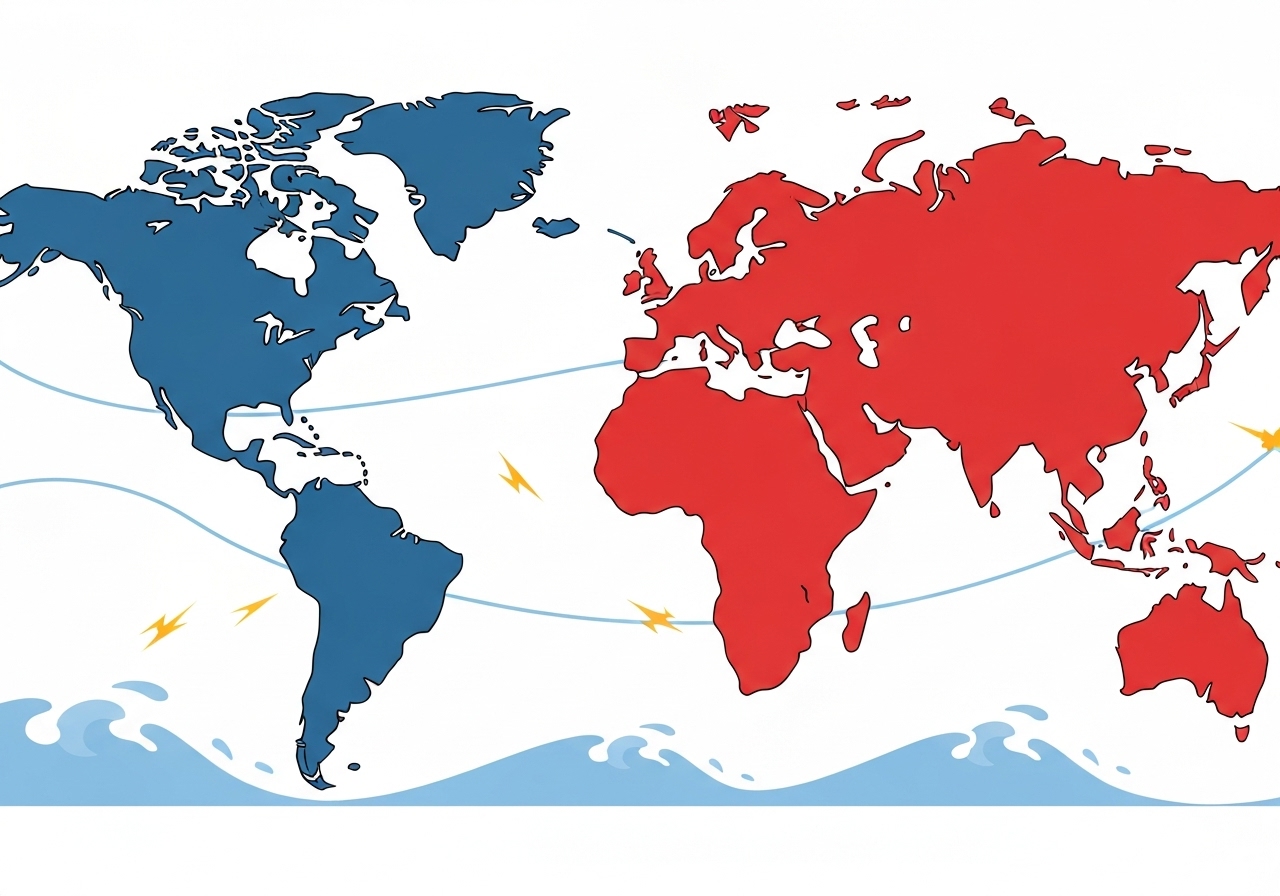
— Multiple undersea fiber cables were cut in the Red Sea early on Sept. 6, causing degraded internet performance and intermittent access in parts of the Middle East and South Asia, with cloud services including segments of Microsoft Azure reporting increased latency.
Key Takeaways
- Disruptions began at 05:45 GMT on Sept. 6, according to Microsoft.
- NetBlocks recorded degraded connectivity in Saudi Arabia, Pakistan, the UAE and India.
- Failures were reported on the SMW4 and IMEWE cable systems near Jeddah, Saudi Arabia.
- Microsoft said Azure was affected but general global traffic not traversing the Middle East remained unaffected.
- Undersea cables are vulnerable to accidental damage and deliberate attacks; attribution for these cuts is unconfirmed.
- The Houthis’ Al Masirah TV acknowledged the cuts on Sunday, citing NetBlocks.
- Separately, investigations have scrutinized Microsoft’s cloud use by Israeli military units; Microsoft has opened an internal probe.
Verified Facts
Microsoft published a status update saying network traffic that routes through the Middle East may see higher latency after undersea fiber cuts in the Red Sea. The company gave the start time of the incident as 05:45 GMT on Sept. 6 and said it was providing ongoing updates while engineers work to restore normal service.
Internet watchdog NetBlocks posted measurements showing degraded connectivity and slower speeds across multiple countries, specifically naming Saudi Arabia, Pakistan, the United Arab Emirates and India. NetBlocks identified the affected systems as SMW4 and IMEWE and located the failures close to Jeddah, Saudi Arabia.
Pakistan Telecommunications warned customers that performance could be degraded during peak hours while international partners work on repairs. Several regional carriers and cloud customers reported intermittent access and elevated latency for services that depend on those cable routes.
Undersea fiber links carry the bulk of international internet traffic and the Red Sea is a strategic corridor connecting Asia and Europe. Damage to major systems can reroute traffic onto longer international paths, increasing latency and sometimes reducing throughput for affected routes.
Context & Impact
Operational impacts were mostly regional because traffic that does not traverse the Middle East remained largely unaffected, per Microsoft’s update. Nevertheless, delays and outages can cascade — affecting enterprise cloud services, banking systems, content delivery and consumer access across the affected countries.
Repairing undersea cables requires specialized vessels and can take days to weeks depending on depth, weather and seabed conditions. Service providers typically reroute traffic over alternate cables or satellite links while repairs are arranged, often at higher cost and with reduced capacity.
These disruptions come amid heightened regional tensions. In early 2024 Yemen’s government-in-exile accused Houthi forces of planning attacks on cables; several cuts occurred then, and the Houthis denied responsibility at the time. On Sunday morning this week, Al Masirah TV — linked to the Houthis — acknowledged the recent cuts, citing NetBlocks.
Separately, public scrutiny of cloud providers has grown after investigations reported that Microsoft Azure was used to store intercepted communications from the occupied West Bank and Gaza. Microsoft has said it was not aware of misuse, and it opened an internal investigation in August; the company also recently disciplined employees involved in on-site protests over the firm’s regional ties.
“Network traffic traversing through the Middle East may experience increased latency due to undersea fiber cuts in the Red Sea,”
Microsoft status update
Unconfirmed
- Cause of the cuts: Microsoft did not specify whether the failures were accidental (e.g., ship anchors, seismic activity) or deliberate.
- Attribution to any group or actor remains unverified despite Al Masirah’s acknowledgement.
- Extent of data or service loss beyond the reported latency and intermittent access has not been independently confirmed.
Bottom Line
Early reports indicate the Sept. 6 Red Sea cable cuts produced measurable slowdowns and intermittent outages across parts of the Middle East and South Asia, with repairs and traffic rerouting under way. While core global internet pathways remain intact, residents and businesses in affected countries should expect degraded performance until repairs are completed.