
Lead
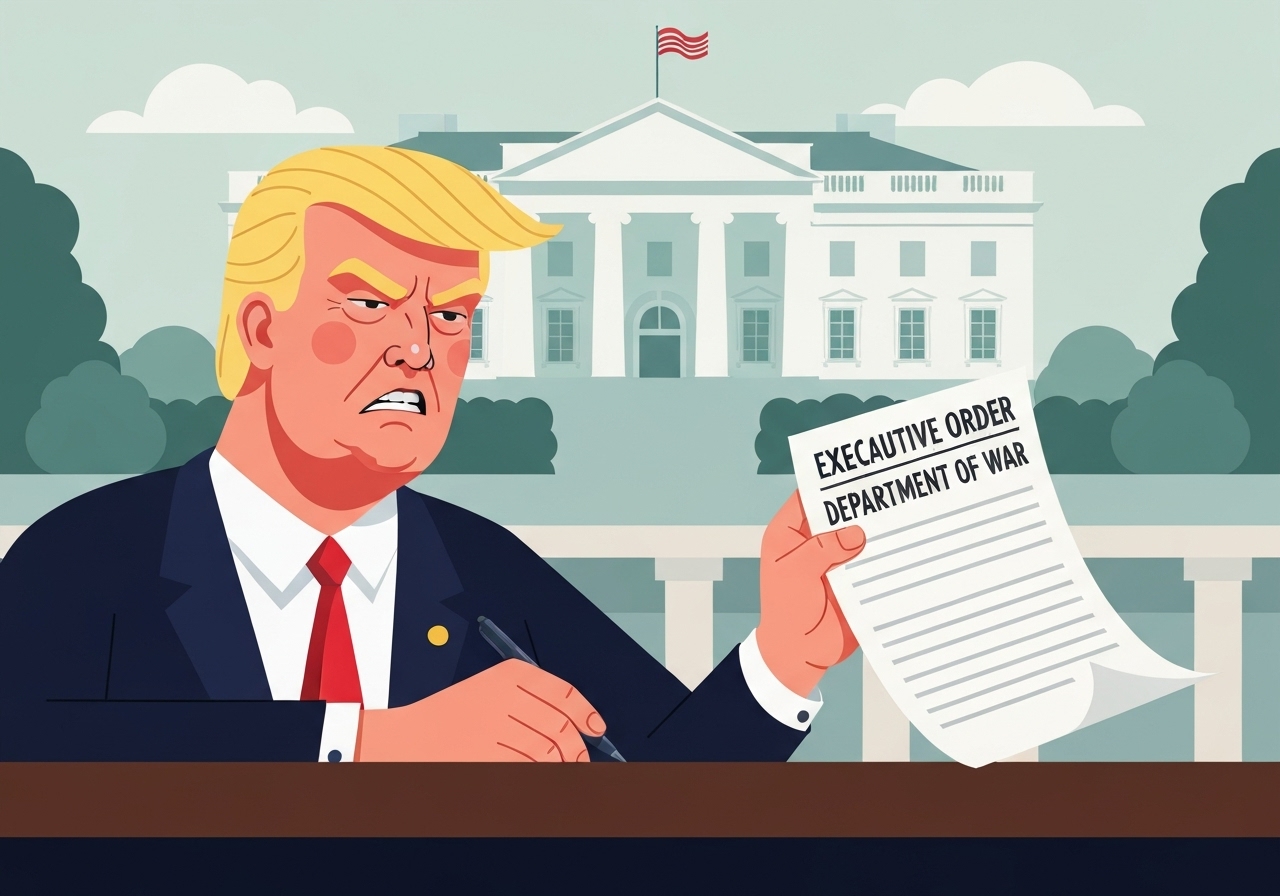
On September 5, 2025, President Donald J. Trump signed an Executive Order authorizing the historic name “Department of War” to be used as a secondary title for the Department of Defense; the administration says the order is the 200th Executive Order of his presidency and directs steps toward a possible permanent rename.
Key Takeaways
- The Executive Order permits the use of secondary titles such as “Department of War,” “Secretary of War,” and related designations in executive-branch communications and ceremonies.
- The White House directed federal departments and agencies to recognize and accommodate those secondary titles in internal and external communications.
- The Order tasks the Defense Department — referred to in the document as the Secretary of War — with recommending legislative and executive steps to pursue a permanent name change.
- The administration frames the change as reinforcing U.S. military readiness and projecting strength; the document cites historical precedent dating to 1789.
- The fact sheet characterizes the move as the President’s 200th Executive Order since taking office.
- The statement includes administration claims about recruitment gains, a military parade, and a strike against Iran; these claims are listed but flagged for verification below.
Verified Facts
The Executive Order issued on September 5, 2025 authorizes Department of Defense officials and subordinate agencies to employ secondary titles such as “Department of War,” “Secretary of War,” and “Deputy Secretary of War” in official correspondence, public communications, ceremonial settings, and non‑statutory executive documents. The order also instructs other executive departments and agencies to recognize and accommodate those secondary titles when interacting with the Department of Defense.
The document directs the designated Secretary (referred to within the order as Secretary of War) to prepare recommendations for further steps, which could include proposed legislation or additional executive actions, to make a permanent name change from the U.S. Department of Defense to the U.S. Department of War. A statutory rename would require congressional action; the order itself does not change any statute.
The fact sheet cites historical context: the Department of War was established in 1789 and served as the principal military department through the 19th and early 20th centuries. The White House also references President George Washington’s January 8, 1790 First Annual Address to Congress on preparedness, using it to frame the administration’s rationale for the change.
Context & Impact
Practically, the order authorizes increased use of a historic label in ceremonial and administrative contexts but does not, by itself, alter the statutory name or the legal authorities that govern the U.S. military. For a permanent renaming, the administration would need to secure legislation from Congress and update statute, appropriations language, signage, seals, and related legal references.
The move is likely to generate political and institutional debate. Supporters may say the change emphasizes deterrence and military readiness; critics may argue it is symbolic, risks escalating rhetoric, or creates confusion within interagency and allied coordination.
Allies, partners, and defense planners will monitor whether the change affects doctrine, force posture, or communications. Legal counsel inside the Defense Department and the Office of Legal Counsel would likely be tasked with assessing statutory impacts and transition costs.
Official Statements
“The United States military is the strongest and most lethal fighting force in the world,”
The White House fact sheet, Sept 5, 2025
Unconfirmed
- The fact sheet’s statements that the military executed a “decisive and obliterating strike against Iran’s nuclear capabilities” are administration claims included in the release and require independent verification from defense officials and open-source reporting.
- Claims that recruiting levels are “now at their highest in decades” are reported by the administration in the fact sheet and should be verified against official Department of Defense recruitment and retention statistics.
- The description of the September parade and its scale is presented by the White House; details such as participating units, costs, and official after‑action reports are not provided in the fact sheet.
Bottom Line
The Executive Order makes the historic label “Department of War” available as a secondary, ceremonial and administrative title within the executive branch and directs the Defense Department to propose steps toward permanently changing the department’s name. Any binding legal change would require congressional legislation and implementation planning. The announcement is likely to prompt debate about symbolism, legal process, and foreign-policy signaling.