
Lead
On Dec. 5, the Advisory Committee on Immunization Practices (ACIP), whose members were appointed by HHS Secretary Robert F. Kennedy Jr., recommended that the Centers for Disease Control and Prevention (CDC) withdraw its universal newborn Hepatitis B vaccine guidance and limit birth-dose shots to infants born to mothers known to be infected. The move departs sharply from the CDC’s long-standing policy of universal newborn vaccination, a practice linked to a 99% drop in Hepatitis B infections among children and teens since 1991. Infectious disease specialists responded with alarm, saying the change risks reversing decades of progress. The recommendation comes amid broader HHS shifts under Kennedy, including personnel changes and altered vaccine guidance.
Key Takeaways
- On Dec. 5 ACIP advised withdrawing CDC guidance for universal Hepatitis B vaccination at birth and restricting birth doses to infants of infected mothers.
- Since universal childhood vaccination began in 1991, Hepatitis B infections among children and teens have declined by 99%.
- Approximately 70% of Americans with chronic Hepatitis B are unaware of their infection; 14% of pregnant women reportedly were not tested before delivery.
- The committee cited no newly published studies to justify its reversal of the universal newborn recommendation.
- Under Secretary Kennedy, the CDC has seen the removal of prior ACIP appointees, cuts of $500 million in mRNA vaccine development funding, and narrower COVID and measles vaccine recommendations.
- A 2025 Lancet analysis cited in commentary estimates vaccines have saved about 154 million lives since 1974 and prevented large numbers of illnesses, hospitalizations and deaths.
- Public-health experts warn that changes to routine recommendations and public signals from HHS risk lowering vaccination uptake and reversing public-health gains.
Background
Universal newborn Hepatitis B vaccination was adopted widely beginning in 1991 to prevent perinatal and early-life infections that can progress to chronic liver disease, liver failure and death. Before broad immunization, mother-to-child transmission accounted for roughly half of pediatric Hepatitis B cases; routine birth dosing was a cornerstone of interrupting that route of transmission. The vaccines used have long safety records, with serious adverse events described as extremely rare in surveillance data.
Hepatitis B can be transmitted not only through sexual contact and shared needles but also via contact with contaminated personal items or microscopic amounts of blood on surfaces, which makes early-life protection important in many settings. Public-health authorities have emphasized prenatal screening to identify infected mothers, but gaps in testing persist: published estimates indicate about 14% of pregnant women were not tested before delivery.
ACIP is the federal advisory body that formulates vaccine recommendations for the United States, and its guidance historically informs CDC policy, clinical practice and reimbursement rules. Shifts in ACIP membership or mandate can therefore have immediate operational effects on hospital policies, pediatric practice and public expectations.
Main Event
On Dec. 5, the ACIP—composed entirely of appointees made by HHS Secretary RFK Jr.—voted to advise the CDC to rescind the agency’s universal Hepatitis B newborn vaccination recommendation and to limit routine birth doses to infants whose mothers test positive for Hepatitis B. The panel framed Hepatitis B as primarily sexually transmitted, arguing that most infants are at low risk and do not need a universal birth dose.
Public-health and infectious-disease specialists sharply criticized the recommendation. They pointed to long-term surveillance showing a 99% decline in Hepatitis B infections among children and adolescents since universal vaccination began in 1991, and urged that the committee’s decision lacked new supporting evidence. Medical societies and clinicians warned that narrowing birth-dose use could leave infants vulnerable, particularly when maternal testing is incomplete.
Secretary Kennedy’s tenure has been marked by several significant policy shifts: he narrowed COVID vaccination recommendations to older adults and those with medical conditions, removed combined MMR vaccine options for certain age groups, eliminated a rule linking federal hospital reimbursements to staff vaccination rates, and replaced ACIP members appointed under prior administrations. The department also cut $500 million intended for mRNA vaccine development and funded contracts to study potential vaccine-autism links despite a large body of evidence to the contrary.
Senate debate during Kennedy’s confirmation highlighted these concerns. Sen. Bill Cassidy (R-La.) said Kennedy promised to respect ACIP recommendations and maintain the CDC statement that vaccines do not cause autism; Sen. Patty Murray (D-Wash.) warned Republicans would regret enabling a secretary she said was likely to undermine vaccines. Sen. Mitch McConnell (R-Ky.) opposed Kennedy’s nomination, citing worries about relitigating established medical advances.
Analysis & Implications
Policy-wise, limiting universal newborn Hepatitis B vaccination shifts reliance from a population-level preventive strategy to a case-finding approach that depends on consistent prenatal screening and perfect implementation. Given documented gaps—an estimated 14% of pregnant women were not tested before delivery—this change could increase the number of infants exposed without prophylaxis, particularly in marginalized or under-resourced communities where screening and follow-up are less consistent.
The practical effect may be discontinuities in hospital protocols: many birthing centers and pediatric units adopted universal birth dosing to ensure protection regardless of maternal test status at delivery. Reverting to a selective approach raises logistical and liability questions for clinicians and institutions that will need to confirm maternal status before administering or withholding a dose within hours after birth.
On a population level, the move could erode public confidence in longstanding vaccine policy, especially when paired with other HHS actions that signal skepticism about routine immunization. The Lancet analysis cited in commentary estimates vaccines have delivered enormous health and economic benefits globally—figures that public-health officials warn are vulnerable to reversal if coverage declines.
Internationally, weakening the CDC’s role as a steady, evidence-based arbiter could affect global partners that look to U.S. agencies for technical guidance. If other countries perceive U.S. policy as politically influenced rather than science-driven, multilateral vaccination efforts and emergency responses could be harder to coordinate.
Comparison & Data
| Metric | Pre-1991 / Baseline | After Universal Vaccination |
|---|---|---|
| Hepatitis B infections in children & teens | Higher incidence | 99% decrease since 1991 |
| Lives saved by vaccines (since 1974) | — | ~154 million (Lancet estimate) |
| Projected U.S. illness prevented (1994–2023 births) | — | ~508 million illnesses; 32 million hospitalizations; 1 million deaths prevented |
| Economic savings (U.S., direct) | — | $540 billion direct; $2.7 trillion societal |
The table summarizes headline numbers cited in contemporary analyses and commentary: near-elimination of pediatric Hepatitis B since universal vaccination began in 1991 and broad estimates of vaccine-attributable health and economic gains cited in a 2025 review. These figures are population-level estimates and do not preclude variability by region or demographic group. Policymakers weighing a return to targeted newborn dosing must consider both the individual clinical risks to infants and the aggregate public-health consequences quantified above.
Reactions & Quotes
Public-health figures, lawmakers and clinicians responded differently to the ACIP recommendation and the broader HHS changes. Below are representative statements placed in context.
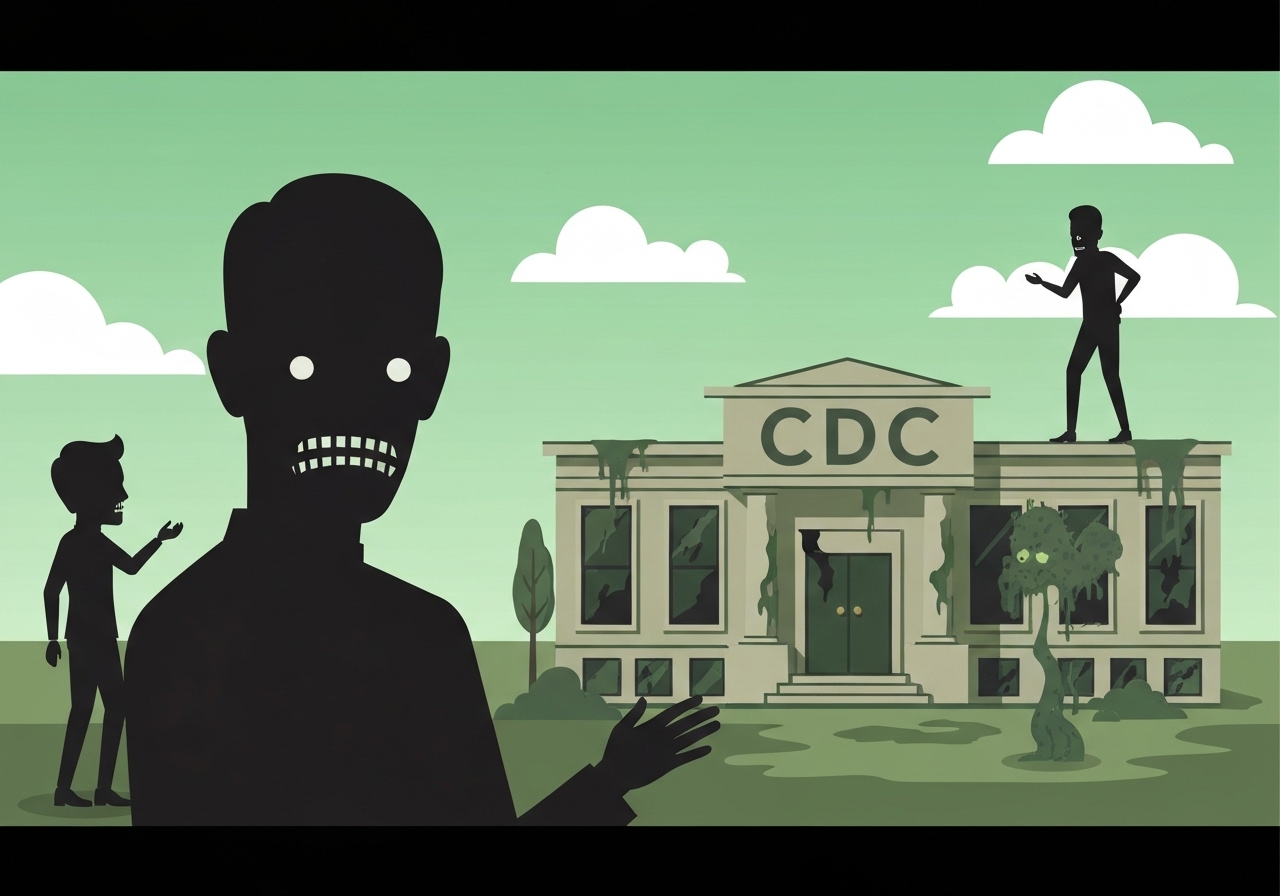
“The CDC has been turned into a zombie organization.”
Demetre Daskalakis, former director, National Center for Immunization and Respiratory Diseases
Context: Daskalakis used this characterization to express concern that institutional rigor and evidence-based decision-making at the CDC were being hollowed out under new leadership, a sentiment echoed by some public-health experts.
“Effectively we’re denying vaccines.”
Sen. Bill Cassidy (R-La.)
Context: Cassidy, who led the Senate Health Committee, warned that recent policy shifts and the narrowing of vaccine recommendations could amount to reduced vaccine access and weaker public-health protections, and he described this outcome as contrary to earlier assurances given during Kennedy’s confirmation.
“I would not condone the re‑litigation of proven cures.”
Sen. Mitch McConnell (R‑Ky.)
Context: McConnell voted against Kennedy’s confirmation and framed the debate as one over protecting established medical advances from political reconsideration.
Unconfirmed
- Claims that ACIP had new, unpublished studies justifying the Dec. 5 recommendation: reporting indicates the committee cited no new peer-reviewed evidence; any such studies have not been publicly disclosed.
- Allegations that the CDC systematically manipulated Hepatitis B vaccine data: accusations have been made publicly, but independent, peer-reviewed verification of systematic data manipulation has not been presented.
- The suggestion that removing the CDC statement “vaccines do not cause autism” would be legally required or impossible without violating an agreement: the legal and contractual basis for such constraints has not been documented in publicly available records.
Bottom Line
The Dec. 5 ACIP recommendation to limit newborn Hepatitis B vaccination marks a significant policy departure with immediate clinical and programmatic implications. The change increases reliance on complete prenatal screening and rapid perinatal decision-making, two areas where gaps are already documented. Without robust safeguards, the shift risks leaving some infants unprotected and could allow preventable infections to rise.
Beyond Hepatitis B, the episode illustrates how leadership-driven changes to advisory bodies and guidance can reshape public-health practice and public confidence. Policymakers, clinicians and hospital systems must now weigh the trade-offs between targeted and universal preventive strategies, while monitoring outcomes closely to detect any reversal of prior gains.
Sources
- The Hill — Opinion: RFK Jr. has turned the CDC into ‘a zombie organization’ (news/opinion)
- Centers for Disease Control and Prevention — Hepatitis B Information (official public-health agency)
- CDC — Advisory Committee on Immunization Practices (ACIP) (official advisory body)
- The Lancet — vaccine impact analyses referenced in commentary (academic/peer-reviewed journal)