
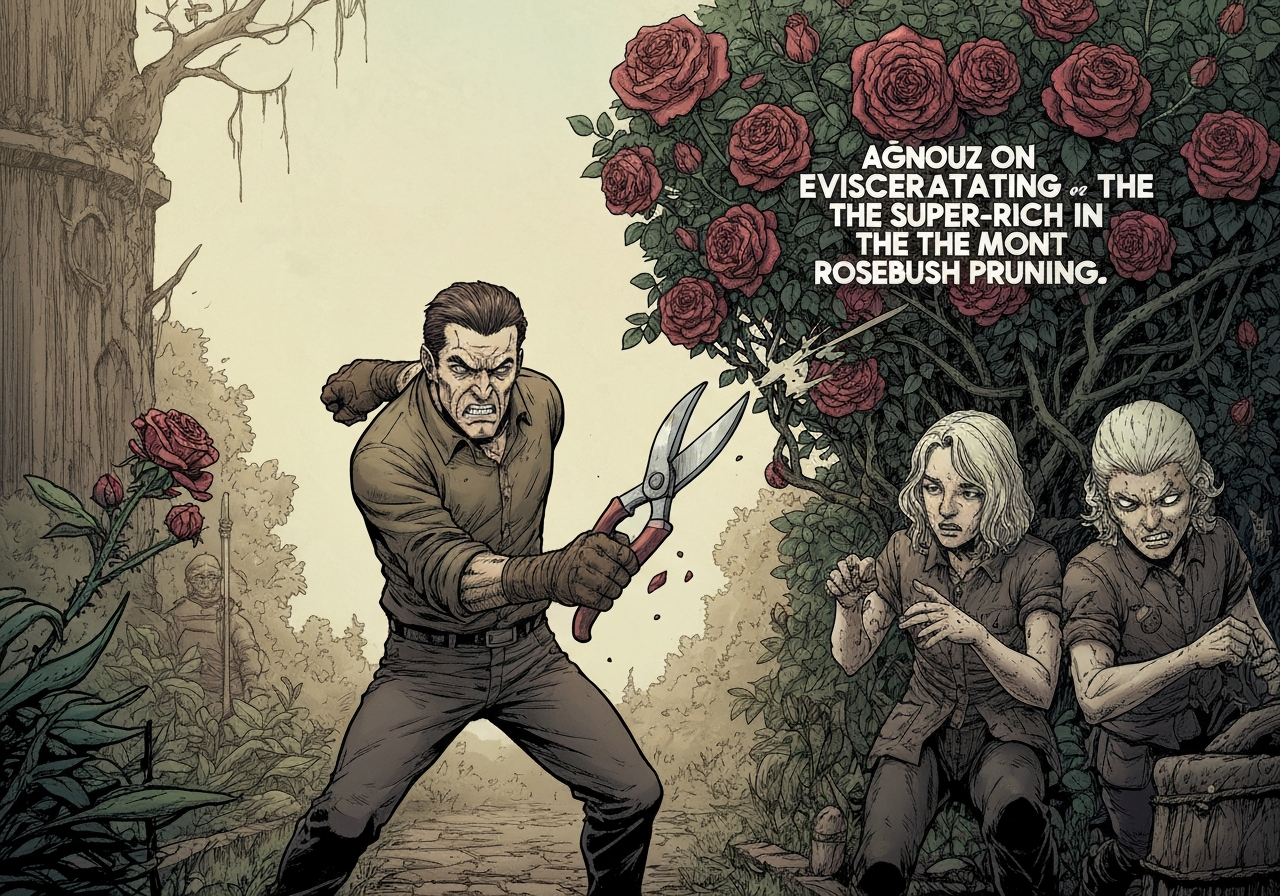
Karim Aïnouz’s Rosebush Pruning, presented ahead of its world premiere in Berlin, is a compact, darkly comic assault on privilege and patriarchy set inside a single Spanish villa. The film centers on a disastrously wealthy American family — led by a blind, domineering father and three fractured siblings — whose brittle order unravels after the eldest son’s move and a troubling revelation about their mother’s death. Aïnouz collaborated with Efthimis Filippou on a script born during the pandemic and assembled a starry ensemble including Tracey Letts, Callum Turner, Jamie Bell, Elle Fanning, Riley Keough, Lukas Gage and Pamela Anderson. The director frames the story as satire with urgent political charge, insisting the film both ridicules and seeks ways to break cycles of inherited power.
Key Takeaways
- Rosebush Pruning is directed by Brazilian‑Algerian filmmaker Karim Aïnouz and written with Efthimis Filippou, a frequent collaborator of Yorgos Lanthimos.
- The cast includes Tracey Letts, Callum Turner, Jamie Bell, Elle Fanning, Riley Keough, Lukas Gage and Pamela Anderson; principal photography and rehearsals took place on location in Spain.
- Aïnouz began writing during the pandemic and positions the film as part of a loose trilogy following Firebrand (2023) and Motel Destino (2024), examining toxic masculinity.
- The film draws structural inspiration from Marco Bellocchio’s Fists in the Pocket (1965) and nods to works such as Pasolini’s Teorema (1968) and Friedkin’s Killer Joe (2011).
- Stylistically the picture is a contained ensemble piece that blends black comedy, absurdism and violence to interrogate wealth, whiteness and patriarchal authority.
- Aïnouz frames the central metaphor as pruning: people are roses, families are rosebushes, and sometimes cutting back is necessary to stop a cycle of harm.
Background
The project began during the COVID‑19 pandemic, when Aïnouz sought a film that was logistically contained yet thematically expansive. He had previously explored historical and gendered power in Firebrand (2023) and a toxic male figure in Motel Destino (2024); Rosebush Pruning shifts the focus to contemporary, privileged whiteness in an American family abroad. Producer Michael Weber suggested Bellocchio’s Fists in the Pocket as a structural touchstone, and Aïnouz layered that blueprint with influences ranging from Pasolini’s theological-provocations to Friedkin’s brutal black comedy.
Aïnouz intentionally recast the central tension from past templates — moving a focal role toward paternal power — to examine masculinity and inheritance. The story unfolds almost entirely within a single villa, a production choice that concentrates performance and stagecraft while allowing the director to stage long rehearsed interactions and theatrical ensemble dynamics. That intimacy was engineered through extended rehearsals in costume, communal living and exercises the director describes as akin to theater workshops.
Main Event
The narrative follows Ed (Callum Turner), Jack (Jamie Bell), Anna (Riley Keough) and Robert (Lukas Gage), members of a wealthy American family living in a Spanish house dominated by a blind, abusive patriarch played by Tracey Letts. Jack’s announcement that he will move in with his girlfriend Martha (Elle Fanning), and Ed’s tentative probing into the circumstances of the mother’s death (the mother portrayed by Pamela Anderson), trigger a collapse of family equilibrium. The siblings’ dysfunction — including Anna and Robert’s unsettling closeness — is played against displays of luxury, contempt for staff and petty interpersonal cruelty.
Aïnouz and Filippou opted for satire and absurdity as their tonal vehicle, using dark humor and escalating grotesquerie to make the family’s moral rot legible and, at times, painfully funny. The film stages scenes of escalation that echo Bellocchio’s 1965 radicalism but translated into present‑day concerns about wealth concentration and gaslighting within elite households. Production notes emphasize that many interactions were developed in rehearsal to make scripted extremities feel lived‑in and spontaneous.
Technically, the shoot in Spain emphasized a single location aesthetic: long takes, carefully choreographed group dynamics and a theatrical rehearsal regimen that aimed to produce a claustrophobic, pressure‑cooker atmosphere. Aïnouz has described the film as both a critique and, crucially, an attempt to imagine ruptures in the cycle of violent inheritance — hence the pruning metaphor that recurs through the film’s narrative and visuals.
Analysis & Implications
Rosebush Pruning enters a growing cinematic conversation about the super‑rich and their social consequences, joining titles like Parasite, Triangle of Sadness and The White Lotus in interrogating how affluence distorts relationships and civic life. Aïnouz’s approach differentiates itself by centering whiteness and patriarchal lineage explicitly, asking not only how wealth corrupts but how identity and inherited power conspire to naturalize inequality. By staging the drama in a single house and leaning into absurdism, the film foregrounds interpersonal pathology as a microcosm of systemic rot.
The director’s invocation of 1960s radical cinema is also a statement about risk: Aïnouz positions Rosebush Pruning as a deliberate push against contemporary risk‑averse filmmaking driven by streaming calculus. If festivals and theatrical programmers embrace the film, it could help recalibrate appetite for audacious, politically engaged features at a moment when commercial pressures often tame formal experimentation. Conversely, the film’s punitive tone toward elites may intensify polarized responses among critics and audiences, especially given its provocative metaphors about violence and social rupture.
On an industry level, casting known stars such as Elle Fanning and Jamie Bell was both an artistic and pragmatic choice — securing audience attention while allowing Aïnouz to deploy performers capable of committed, theatrical work. If Rosebush Pruning gains festival traction, it may reinforce the viability of auteur‑driven, ensemble satires as a pathway for mid‑budget international films to reach broader audiences.
Comparison & Data
| Film | Year | Director | Tone/Focus |
|---|---|---|---|
| Fists in the Pocket | 1965 | Marco Bellocchio | Radical domestic melodrama, anti‑bourgeois violence |
| Rosebush Pruning | 2024 (festival) | Karim Aïnouz | Black comedy/absurdist satire of the super‑rich |
| Triangle of Sadness | 2022 | Ruben Östlund | Satire of class, luxury and chaos |
| Parasite | 2019 | Bong Joon‑ho | Social thriller about inequality |
The table highlights lineage and shared concerns: domestic rupture and the targeting of elite mores. Aïnouz’s film situates itself among recent works that make wealth and entitlement into dramatic engines, but it stresses a lineage to 1960s formal experimentation. That pedigree matters for how programmers and critics will frame reception: the film asks to be read both as satire and as a formal provocation.
Reactions & Quotes
Ahead of Berlin, responses from collaborators emphasized the film’s tonal audacity and the rehearsal‑driven process that underpinned performance choices. Below are representative comments and the context in which they were offered.
“It’s time to burn down the house,” the director said when describing the film’s imperative to upend inherited power structures.
Karim Aïnouz (director)
This remark framed the film not as gratuitous destruction but as a metaphor for radical change; Aïnouz clarified he meant structural overhaul rather than literal violence. Cast and crew noted the rehearsal period in Spain helped the ensemble sustain the movie’s mix of cruelty and tenderness.
“We chose satire and absurdity as the only way to make these themes relatable without losing the audience,” Aïnouz explained of his collaboration with Efthimis Filippou.
Karim Aïnouz (director)
The director credited Filippou with shifting the project toward dark humor, and producers emphasized that star casting was both an artistic and promotional strategy to ensure the film would be seen beyond festival circles.
Unconfirmed
- No wide release date or distributor outside festival play has been publicly confirmed as of the Berlin premiere announcements.
- Specific details surrounding the mother character’s death remain narrative elements within the film and have not been linked to an external, factual event.
Bottom Line
Rosebush Pruning represents Karim Aïnouz’s attempt to fuse political outrage with formal risk-taking: a concentrated, satirical chamber piece that interrogates wealth, whiteness and patriarchal domination. By trading straightforward realism for absurdist black comedy, the film seeks to make viewers laugh while prompting them to consider how inherited power persists and is enforced within intimate settings.
Its reception will test festival appetites for formally daring, politically pointed cinema and may strengthen a current thread of films that make the super‑rich the site of sustained ethical scrutiny. For audiences and programmers curious about how satire can both wound and imagine alternatives, Rosebush Pruning promises to be one of the boldest entries this season.
Sources
- The Hollywood Reporter — entertainment trade; interview with Karim Aïnouz (primary source)