
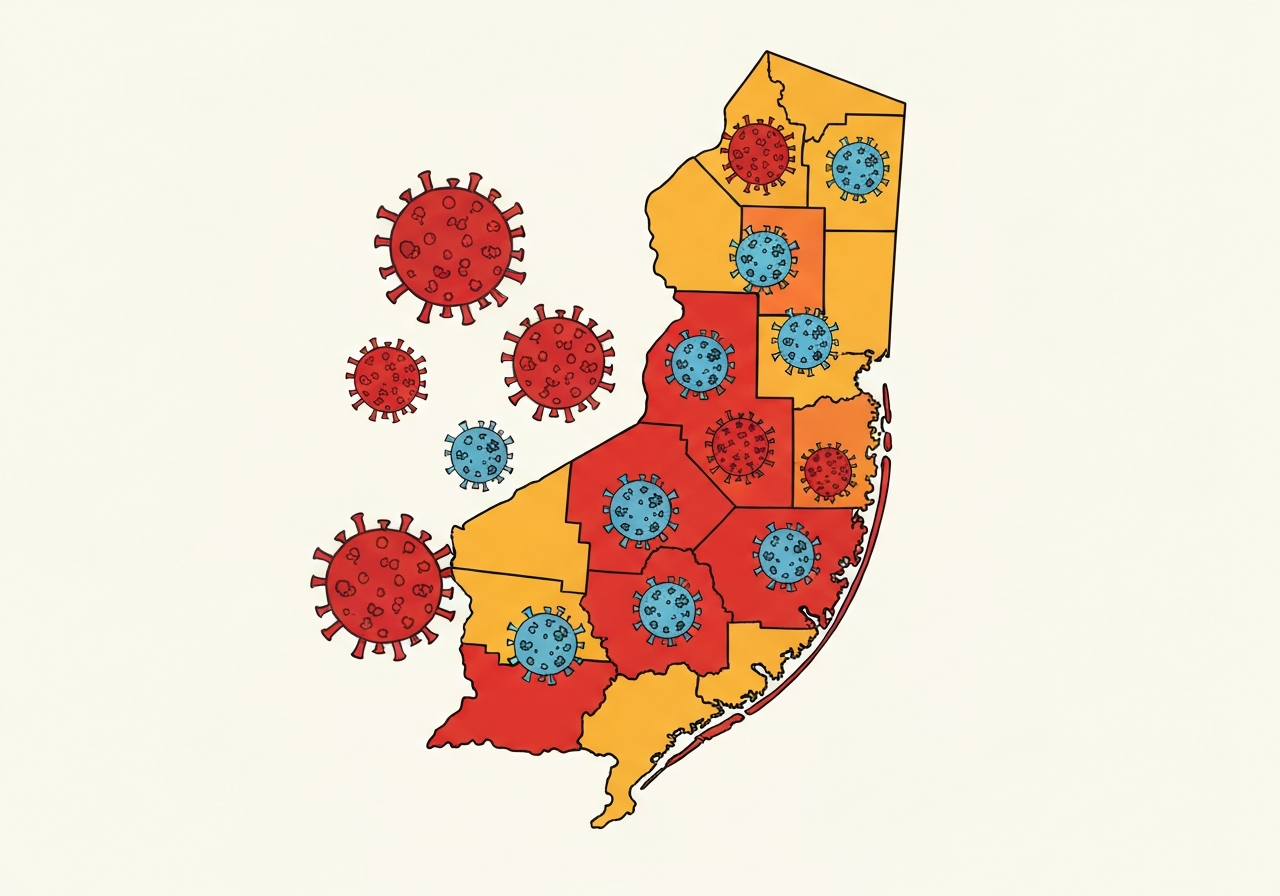
Lead: A winter surge of Respiratory Syncytial Virus (RSV) is active across New Jersey, with emergency room visits and hospital admissions rising since early October and peaking through January. As of Jan. 31, state data list 304 hospitalizations, concentrated among children under 4 and adults 65 and older. More than half of New Jersey counties report “high” or “very high” ER activity for RSV, mirroring elevated transmission nationally. Public health agencies emphasize targeted prevention—especially for infants and older adults—to reduce severe cases.
Key Takeaways
- RSV activity in New Jersey has been climbing since early October and remains high in many counties as of late January.
- As of Jan. 31, RSV accounted for 304 hospitalizations statewide; most admissions are children under 4 and adults 65+.
- CDC surveillance shows RSV makes up roughly 0.5% of U.S. emergency department visits and 0.7% of visits in New Jersey.
- Annually, about 2–3 out of every 100 infants under 6 months are hospitalized with RSV, and 100–300 children die from RSV in the U.S. each year, per CDC estimates.
- Preventive options include a maternal RSV vaccine and monoclonal antibodies for infants (clesrovimab, nirsevimab); either product can reduce severe disease in early life.
- CDC recommends RSV vaccination for adults 75+, and for people 50–74 with chronic heart/lung disease or other high-risk conditions; one dose protects for at least two years.
- Vaccination uptake (Dec. 2025): 43.4% among adults 75+, and 30.6% among higher-risk adults aged 50–74.
Background
Respiratory Syncytial Virus is a common seasonal respiratory pathogen that typically emerges in the fall and peaks in winter months. For most healthy older children and adults RSV produces cold-like symptoms; however, infants, older adults and immunocompromised people face higher risks of severe disease and hospitalization. Historically, RSV has been the leading cause of infant respiratory hospitalization in the U.S., prompting new preventive strategies in recent years.
Public health authorities track RSV through emergency department visits, hospital admissions and laboratory surveillance to time recommendations and resource planning. In 2023–2025, regulatory approvals of maternal vaccines and long‑acting monoclonal antibodies for infants have changed prevention options, requiring public-health outreach and provider guidance on who should receive which product. State health departments, pediatric practices and long‑term care facilities are key stakeholders in implementing those measures.
Main Event
The current wave in New Jersey has produced sustained increases in ER visits and inpatient care for RSV since early October. According to CDC surveillance cited by state data, ER visits attributed to RSV were rated “high” or “very high” in more than half of New Jersey’s counties by late January. State health records show 304 hospitalizations statewide as of Jan. 31, with hospital admissions rising at pediatric and geriatric wards.
Hospitalized cases are concentrated in two main groups: young children—especially those under 4 years old—and adults aged 65 and older. Infants born prematurely or with chronic medical conditions continue to face the greatest risk for severe outcomes. Healthcare systems in counties with the highest activity have reported higher pediatric bed utilization and increased use of respiratory support for infants.
Public-health guidance emphasizes protecting infants through maternal vaccination during pregnancy or providing monoclonal antibodies to newborns and young infants. For older adults, regulators recommend one dose of RSV vaccine for those 75 and older and for certain high-risk adults 50–74; the vaccine’s protection has been observed to last at least two years in studies cited by the CDC.
Analysis & Implications
The surge underscores perennial tensions between seasonal viral pressure and healthcare capacity. Increased pediatric and geriatric admissions create predictable seasonal strain on emergency and inpatient services; when many counties experience simultaneous “high” ER activity, transfer and staffing options become more constrained. Hospitals in high-activity counties may need to activate surge protocols or reassign staff to respiratory units.
Prevention tools introduced in recent seasons—maternal vaccination and monoclonal antibodies for infants—have the potential to lower severe outcomes but rely on timely uptake. The observed adult vaccination coverage (43.4% in 75+; 30.6% among at‑risk 50–74) suggests substantial gaps remain. Higher coverage in target groups would likely blunt hospital demand and reduce severe cases.
Economically, more RSV hospitalizations translate into higher short‑term healthcare spending and lost workdays for caregivers. For neonatal and pediatric services, recurrent seasonal surges complicate long-term planning: adding beds and specialized staff for a few months each year is costly, while under-preparation risks worse outcomes. Policymakers must weigh investments in prevention outreach versus episodic capacity expansion.
Comparison & Data
| Metric | United States | New Jersey |
|---|---|---|
| ED visits attributable to RSV | 0.5% | 0.7% |
| State hospitalizations (as of Jan. 31) | — | 304 |
| Infant hospitalization rate (under 6 months, annual) | 2–3 per 100 infants | Consistent with national range |
| Adult RSV vaccine coverage (Dec. 2025) | Varies | 75+: 43.4% · 50–74 (at risk): 30.6% |
The table summarizes surveillance figures reported by the CDC and state health authorities. New Jersey’s share of ED visits for RSV (0.7%) exceeds the national average (0.5%), reflecting either higher transmission, testing differences, or care‑seeking patterns. The 304 hospitalizations reported to Jan. 31 signal substantial clinical burden but are subject to change as surveillance updates continue.
Reactions & Quotes
“RSV activity remains elevated in numerous jurisdictions, with serious outcomes concentrated among infants and older adults,”
Centers for Disease Control and Prevention (CDC)
Context: The CDC emphasizes ongoing surveillance and targeted prevention for high‑risk populations as part of its national guidance.
“State data show sustained increases in emergency visits and inpatient care since early October,”
New Jersey Department of Health (official summary)
Context: The state health department is coordinating hospital reporting and public advisories to clinicians and families in counties with high activity.
“Parents of infants and caretakers of older adults should consult their clinicians about available immunizations and antibody options,”
Public‑health advisory paraphrase
Context: Local pediatric and primary‑care providers are being urged to discuss prevention choices for eligible patients.
Unconfirmed
- Precise county-level hospitalization totals for dates after Jan. 31 are not yet consolidated statewide and may change as hospitals update reports.
- Whether this season will surpass the peak severity of past high‑impact seasons remains uncertain; surveillance trends are preliminary and subject to revision.
- Local differences in testing and reporting practices may affect the apparent variation in ER visit rates between counties.
Bottom Line
RSV is producing a meaningful winter surge across New Jersey, with elevated ER visits and 304 hospitalizations recorded through Jan. 31. The clinical burden is concentrated among the youngest children and the oldest adults, groups for which targeted prevention is available and recommended. Families with infants and caregivers of older adults should consult clinicians about maternal vaccination and monoclonal antibodies for eligible infants, and older adults should review RSV vaccine guidance for their age and health status.
Public‑health and healthcare systems will monitor surveillance indicators closely in the coming weeks to anticipate peak demand and adjust resources. Increasing preventive uptake in recommended groups would be the most direct way to reduce severe cases and ease pressure on hospitals during the seasonal peak.