
Lead
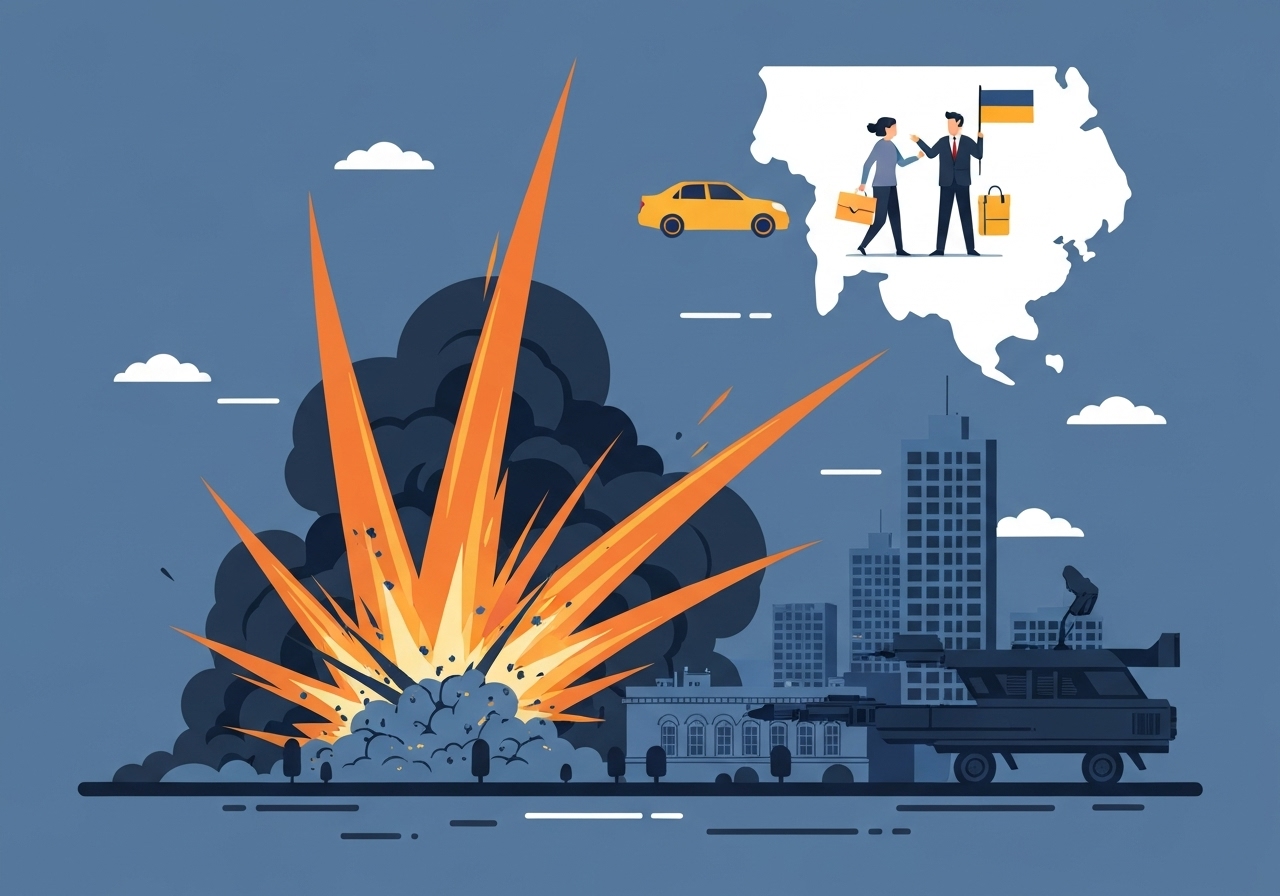
On Nov. 30, 2025, Russian forces struck the Kyiv area overnight, killing at least one person, injuring 19 and damaging residential buildings in Vyshhorod and parts of the capital, Ukrainian President Volodymyr Zelenskyy said. The attack occurred as Zelenskyy’s top advisers traveled to Florida for talks with U.S. officials and envoys. Kyiv described the incident as part of an intensified air campaign in recent days, while Washington prepares separate diplomacy with Moscow. Emergency teams were operating at the scene early Sunday as Ukrainian leaders sought to balance urgent domestic needs with high-stakes international negotiations.
Key Takeaways
- Casualties and damage: At least one person was killed and 19 people were wounded in the overnight drone strike in Vyshhorod and Kyiv on Nov. 30, 2025, with multiple residential buildings damaged.
- Scale of campaign: President Zelenskyy said Ukraine faced roughly 1,400 drones, 66 missiles and more than 1,000 aerial bombs in the last week, underlining a surge in air attacks.
- Diplomatic timing: The strike coincided with a Ukrainian delegation traveling to Florida for talks with U.S. officials, including Secretary of State Marco Rubio and advisers tied to the White House.
- U.S. envoy movements: White House special envoy Steve Witkoff is expected to travel to Moscow early next week to meet President Vladimir Putin following the U.S.-Ukraine discussions.
- Negotiation hurdles: Earlier U.S. proposals reportedly narrowed from a 28-point to a 19-point plan, but key questions — territorial concessions and future NATO membership — remain unresolved.
- Leadership changes: The Ukrainian team in Florida is led by Rustem Umerov after Chief of Staff Andriy Yermak resigned amid a corruption scandal; Umerov has been questioned by investigators but not formally accused.
Background
The attack comes amid months of intensified aerial operations affecting Ukrainian cities and infrastructure. Kyiv has increasingly reported swarms of Iranian-made and other long-range drones together with missile salvos and aerial bombs, stretching air-defence systems and civilian emergency services. The surge follows a period of intermittent diplomacy; U.S. and Ukrainian officials met in Geneva earlier this year to discuss a multi-point plan meant to create a framework for ending the war.
That Geneva dialogue began with a U.S. 28-point proposal that negotiators pared down to a 19-point version, according to U.S. and Ukrainian officials. Even after revision, the plan left open the most sensitive matters for Ukraine: whether to cede territory and how to address a possible future NATO application. Those unresolved questions have complicated Kyiv’s ability to present negotiators with an acceptable opening position.
Domestic politics in Kyiv add another layer of complexity. Andriy Yermak’s resignation over a corruption scandal removed a central figure in Ukraine’s negotiating team at a fraught moment. Rustem Umerov, head of the National Security Council, is leading the current delegation; Ukrainian media and Reuters report he was questioned by investigators but has not been charged.
Main Event
According to Zelenskyy and local authorities, the overnight strike used drones that struck residential areas in Vyshhorod, a satellite town north of Kyiv, and caused fires in several apartment buildings. Emergency services and firefighters were reported working at multiple scenes early Sunday, extinguishing blazes and evacuating residents. Officials released casualty figures of one dead and 19 wounded; the numbers may change as rescue operations continue.
Zelenskyy posted on social media that emergency response efforts were underway and that numerous residential buildings were damaged. Local reporters and image agencies documented smoke and flames at damaged apartment blocks and rescue crews assisting civilians in the early hours. Kyiv’s mayoral and regional emergency centers coordinated search-and-rescue and medical evacuation.
The strike occurred as the Ukrainian delegation traveled to Florida for talks with U.S. officials. The meetings are intended to refine Kyiv’s negotiating stance ahead of a planned trip by the U.S. special envoy to Moscow. White House figures involved in the talks include Secretary of State Marco Rubio and Jared Kushner, who are participating in U.S.-led discussions to shape a possible peace framework.
Analysis & Implications
The timing of the attack complicates Kyiv’s diplomatic posture. A violent incident that injures civilians while negotiators are in transit can harden domestic resolve and constrain political flexibility, making territorial compromise more politically costly for President Zelenskyy. At the same time, Kyiv has signaled it needs stronger air-defence capabilities and weapons to maintain leverage at the negotiating table.
For Washington, the strike underscores the challenge of pursuing parallel channels: supporting Ukraine’s immediate defensive needs while attempting to engage Moscow diplomatically. If U.S. envoys carry proposals to Moscow after such attacks, the optics may reduce the chance of Russian concessions and raise questions among U.S. lawmakers and allies about the viability of quick diplomatic fixes.
For Moscow, sustained air pressure could be a tactic to extract concessions or to test Western unity. But continued strikes that cause civilian casualties risk hardening international opposition and complicating any pathway to political recognition of territorial gains. The durability of any negotiated settlement will depend on whether Kyiv can secure guarantees for sovereignty, sufficient defensive support, and credible enforcement mechanisms.
Comparison & Data
| Metric | Number (last week) |
|---|---|
| Drones reported | ~1,400 |
| Missiles launched | 66 |
| Aerial bombs | >1,000 |
These figures, provided publicly by President Zelenskyy, illustrate a concentrated period of aerial assault that officials say is placing sustained pressure on Ukraine’s air defenses and civilian protection mechanisms. Independent verification of every incident requires time; governments and monitoring agencies typically corroborate such tallies through open-source imagery and on-the-ground reporting.
Reactions & Quotes
Ukrainian leadership framed the attack as part of a broader pattern of daily strikes that increase civilian harm and stress national resilience.
“Such attacks happen every day,”
President Volodymyr Zelenskyy
Russian official commentary cited in prior reporting has dismissed the likelihood of meaningful talks with Kyiv.
“Talks with Zelenskyy are pointless,”
President Vladimir Putin (as reported)
U.S. and allied officials, while urging restraint, have signaled both support for Ukraine’s defensive needs and a desire to pursue diplomatic channels; the U.S. envoy’s planned trip to Moscow underscores the dual-track approach.
Unconfirmed
- Whether the full tally of wounded and dead will rise as rescue teams complete searches; casualty figures are provisional.
- The exact identity of all weapon systems used in the overnight strike has not been independently verified beyond Ukrainian government statements.
- How the corruption probe involving Andriy Yermak and questioning of Rustem Umerov might affect negotiation authority and outcomes remains unclear.
Bottom Line
The Nov. 30 drone strike near Kyiv highlights the immediate human cost of the war and complicates parallel diplomatic efforts. Kyiv’s need to protect civilians and maintain negotiating leverage pushes its leaders to seek both stronger defensive aid and clearer international guarantees before accepting any compromise.
For policymakers in Washington and elsewhere, the attack is a reminder that diplomacy and deterrence are interconnected: negotiating a durable settlement will likely require Kyiv to secure credible security guarantees and for negotiators to present enforceable mechanisms that address both territory and future alliance questions. In the short term, expect Kyiv to press for more robust air-defence support and for U.S.-led talks to confront the political realities that such strikes create.
Sources
- ABC News (U.S. news media report; primary dispatch provided by user)
- Reuters (international news agency; reporting cited for investigative details on Ukrainian officials)
- AFP (news agency; photographic and field reporting credited in coverage)
- The Associated Press (news agency; field reportage and imagery)