
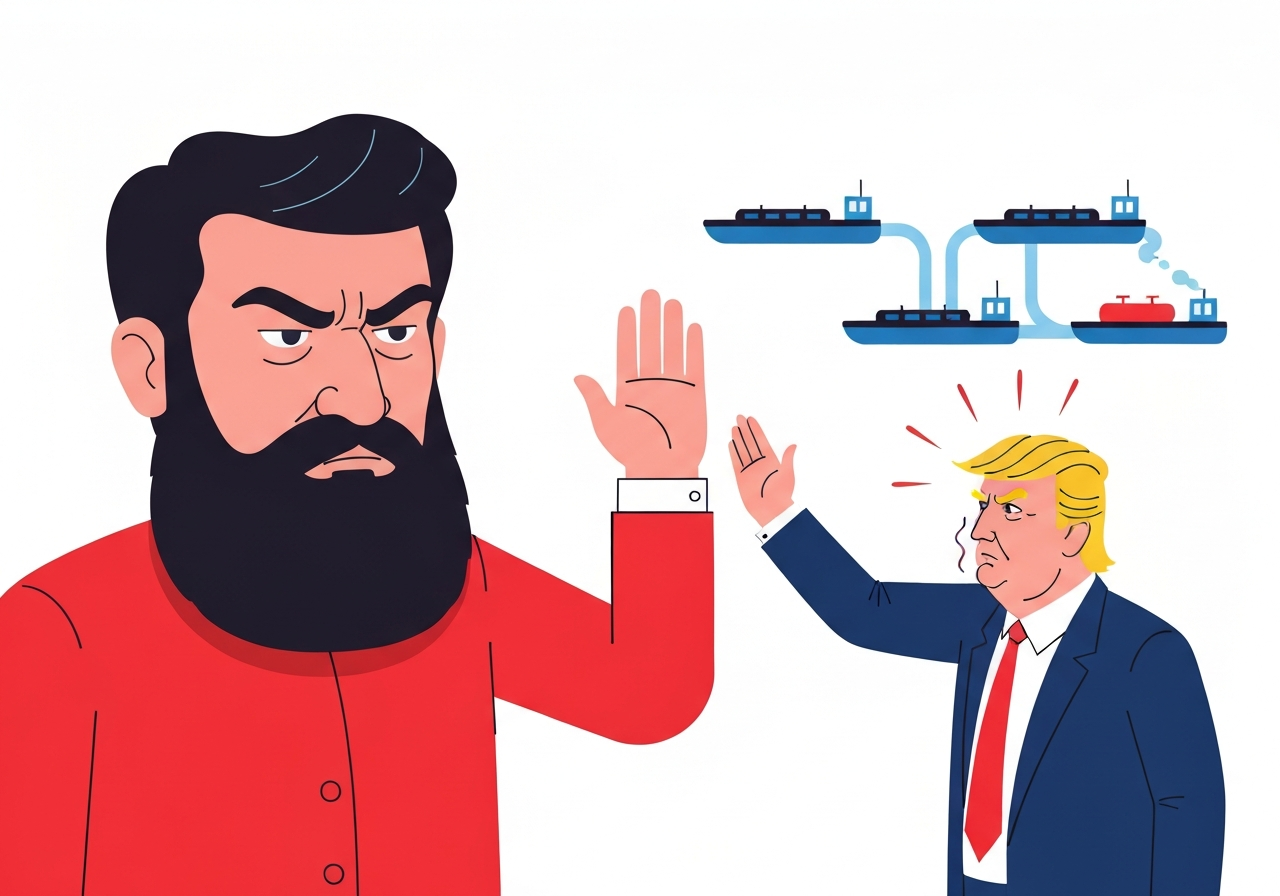
Lead: The Kremlin said on Thursday it is discussing assistance for fuel-starved Cuba and played down U.S. President Donald Trump’s threat to impose tariffs on countries that send oil to the island. Kremlin spokesman Dmitry Peskov told reporters Moscow prefers dialogue but noted current trade with the U.S. is limited. The statement comes as Havana implements emergency measures after an acute fuel shortage and as airlines and foreign firms adjust operations. The White House has signaled tariffs could target any nation—directly or indirectly—supplying oil to Cuba.
Key Takeaways
- Russia acknowledged on Feb. 12, 2026 that it is «actively discussing» assistance to Cuba amid an energy crisis, according to a Kremlin spokesman cited by state media.
- The White House has pledged tariffs on countries supplying oil to Cuba, describing the Cuban government as an «unusual and extraordinary threat» in its public guidance.
- Cuba introduced emergency measures including fuel rationing, shortened school days and a four-day workweek for state firms as the island faces an ongoing aviation fuel shortage.
- Air Canada canceled flights to Cuba but said it would repatriate about 3,000 customers already in the country over the following days.
- Cuba has been under a U.S. trade embargo for more than 60 years; the recent U.S. pressure increased after an extraordinary operation on Jan. 3, 2026 aimed at Venezuelan President Nicolás Maduro.
- Kremlin spokesman Dmitry Peskov emphasized Moscow would seek ‘‘constructive dialogue’’ with Washington while noting limits to public discussion for ‘‘obvious reasons.’li>
Background
For decades Cuba has operated under a U.S. embargo, shaping the island’s trade options and energy arrangements. In recent weeks the situation intensified: a January 3, 2026 extraordinary operation targeting Venezuelan President Nicolás Maduro, a long-standing ally of Havana, prompted a stepped-up U.S. campaign putting pressure on countries that maintain ties with Cuba. The White House announced a policy of tariffs aimed at nations that supply oil to the Cuban government, potentially exposing suppliers to economic penalties.
Energy shortfalls on the island have become acute, affecting power, transportation and public services. Cuban authorities announced emergency measures intended to prioritize essential services, including limits on fuel sales, temporary closures of some tourist facilities, shortened school days and a reduced workweek at state-owned enterprises. Those steps reflect both immediate shortages and the government’s attempt to shield critical infrastructure while negotiating external assistance.
Main Event
On Feb. 12, 2026 Kremlin spokesperson Dmitry Peskov told reporters that Moscow is actively discussing what help it can provide to Cuba, and described engagement with the U.S. as preferable to escalation. Peskov was quoted by Russian state outlet RIA Novosti when answering whether the Kremlin was concerned about U.S. tariff threats. He framed Russia’s response as favoring constructive dialogue rather than public confrontation.
The White House, meanwhile, publicly signaled a readiness to impose tariffs on any country that supplies oil to Cuba, whether the shipments are direct or routed indirectly. U.S. officials characterize the Cuban government as posing ‘‘an unusual and extraordinary threat’’—language used to justify expanded economic measures. Washington’s posture is part of a broader pressure campaign that has grown since the Jan. 3 operation involving Venezuela.
At the same time, Cuba’s government implemented a package of measures to cope with the fuel shortfall: rationing mechanisms for key sectors, restrictions on fuel sales, and actions affecting tourism and public services. The aviation shortage prompted airlines to revise schedules; Air Canada canceled scheduled services to the island and committed to repatriating roughly 3,000 passengers already on the ground over subsequent days.
Analysis & Implications
Diplomatically, Moscow’s response is calibrated. By signaling willingness to discuss assistance for Havana while downplaying escalation, the Kremlin keeps options open without committing publicly to large-scale shipments that could trigger secondary U.S. sanctions. That posture preserves diplomatic room for maneuvers and reduces immediate confrontation risk between Russia and the United States.
Economically, any Russian or third-party deliveries of fuel to Cuba would complicate Washington’s enforcement calculus. The White House’s tariff threat aims to raise the political and financial cost for suppliers; however, applying tariffs to a broad set of trading partners could have spillover effects on international markets and bilateral trade relations, especially if enforcement is perceived as extraterritorial.
For Cuba, short-term relief—whether commercial imports, barter, or state-backed credit lines—could ease acute shortages but would not resolve underlying structural problems compounded by decades of restricted access to international capital and markets. The emergency measures signal severe domestic strain: limiting fuel use and curbing tourism activity risks revenue losses that could deepen the recessionary environment.
Regionally, the dispute raises questions about supply-chain resilience and geopolitical alignments in the Caribbean and Latin America. Countries weighing energy or trade ties with Cuba must balance humanitarian concerns and commercial interests against potential punitive measures from Washington. The situation could prompt multilateral discussions or private negotiations aimed at de-escalation, but outcomes remain uncertain.
Comparison & Data
| Item | Reference |
|---|---|
| U.S. embargo on Cuba | More than 60 years |
| Notable date | Jan. 3, 2026 — operation involving Nicolás Maduro |
| Air Canada action | Cancelled flights; ≈3,000 customers to be repatriated |
The table summarizes discrete, verifiable data points cited in reporting: the longevity of the U.S. embargo, the Jan. 3, 2026 operation linked to escalation in policy, and Air Canada’s operational response affecting roughly 3,000 passengers. These figures help ground the diplomatic and humanitarian consequences described above.
Reactions & Quotes
“We wouldn’t want any escalation, but on the other hand, we don’t have much trade right now.”
Dmitry Peskov, Kremlin spokesperson (as reported by RIA Novosti)
Peskov’s remark was offered in response to whether the Kremlin was concerned about the Trump administration’s tariff threats. The line conveys a preference to avoid public escalation while signaling that Russia currently has limited trade exposure to U.S. sanctions pressure.
“The United States will take measures, including tariffs, against countries that provide oil to Cuba.”
White House statement (public guidance)
The White House framed its policy as targeting any supplier—direct or indirect—linked to energy deliveries to Cuba. Officials describe the Cuban government as an «unusual and extraordinary threat» and have signaled readiness to use economic tools to raise costs for suppliers.
“We have cancelled our flights to Cuba and will repatriate customers already in the country over the coming days.”
Air Canada (operational notice)
Air Canada’s operational decision reflects airlines’ need to mitigate risks from fuel shortages and ensure passenger welfare; repatriation of about 3,000 customers was reported as part of that effort.
Unconfirmed
- Whether Russia will follow through with large-scale fuel shipments to Cuba and the timing of any deliveries remains unconfirmed.
- Specific lists of countries that the U.S. will target with tariffs, and the precise tariff levels or legal mechanisms to be used, have not been publicly detailed.
- The long-term impact of Cuba’s emergency measures on tourism revenue and state company outputs is not yet quantified and depends on evolving fuel access.
Bottom Line
The episode illustrates a convergence of humanitarian need and geopolitics: Cuba faces an immediate energy crisis that could be eased by external suppliers, yet any assistance risks entangling providers in a U.S. campaign of tariffs and penalties. Moscow’s public posture—advocating dialogue while downplaying escalation—keeps open the possibility of assistance without committing to steps that would provoke an immediate confrontation with Washington.
For policymakers and businesses, the case underscores the dilemma of balancing short-term humanitarian relief and commercial opportunity against the legal and political risks of U.S. punitive measures. In the coming days, clarity on Washington’s enforcement plans and any concrete offers from Moscow or other suppliers will determine whether the crisis eases or escalates into a broader trade or diplomatic dispute.
Sources
- CNBC (news report summarizing Kremlin comments, White House guidance, and airline actions)