
Lead
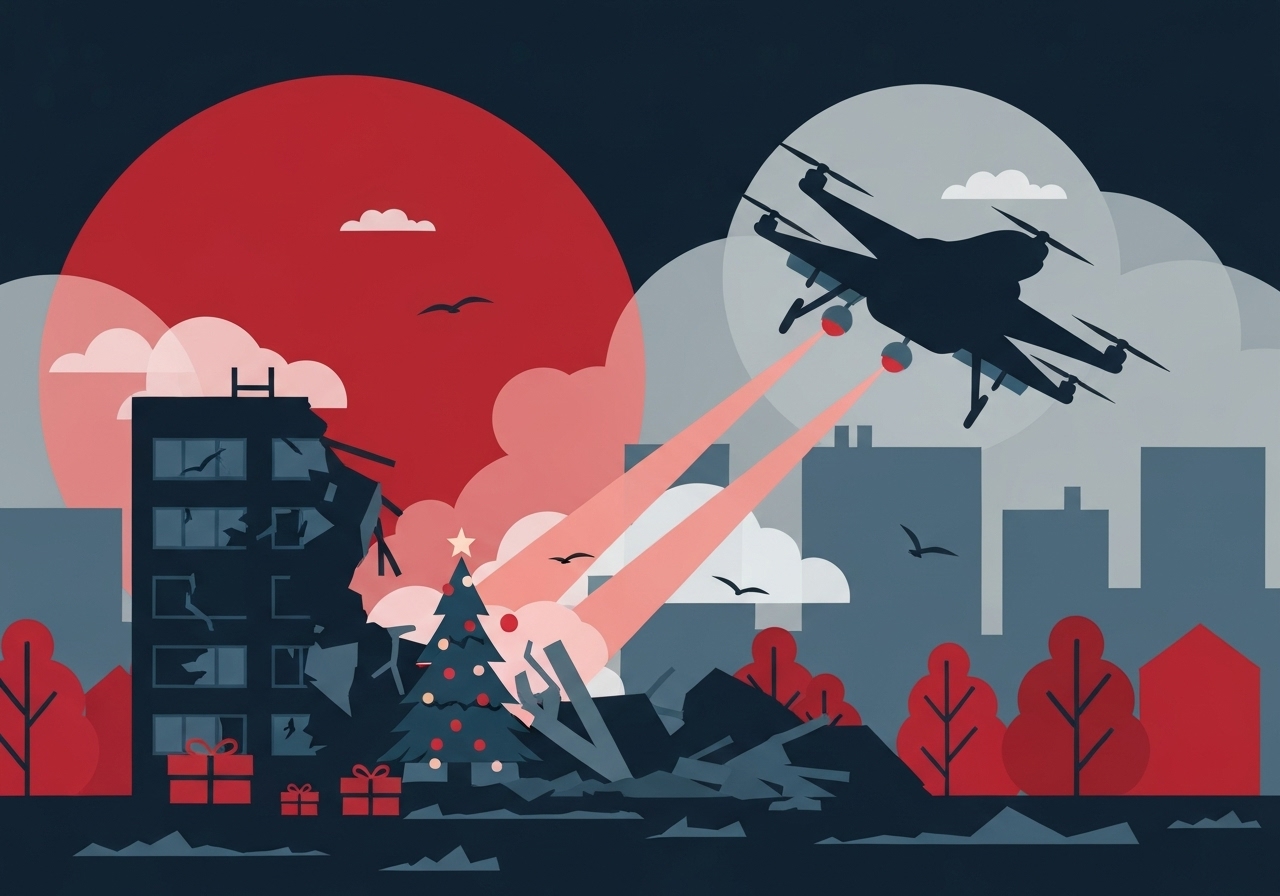
Russian forces and Ukrainian defenders exchanged hundreds of long-range drone strikes from Wednesday night into Thursday morning, with Kyiv reporting fatalities and damage across multiple regions. Ukraine’s air force said Russia launched 131 drones overnight, of which 106 were intercepted or suppressed and 22 struck targets in 15 locations. Local officials in Odesa, Chernihiv and Kharkiv reported civilian deaths, injuries, and damage to industrial and energy infrastructure. Moscow officials also said drones fell in Russian regions and some airports imposed temporary flight restrictions.
Key Takeaways
- Ukraine reported 131 Russian drones launched overnight; Kyiv said 106 were shot down or suppressed and 22 reached targets across 15 locations.
- Odesa authorities reported damage to port and industrial facilities and at least one civilian killed; two others were reported injured.
- Ukraine’s State Emergency Service reported at least one death and 14 injuries from strikes in Kharkiv region over 24 hours.
- Chernihiv suffered a high-rise residential strike and energy infrastructure hits; local officials reported two deaths and two injuries there.
- Ukrenergo logged power outages in Chernihiv, Sumy, Kharkiv, Dnipropetrovsk and Odesa regions and announced consumption restrictions for Thursday.
- Russian officials said their forces downed at least 141 drones overnight and reported debris falling in Moscow and damage in border regions.
- Russian regions including Krasnodar and Bryansk reported port damage, fires and one civilian hospitalized from shrapnel.
Background
The strikes occurred amid an extended period of cross-border drone and missile exchanges between Russia and Ukraine, with both sides increasingly using long-range unmanned platforms to strike infrastructure and logistics nodes. Ukraine has repeatedly warned that Russia targets ports, energy networks and industrial facilities to undermine civilian life and military supply lines, especially during holidays when services may be stretched. Russia, for its part, has continued to attribute many incoming drone incidents to Ukrainian attacks and has emphasized its air defenses’ performance in public statements.
Since the summer of 2023 both sides have scaled up unmanned aerial operations, prompting wider power outages and damage to transport hubs that affect civilian mobility and humanitarian access. The proliferation of cheaper, long-endurance strike drones has made attribution and immediate independent verification more difficult, while air defenses on both sides report varying interception totals that are often inconsistent with each other. Local and national emergency services in Ukraine now routinely combine rapid damage assessment with temporary restrictions on electricity to stabilize the grid after attacks.
Main Event
Wednesday night into Thursday morning saw a major wave of drone activity. Kyiv’s air force reported that 131 Russian drones were launched overnight; Ukrainian air defenses engaged the majority, claiming 106 were shot down or suppressed and that 22 impacted targets across 15 locations. Ukrainian emergency responders and regional governors reported casualties and infrastructure damage as teams conducted search, rescue and stabilization tasks through the morning.
Odesa Governor Oleh Kiper said on Telegram that Russian strikes hit the southern region’s port and industrial infrastructure, damaging facilities and causing at least one civilian death and two injuries. In the northeast, Ukraine’s State Emergency Service (SES) reported one person killed and 14 injured in the Kharkiv area over the previous 24 hours, and said multiple strikes struck energy and residential targets.
In Chernihiv, officials reported that a drone struck a high-rise apartment building and that energy infrastructure was also hit; Governor Viacheslav Chaus reported two deaths and two injuries in the city. Ukrenergo, the state electricity operator, confirmed power outages across Chernihiv, Sumy, Kharkiv, Dnipropetrovsk and Odesa regions and announced consumption restrictions for all regions on Thursday to manage the system load.
Russian statements and regional reports indicated that debris from downed drones fell in and around Moscow and in border regions. Moscow Mayor Sergey Sobyanin said emergency services were working at debris sites, and local governors in Bryansk and Krasnodar regions reported civilian harm and damage to an apartment building and a port facility, respectively. Rosaviatsiya imposed temporary flight restrictions at airports in Krasnodar and Yaroslavl during the incidents.
Analysis & Implications
The scale and timing of these strikes — occurring on a major Christian holiday — carry both tactical and symbolic weight. Tactically, strikes aimed at ports and logistics hubs can disrupt Ukraine’s export routes and military resupply, complicating both immediate humanitarian flows and longer-term economic recovery. Symbolically, attacks during holidays can erode public morale and strain emergency services when staffing and resources may be reduced.
Economically, repeated hits to energy and industrial infrastructure increase repair costs and heighten the risk of longer outages, which in turn affect hospitals, heating and food distribution as winter deepens. The cumulative effect of successive strike waves pressures Ukraine’s already fragile grid and forces authorities to implement rationing measures that have social and political consequences domestically.
Militarily, both sides are testing air-defense performance and counter-drone tactics. Ukraine’s interception rate in this incident — as reported by Kyiv — was high, but a notable number of drones still struck targets. Russia’s higher interception claims introduce a persistent verification challenge: asymmetric reporting makes independent casualty and damage tallies essential for clear assessment of efficacy on either side.
Comparison & Data
| Metric | Wednesday night–Thursday morning | Russian statement |
|---|---|---|
| Drones reported launched into Ukraine | 131 (Ukrainian air force) | — |
| Drones Ukraine says shot down/suppressed | 106 (Ukrainian air force) | — |
| Drones reported impacting targets in Ukraine | 22 (Ukrainian air force) | — |
| Russian claim of drones shot down | — | 141 (Russia Defense Ministry) |
| Previous 24-hr high reported by Russia | — | 387 Ukrainian drones (Russia’s Defense Ministry, two days earlier) |
The table highlights the divergent tallies reported publicly by Kyiv and Moscow. Ukraine’s figures are focused on launches and interceptions within its airspace and on confirmed impacts, while Russian statements emphasize defensive successes and counts of inbound Ukrainian drones. Independent verification by third-party monitors or investigators is limited in the immediate aftermath of such fast-moving events.
Reactions & Quotes
Ukrainian officials framed the strikes as deliberate attacks on critical infrastructure and civilian life, emphasizing ongoing resilience measures and the need for continued external support. Emergency teams were dispatched to repair power lines and assist affected residents while authorities urged energy conservation to stabilize the grid.
“Even during the Christmas holidays, Russia continues to launch targeted attacks on Ukrainian logistics, ports and critical infrastructure.”
Oleksiy Kuleba, Ukraine Deputy Prime Minister (Telegram)
Ukrainian leaders used social and official channels to describe the strikes as targeted and deliberate, calling for international attention to civilian harm. Authorities combined casualty reporting with operational updates on power restrictions and rescue operations to inform residents and partners.
Russian officials described successful defensive actions and reported debris and limited civilian harm inside Russia, portraying air defense performance positively and noting temporary disruptions to flights and local services. Local officials in Russian regions reported injuries from falling debris and port fires, underscoring how cross-border drone activity affects border communities on both sides.
“Our units downed multiple UAVs; emergency services are addressing debris and the resulting incidents in Moscow and border regions.”
Russian Defense Ministry / Moscow regional officials (public statements)
Moscow’s narrative emphasized interception counts and damage control to reassure domestic audiences and maintain public confidence in civil defense capabilities. Independent confirmation of some Russian regional reports remains limited pending on-the-ground verification.
Unconfirmed
- Exact civilian casualty totals across all affected Ukrainian regions remain subject to revision as local authorities update counts.
- Discrepancies between Ukrainian and Russian interception and launch figures have not been reconciled by independent third-party verification.
- Specific damage assessments to port infrastructure in Odesa and Krasnodar Krai are preliminary and await detailed engineering surveys.
Bottom Line
The late-December wave of drone strikes underscores how aerial unmanned systems have become central to the Ukraine conflict’s tactical and humanitarian dimensions. Despite high interception claims from both sides, drones continue to strike populated and industrial areas, producing civilian casualties and compounding energy and logistics vulnerabilities.
For policymakers and international observers, the incident highlights an urgent need for robust verification mechanisms, additional support for air-defense and critical infrastructure protection, and intensified diplomatic efforts to mitigate escalation, particularly around culturally sensitive dates. In the near term, Ukrainians can expect continued emergency measures to manage power and repair infrastructure as authorities document damage and casualties.
Sources
- ABC News (U.S. news outlet reporting official statements and field reporting)