
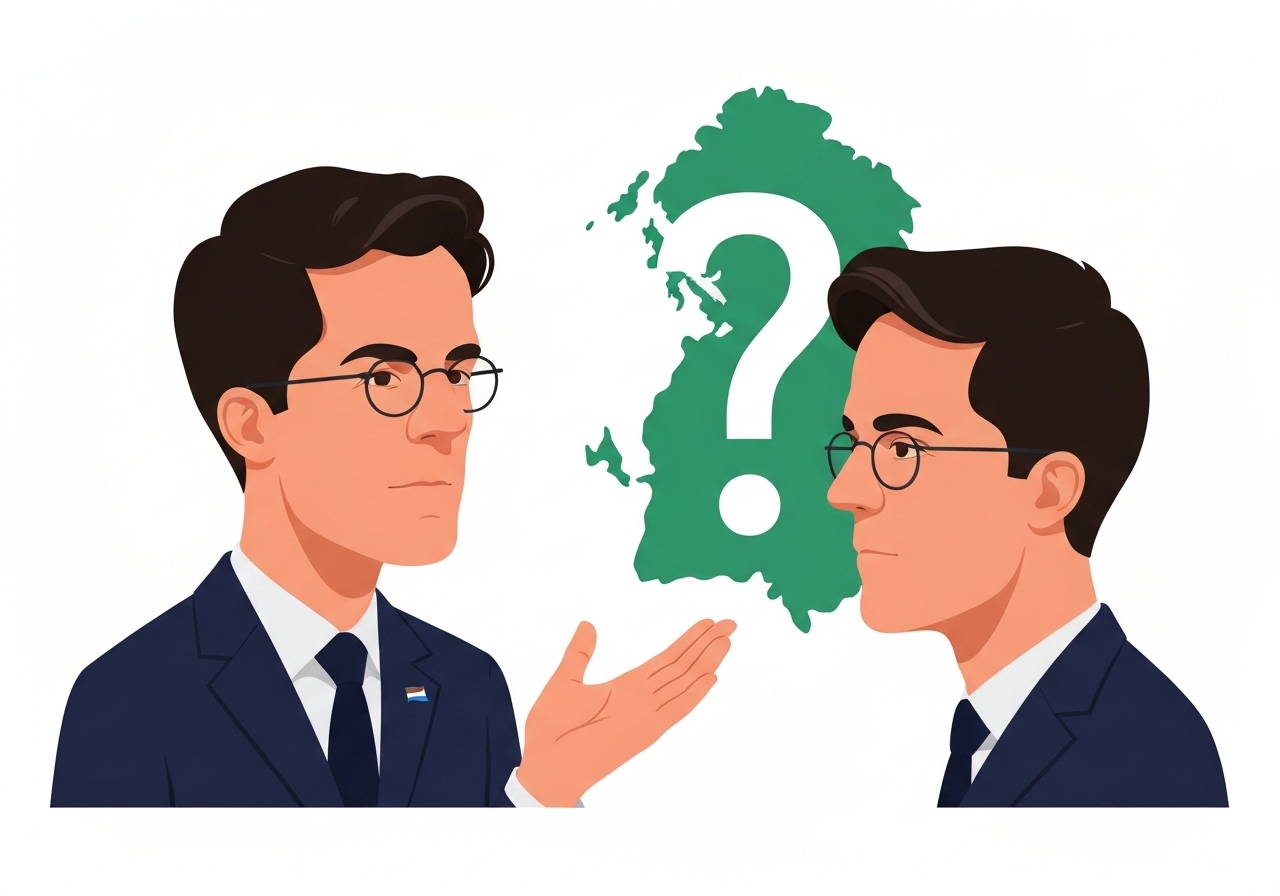
Lead: On January 22, 2026, NATO Secretary General Mark Rutte told Bloomberg in Davos that he did not raise Greenland’s sovereignty with former President Donald Trump. The conversation at the World Economic Forum focused on Arctic security in a “practical sense,” Rutte said, and aimed at preventing Russia and China from gaining access to the semi-autonomous Danish territory. Rutte described a breakthrough on Greenland-related security cooperation that, he said, did not require debating the island’s sovereignty. The comment frames NATO’s immediate objectives in the Arctic as operational and deterrent rather than territorial.
Key Takeaways
- Mark Rutte, serving as NATO Secretary General, said on Jan 22, 2026 in Davos that Greenland’s sovereignty was not discussed with Donald Trump during their talks.
- The interview took place at the World Economic Forum in Davos and was conducted by Bloomberg News Editor-in-Chief John Micklethwait.
- Rutte characterized the talks as focused on regional security in the Arctic “in a practical sense,” specifically on preventing Russian and Chinese access to Greenland.
- Rutte said a breakthrough on Greenland-related cooperation was secured without addressing sovereignty, signaling NATO’s operational priorities over political claims.
- The statement highlights growing NATO attention to the Arctic amid increased Russian and Chinese activity in the region.
Background
Greenland is a semi-autonomous territory within the Kingdom of Denmark; its strategic importance has grown as melting ice opens new maritime routes and resource access. Concerns about Arctic access have intensified since Russia has increased military activity in the region and China has declared itself a “near-Arctic state,” pursuing scientific and commercial presence. In 2019 the question of Greenland briefly entered global headlines when the United States signaled interest in the island, prompting Danish and Greenlandic officials to reaffirm sovereignty and partnership arrangements.
Since taking NATO leadership, Rutte has prioritized alliance cohesion and regional deterrence, including in the Arctic theater. NATO member states increasingly view infrastructure, surveillance, and allied interoperability in the north as part of collective defence. Denmark—whose realm includes Greenland—has both domestic political responsibilities to Greenlanders and obligations as a NATO member, complicating any diplomatic maneuvering over the island.
Main Event
At the World Economic Forum in Davos on January 22, 2026, Mark Rutte told Bloomberg’s John Micklethwait that his discussions with former President Trump did not include Greenland’s sovereignty. Rutte emphasized that the talks concentrated on how NATO and partners can prevent Russia and China from accessing Greenland in ways that would undermine allied security. He framed the conversation as “practical,” aimed at concrete measures like surveillance, infrastructure and cooperation rather than sovereignty debates.
Rutte described a “breakthrough” on Greenland-related cooperation but did not disclose detailed terms or bind any party to specific new commitments during the interview. He underlined that securing the island against potential adversary presence is a collective interest for NATO members with Arctic responsibilities. The secretary general’s remarks appeared intended to reassure allies and stakeholders that security gaps, not territorial claims, are the immediate priority.
The exchange re-energizes questions about the balance between respect for Danish and Greenlandic autonomy and the alliance’s security imperatives. Rutte’s public account leaves open whether bilateral or multilateral follow-up steps will be formalized, indicating further diplomacy and planning may be required to translate the breakthrough into concrete actions.
Analysis & Implications
Rutte’s framing—focusing on deterrence and access rather than sovereignty—signals NATO’s attempt to de-escalate politically sensitive territory issues while strengthening practical defense measures. By avoiding public debate over sovereignty, NATO reduces the risk of inflaming nationalist or diplomatic frictions that could derail collective security work. This approach can speed cooperation on intelligence sharing, surveillance, and logistics while leaving final political questions to national governments and Greenlandic authorities.
The statement also underscores NATO’s growing Arctic posture amid evolving threats. Russia’s northern military posture and China’s expanded Arctic activity have prompted allied planners to prioritize early-warning systems, port and airfield resilience, and multinational exercises. If implemented, the measures Rutte described would enhance allied ability to detect and deny unfriendly military or dual-use access to Greenlandic territory and surrounding waters.
Politically, the decision to sidestep sovereignty debates may be pragmatic but not permanent. Greenlandic leaders and Danish authorities retain the ultimate say on domestic governance and international agreements involving the territory. Any long-term basing, permanent deployments or third-party access arrangements would require transparent consultations with Greenland’s self-governing institutions to avoid legal and democratic pushback.
Comparison & Data
| Year | Event | Primary focus |
|---|---|---|
| 2019 | U.S. public comments about buying Greenland | Political controversy over sovereignty and strategic interest |
| 2026 | Rutte’s Davos comments | Operational Arctic security and preventing rival access |
The two episodes show a shift from headline-grabbing political proposals to technocratic, alliance-driven security planning. While 2019 centered on a provocative territorial idea, the 2026 breakthrough as described by Rutte emphasizes practical defence cooperation and deterrence, reflecting NATO’s prioritization of collective security measures in the Arctic.
Reactions & Quotes
Rutte’s comments prompted immediate media attention and responses from analysts focused on Arctic security.
“We did not discuss sovereignty. The conversation was about regional security in a practical sense and how to prevent Russia and China from accessing Greenland.”
Mark Rutte, NATO Secretary General (interview with Bloomberg)
The interviewer framed the exchange as part of Davos diplomacy, noting the significance of a NATO chief publicly describing a ‘breakthrough’ on Greenland without entering sovereignty debates.
“This was a practical discussion about security arrangements rather than political claims over territory.”
John Micklethwait, Bloomberg News Editor-in-Chief (interview context)
Unconfirmed
- Whether private or off-record conversations between Trump and other officials referenced Greenland sovereignty is not independently verified.
- The detailed content, scope and binding nature of the “breakthrough” Rutte referenced were not disclosed in full and remain unconfirmed.
- Any future operational steps, basing arrangements, or timelines implied by Rutte’s remarks have not been published or ratified by NATO or Danish authorities.
Bottom Line
Mark Rutte’s Davos remarks on January 22, 2026, signal that NATO is prioritizing actionable Arctic security measures over public debate about territorial sovereignty. By characterizing talks with Donald Trump as focused on preventing rival access to Greenland, Rutte seeks to frame alliance efforts as practical and defensive rather than expansionist.
That approach could facilitate quicker cooperative steps—surveillance upgrades, logistics planning and joint exercises—while deferring sensitive political questions to national and local processes. Still, translating a diplomatic “breakthrough” into implemented measures will require transparency with Greenlandic authorities and clear political agreements among NATO members to avoid legal or democratic disputes.