
Lead
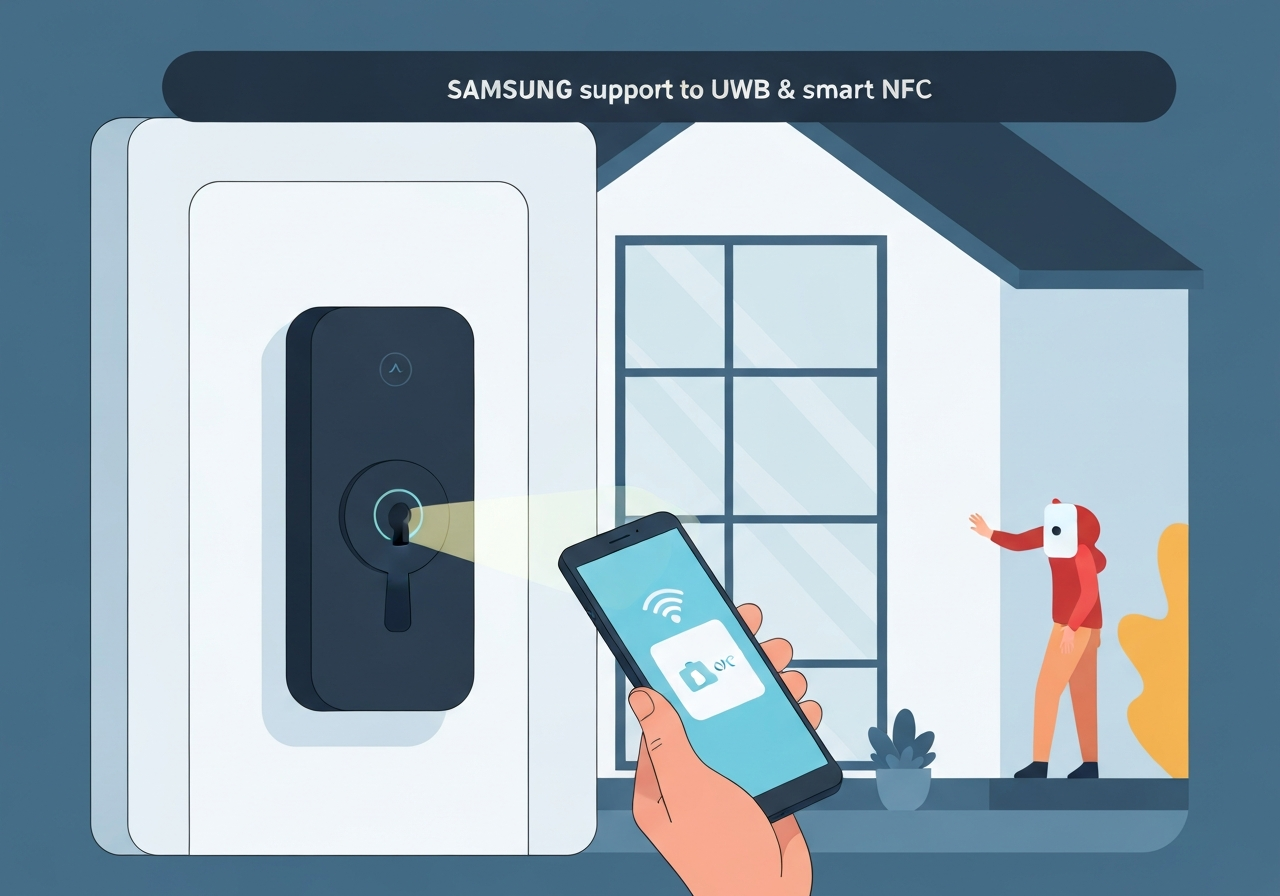
Samsung is expanding Digital Key functionality in Samsung Wallet to include a new Digital Home Key for compatible smart locks, a change reported on March 2, 2026. The feature supports locks built to the Aliro standard and uses NFC taps and Ultra-Wideband (UWB) proximity to unlock doors on compatible Galaxy devices. Samsung and reporting outlets say the rollout begins in select regions in March 2026 and will grow as leading smart lock makers ship Aliro-compatible models. The move leverages Aliro’s link to the Connectivity Standards Alliance (CSA) and aims to bring phone-based door unlocking beyond vehicles.
Key Takeaways
- Samsung Wallet will add a Digital Home Key type for home locks; the change was reported on March 2, 2026.
- The feature only works with smart locks that adopt the Aliro standard, which is run by the Connectivity Standards Alliance (CSA).
- Users can add a lock to Samsung Wallet during setup and unlock via NFC tap or UWB proximity, depending on the lock’s capabilities.
- NFC unlocking functions like contactless payments: a short tap to the lock registers and opens the door.
- UWB enables passive proximity unlocking—an authorized Galaxy device can unlock a door simply by approaching it.
- Samsung described the proximity method as secure; precise technical safeguards and implementation details are not fully public.
- The feature will roll out in select regions starting March 2026 and expand as Aliro-compatible locks from leading brands arrive.
Background
Digital keys in mobile wallets began primarily with vehicle access, where manufacturers and platform vendors worked to standardize digital car keys. Samsung’s Wallet has supported vehicle keys for some time; the new Home Key expands that model to residential and other door locks. The Aliro standard—managed by the Connectivity Standards Alliance, the organization behind Matter—was developed to provide an interoperable framework for smart locks and related credentials.
The smart-lock market has a mix of proprietary and open approaches. Manufacturers that adopt open standards like Aliro gain easier integration into ecosystems such as Galaxy devices, potentially unlocking larger user bases. Platform-level support from major device makers reduces friction for consumers, but it also raises expectations about security, privacy, and regional availability of compatible hardware.
Main Event
According to the March 2, 2026 report, Samsung Wallet will present a new key type when a user pairs an Aliro-compatible lock during setup. Once added, the Digital Home Key appears alongside other Wallet credentials and can be invoked to unlock the door. For locks with NFC, unlocking is an active interaction: users tap their phone to the lock much like a contactless payment.
For locks that support UWB, Samsung describes a proximity-based flow: an authorized Galaxy device carried by the user can unlock automatically when the user approaches the door. That removes the need to wake and tap the phone, aiming to make entry quicker. Samsung and reporting outlets emphasize that the system is intended to be secure, though a proximity unlock raises distinct threat models compared with tap-to-unlock flows.
Samsung’s announcement does not list specific smart lock brands; instead it says the feature will launch in select regions in March 2026 and expand as new Aliro-compliant locks from leading manufacturers reach the market. Consumers who want the feature must buy locks that explicitly support Aliro and follow the lock maker’s setup flow to add the key to Samsung Wallet.
Analysis & Implications
Adopting Aliro narrows initial compatibility—only manufacturers that implement the standard will interoperate with Samsung Wallet—but it also lowers long‑term friction for cross-device support. By aligning with a standard run by the CSA, Samsung signals a preference for vendor-neutral integrations that can attract multiple lock makers and, over time, increase the pool of compatible hardware for Galaxy users.
UWB proximity unlocking is the most notable functional shift because it changes the user interaction model: unlocking becomes implicit rather than an explicit tap. That improves speed and convenience but expands the security landscape to include relay, spoofing, and theft scenarios that are less relevant for short-range contactless taps. How manufacturers and Samsung combine cryptographic checks, distance-ranging safeguards, and device authentication will determine whether UWB unlocks are both convenient and resilient.
Platform incentives matter: Galaxy’s large installed base is attractive to lock makers, especially those considering Aliro adoption. If Aliro gains momentum, Samsung Wallet support could become a selling point for smart locks. Conversely, customers in regions outside the initial rollout will experience delayed benefits, which may influence purchasing decisions and timelines for competing platforms to offer similar integrations.
Comparison & Data
| Method | Typical Range | User Action | Security Notes |
|---|---|---|---|
| NFC | <10 cm | Tap phone to lock | Short range; easier to limit relay attacks with user interaction |
| UWB | Up to several meters (device-dependent) | Approach door with authorized device | Enables ranging; requires mitigations for relay/spoofing |
The table highlights why UWB can feel faster: no deliberate phone action is required. However, UWB’s longer effective range shifts the emphasis to robust cryptographic pairing and distance verification to prevent unauthorized access. Manufacturers will need to publish or certify their implementations to reassure privacy and security-conscious buyers.
Reactions & Quotes
Security researchers and industry observers have been closely watching how platform vendors implement door-unlock flows. Below are representative remarks drawn from reporting and organization statements, with context.
Before the quote: Samsung’s materials and early reporting stress security as a primary design goal for the proximity flow, but details remain limited.
“secure”
Samsung (as reported by 9to5Google)
After the quote: That shorthand reflects Samsung’s assurance but does not specify the cryptographic or distance‑ranging measures used. Independent evaluation will be necessary to confirm the practical resilience of UWB‑based unlocking against relay or spoofing attacks.
Before the quote: The Connectivity Standards Alliance describes Aliro as intended to be broadly interoperable, encouraging multiple manufacturers to adopt a shared approach.
“open standard”
Connectivity Standards Alliance (CSA)
After the quote: Framing Aliro as an open standard matters for adoption: it lowers integration costs for lock makers and can speed inclusion in platform ecosystems like Samsung’s Wallet. Adoption rate, however, remains contingent on manufacturer priorities and market demand.
Unconfirmed
- No official list of smart lock brands that will support Aliro at launch has been published; brand support remains unconfirmed.
- The exact technical details and public security evaluation of Samsung’s UWB proximity implementation have not been released and are therefore unverified.
- Precise country or regional rollout dates beyond “select regions in March 2026” are not specified by Samsung or reporting outlets.
Bottom Line
Samsung’s addition of a Digital Home Key to Samsung Wallet is a strategic step to bring phone-based access control into home locks via the Aliro standard. NFC taps provide a well-understood, short-range method that mirrors contactless payments, while UWB promises a faster, hands-free experience at the cost of new security trade-offs that require careful engineering.
For consumers, the practical value depends on lock availability and regional rollout timing: those in launch regions with Aliro-compatible locks will see immediate benefit, while others may wait for broader hardware support. For the industry, Aliro alignment with CSA gives a pathway to cross-vendor interoperability that could accelerate smart-lock adoption across device ecosystems if manufacturers commit to the standard and subject their implementations to independent review.
Sources
- 9to5Google — reporting on Samsung Wallet update (media)
- Samsung Newsroom (official press / corporate)
- Connectivity Standards Alliance (CSA) (industry standards organization)